Broadband Deserts Are Still Expanding While Infrastructure Sits Unspent
When billions in broadband infrastructure funding sits unspent while broadband deserts persist or expand, what does the gap between allocation and deployment reveal about who controls the pace of access expansion?
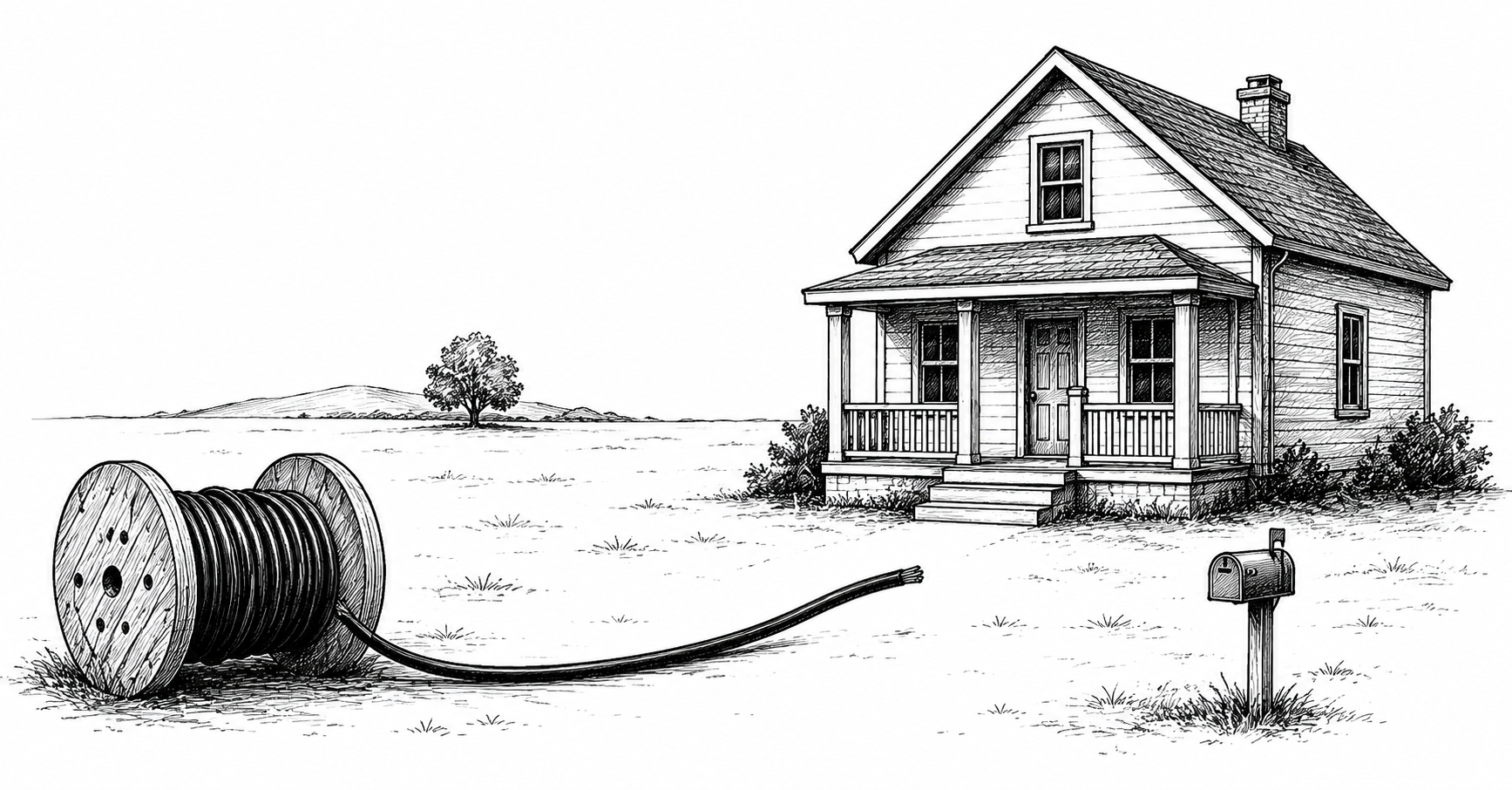
The United States has committed roughly $65 billion in federal funding to expand broadband access to underserved and unserved communities. Most of that money sits unspent. According to fiscal year 2024 data, only a fraction of allocated funds have been deployed, and broadband access gaps persist or have widened in rural and lower-income communities despite the availability of the capital.
The mechanism separating allocation from deployment is institutional. Federal funding doesn’t automatically become local broadband infrastructure. The money moves through a system where private telecom companies bid on projects, where state governments must allocate funds, where communities must have the technical and administrative capacity to apply, and where private providers make economic decisions about whether returning on a project meets their investment threshold.
That system has built-in delays and constraints. Private companies considering broadband expansion in rural areas do cost-benefit analyses that often conclude deploying in sparsely populated areas cannot generate sufficient returns at standard rates of cost recovery. Subsidies exist to close that gap, but accessing subsidies requires administrative work, competitive bidding, and coordination between state and local actors who may lack the bandwidth (literal and metaphorical) to navigate federal processes.
The consequence is a structural gap between need and deployment. Communities with the highest broadband access deficits are often the ones with the fewest administrative resources to apply for federal funding. Rural areas, low-income neighborhoods, and communities already struggling with disinvestment are the ones most likely to experience the delay between funding allocation and actual infrastructure deployment. Wealthy communities and areas already served by multiple providers move faster because the private sector incentive is already there.
Federal funding was designed to correct this gap. But federal funding can only move as fast as the deployment mechanisms underneath it allow. If private providers won’t deploy in an area at standard rates even with subsidies, if local administrations can’t navigate application processes, if competitive bidding disadvantages smaller contractors, then the money remains allocated but undeployed. The delay itself becomes a mechanism of access inequality. A community gets to say they received broadband funding while experiencing continued access deficits. The funding exists. The infrastructure doesn’t.
That timeline gap creates a visibility problem. Federal budget announcements allow politicians to claim broadband expansion credit. Deployment happens on a different schedule, often beyond the electoral cycle of the politicians making the announcements. A community experiencing a broadband gap today may not see infrastructure built for two or three more years, by which time different political actors may claim credit or different pressures may have shifted priorities.
The structural tension is that access expansion requires both money and deployment capacity, and those two things don’t automatically align. Billions can be allocated without deployment mechanisms capable of absorbing them at the pace communities need access. Until that gap closes—until deployment keeps pace with allocation—broadband deserts will continue contracting access even in communities that have been technically awarded federal funding for expansion.
What’s worth tracking is whether deployment accelerates or whether the gap between funded and built persists. Communities waiting for infrastructure that was allocated years ago are the data point that tells the real story.