Employers Want AI Experience. Someone Has to Create It.
Universities are increasingly being asked to solve a problem businesses created: hiring for skills workers have never had the chance to develop.
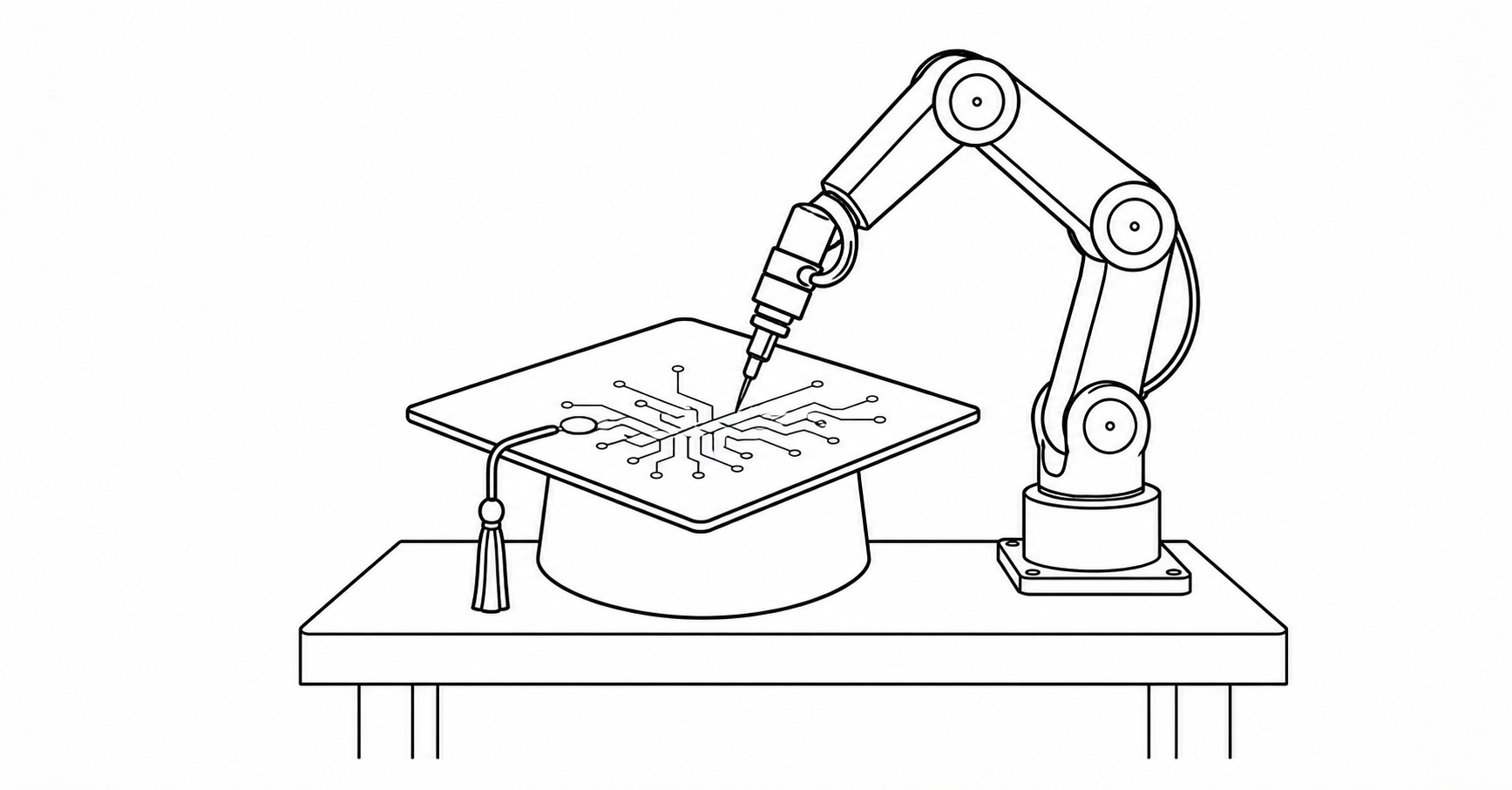
Labor markets depend on a simple bargain. Employers identify skills they need. Workers acquire those skills. Employers hire the workers who have them.
Artificial intelligence has broken that bargain.
Companies now routinely advertise positions requiring AI experience. Some expect familiarity with AI-assisted workflows. Others want employees who can manage automation, evaluate AI outputs, or redesign business processes around intelligent systems. The problem is straightforward: many of these expectations emerged faster than the jobs that traditionally create experience.
A recent graduate cannot accumulate three years of AI workplace experience if AI entered mainstream business workflows less than three years ago.
Power shifted from employers to educational institutions. Once, companies trained workers. Now universities are being asked to manufacture labor-market readiness before the labor market itself knows what readiness looks like.
Why? The incentive structure makes sense for employers. Companies facing competitive pressure want workers who can contribute immediately. Training costs money. Productivity expectations continue to rise. Asking applicants to arrive AI-ready shifts that burden elsewhere.
The burden does not disappear. It moves.
The cost of workforce development migrates from the company balance sheet to tuition-paying students and the universities serving them. Universities absorb the responsibility. Students absorb the cost.
Business schools have no choice but to respond.
Traditional curricula were designed around relatively stable professions. Accounting changed gradually. Marketing evolved over years. Supply chains developed new practices over decades. Artificial intelligence compresses those timelines. Entire categories of work can shift between semesters.
This creates a challenge larger than curriculum design. Universities are being forced to teach adaptation itself—not just mastery of current tools, but capacity to learn tools that do not yet exist.
The most interesting detail in Miami’s approach is not the AI coursework. It is the decision to spread AI across disciplines rather than isolate it inside technical programs. Most workers will not become AI engineers. They will become accountants, marketers, managers, analysts, and operators working inside organizations increasingly shaped by AIsystems.
The skill workers actually need is not building the technology. It is understanding how work changes around it.
Many discussions about AI employment focus on replacement: Which occupations disappear? The labor market is already producing a different outcome. Companies are eliminating some tasks while simultaneously creating expectations for entirely new capabilities. Workers are not competing against automation. They are competing against other workers who know how to use automation better.
This creates an access problem that institutional funding cannot solve.
Students at well-funded universities may gain exposure to AI tools, industry partnerships, and experimental coursework. Students at institutions with fewer resources graduate into the same labor market without equivalent preparation. If AIfluency becomes a prerequisite for professional employment, educational inequality becomes labor-market inequality.
The next phase of the AI economy depends less on the technology itself than on who gains access to meaningful experience using it.
Universities like Miami are attempting to close that gap. Whether they succeed is almost secondary to what their efforts reveal: employers increasingly expect workers to arrive prepared for jobs that did not exist when those workers entered college. That expectation cannot be met by hiring alone. It requires educational institutions to absorb training responsibility that employers once carried.
The institutions that adapt fastest will not simply produce graduates. They will become unofficial workforce-development partners for industries moving too quickly to train their own employees.
And if that trend continues, the next debate about artificial intelligence may not center on which jobs disappear. It may center on who pays to prepare workers for the jobs that replace them.