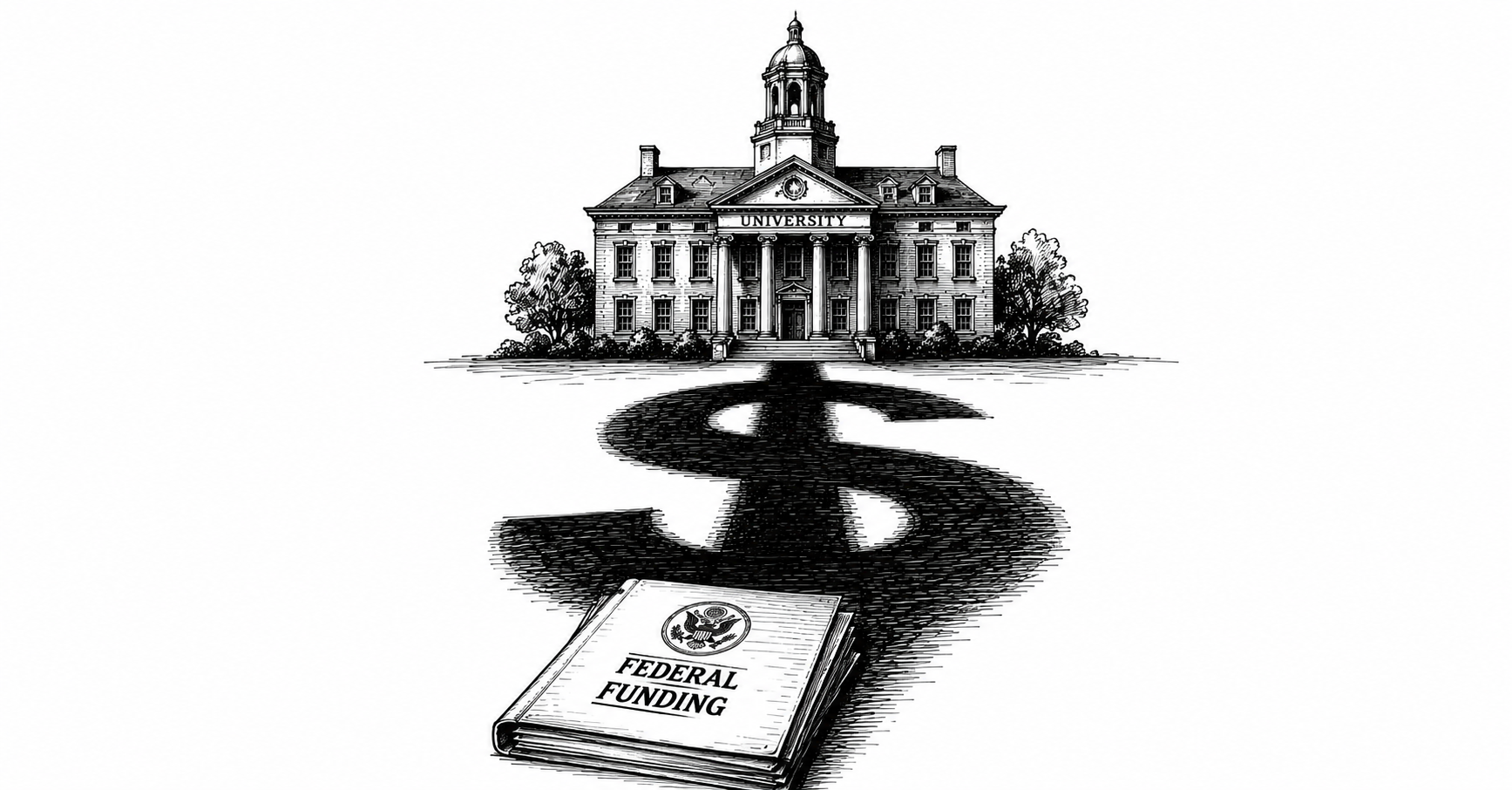
Yale Isn’t Fighting the Findings. It’s Pricing Them.
Faculty lawyers call the government’s evidence cherry-picked and statistically weak. The university has offered two settlements anyway. The gap between those positions is the story.
Yale University has now made two settlement offers to resolve Justice Department investigations into its admissions practices — the first rejected by the government, the second pending, according to the Yale Daily News. As reported by Ben Unglesbee of Higher Ed Dive, this comes as attorneys for Yale’s chapter of the American Association of University Professors sent university leadership a detailed analysis arguing the department’s findings rest on cherry-picked and statistically weak evidence.
Hold both facts in view. The university’s own faculty lawyers contend the case against it is weak. The university is negotiating to settle it anyway.
The Justice Department’s Civil Rights Division issued findings on May 14 alleging that Yale’s medical school intentionally selected applicants by race in violation of the Supreme Court’s 2023 ruling in Students for Fair Admissions v. Harvard. The department has since opened pending investigations into Yale College and Yale Law School. Among the evidence the AAUP’s attorneys examined: a 2024 presentation slide titled “Admissions post-SCOTUS” that was otherwise blank, which the department read as proof that instructions to consider race were delivered verbally. Yale hired McGuireWoods — the firm that negotiated the University of Virginia’s settlement with the department in October 2025 — to handle talks.
The comparison shaping Yale’s calculation is Harvard, which refused federal demands, faced funding attacks and litigation across multiple fronts, and is still in court. The New York Times reported Yale’s quick moves suggest it wants no version of that fight. Yale’s president, Maurie McInnis, told the campus Monday the university is participating in the resolution process in good faith.
An investigation of this kind does not need to win in court to work. It needs to make the cost of contesting it — years of litigation, frozen federal funds, donor anxiety, applicant uncertainty — exceed the cost of conceding. The evidence can be thin, as Yale’s own faculty attorneys argue it is, because the evidence is not the leverage. The leverage is the university’s dependence on federal research money and its aversion to sustained conflict with the government. The department has announced similar findings at UC Davis’s medical school and opened at least 15 additional probes at unnamed institutions. Each settlement makes the next one cheaper to obtain.
The distribution question is who loses what when institutions settle rather than litigate. Yale’s law school dean, Cristina Rodríguez, and faculty across the university have warned that a deal compromises the university’s independence and, in her words, the rule of law — because unlitigated findings become de facto precedent. Black and Hispanic applicants at every institution watching this negotiation inherit admissions offices that now treat their presence in a class as a legal risk to be managed. And the question of what the law actually requires after Students for Fair Admissions — including whether the department’s expansive reading of racial proxies is correct — goes unanswered, because answering it is precisely what settlement avoids.
Senator Richard Blumenthal of Connecticut put the counterargument plainly: an agreement invites more of the same. Yale appears to have run the numbers and concluded otherwise.