Microsoft Cut 4,800 Jobs in July and Said AI Is Changing How Work Gets Done. That Is Not the Story. The Capital Reallocation Is.
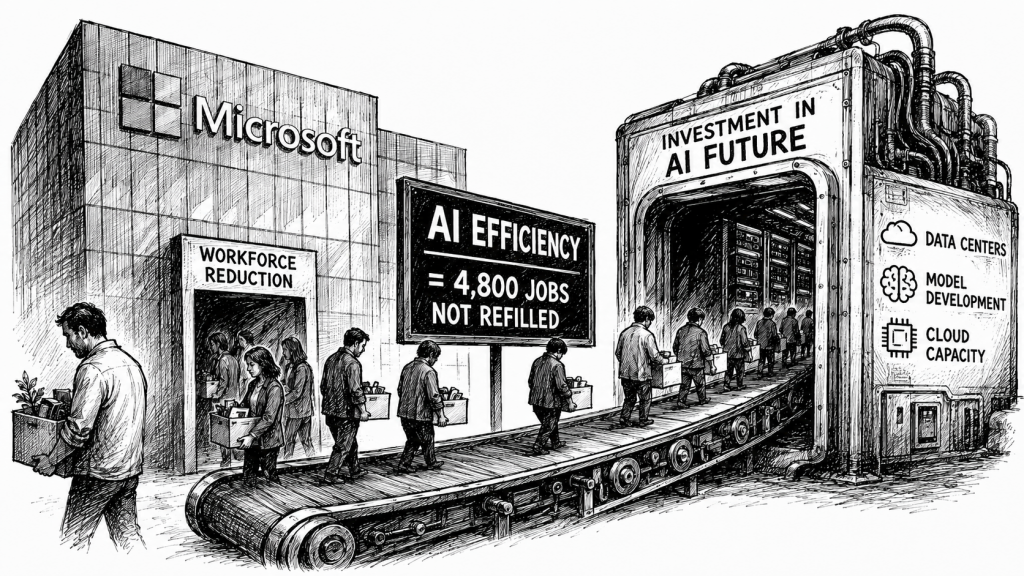
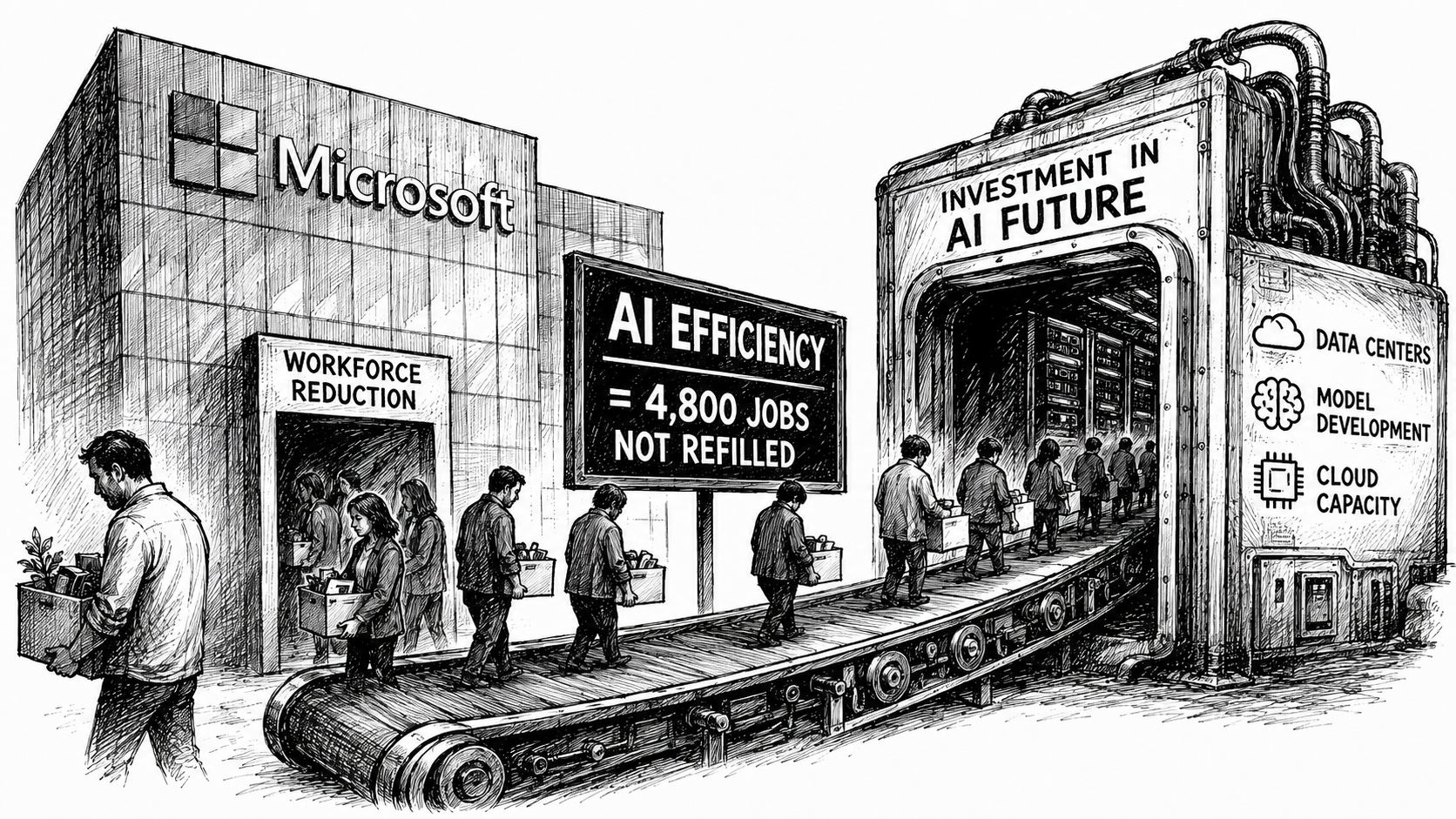
Microsoft eliminated approximately 4,800 workers — 2.1% of its workforce — in July 2026, primarily in sales, consulting, and Xbox gaming, according to reporting by TechCrunch, NBC News, and ABC News. The company explicitly cited AI efficiency as a driver of the decision. A Microsoft spokesperson confirmed that none of the eliminated roles would be replaced by AI directly — they would simply not be refilled. The company simultaneously announced continued record investment in AI infrastructure: data centers, model development, cloud capacity. The two announcements occupied the same press cycle.
The coverage framed the layoffs as a workforce management story — a company adjusting headcount in response to changing technology, the kind of restructuring that has accompanied major technology transitions before. The accurate frame is capital reallocation. Microsoft moved resources from the compensation of 4,800 workers to the infrastructure that enables those workers to be replaced. The productivity gains that those workers were generating — the revenue produced by sales teams, the services delivered by consultants, the games shipped by studio staff — are now accounted for differently. The workers do not receive the wages they were previously paid. The company captures the difference as margin and reinvests a portion into the AI infrastructure that makes the next round of substitution possible.
This is not a conspiracy. It is an incentive structure. Companies in competitive markets are rewarded for reducing costs and investing in productivity-enhancing technology. The executives who make capital allocation decisions are evaluated on metrics that rise when labor costs fall and AI investment produces operational efficiency. The shareholders who hold the equity that those decisions benefit have no mechanism to account for the welfare of the workers whose displacement produced the returns. The system is functioning as designed. The question is who designed it with whom in mind.
The Xbox gaming cuts are worth examining separately. Microsoft’s gaming division is not being reduced because AI is replacing game developers — it is being reduced because the division’s performance metrics no longer justify its size within Microsoft’s portfolio priorities. The AI framing, applied broadly across all 4,800 positions, allows the company to communicate a single coherent narrative to investors: this is a strategic pivot, not a retreat. The workers in Xbox studios who are not being replaced by AI tools are losing their jobs because the company has decided to allocate its capital elsewhere — and the AI efficiency story provides cover for that decision.
The workers who were let go are not being transitioned into the AI economy Microsoft is building. The new roles the company is creating to manage and develop its AI infrastructure require different skills, different credentials, and in many cases different professional histories than the roles being eliminated. Sales professionals who sold Microsoft enterprise software for ten years are not, in the normal course of events, positioned to become the prompt engineers or model trainers or data center operations specialists the company is hiring. The transition that the disruption narrative implies — workers moving from old roles into new ones — is not the transition that is actually happening.
The story being written about Microsoft is a story about AI’s impact on employment. The story that deserves more attention is about who benefits when the efficiency gains from that impact are captured and who pays the cost when the displacement is distributed. Those are not the same people.