New York City Passed a Good Cause Eviction Law. Then HUD Cut Off All Its Homeless Funding.
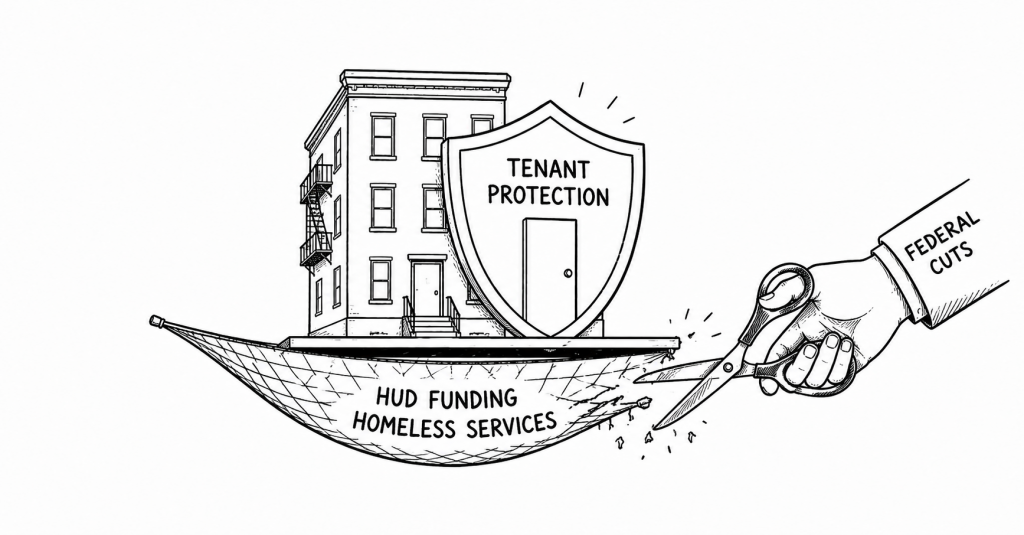
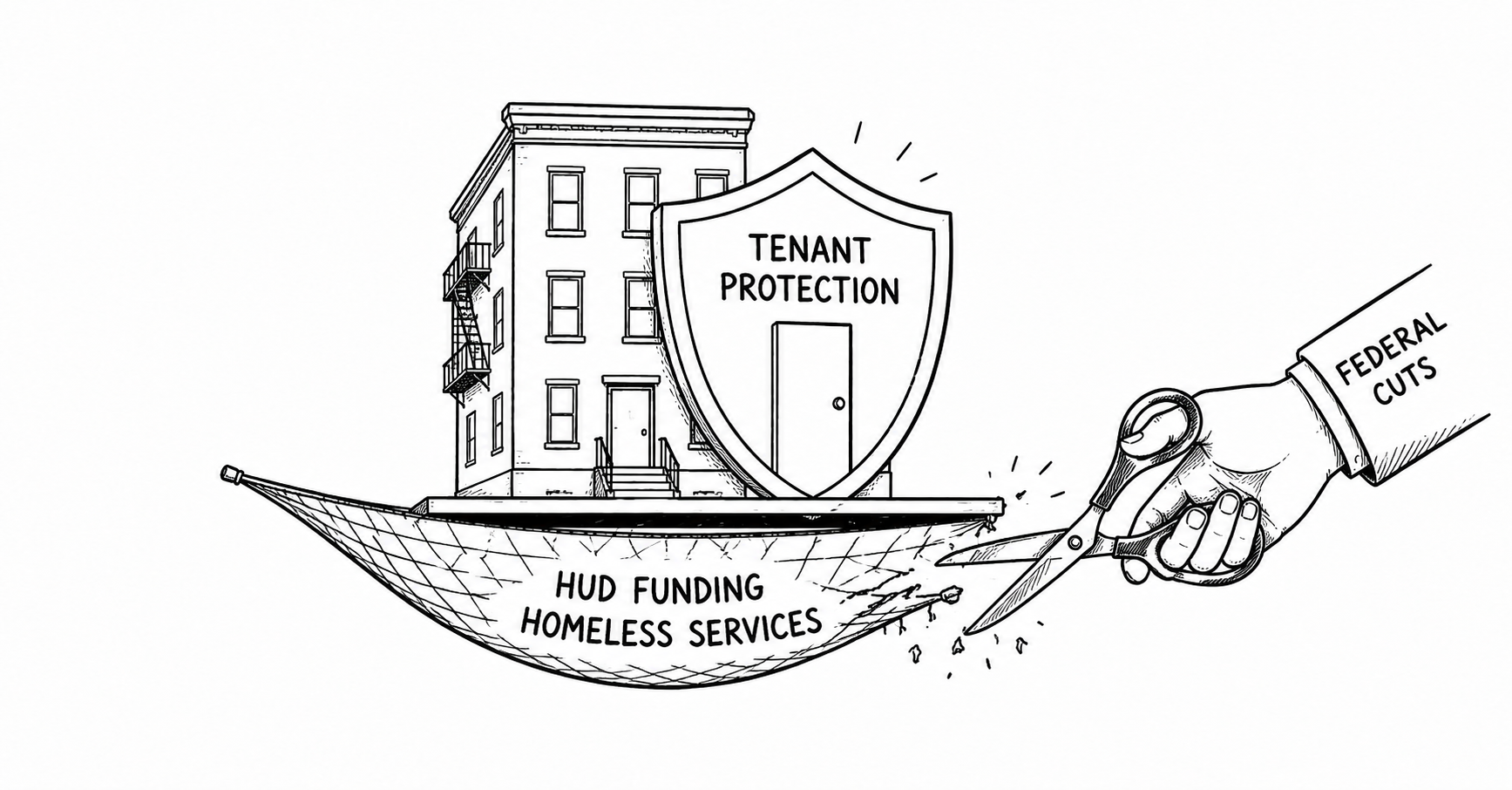
On March 5, 2026, New York City Council passed a Good Cause Eviction law. On April 9, the Mayor’s veto was overridden. On April 17, the law went into effect. The law prevents landlords from evicting tenants without good cause and from raising rents more than 3 percent annually unless specific conditions are met. It was a victory for housing justice advocates. It was supposed to be a significant constraint on landlord power in a city where rents had been accelerating beyond tenant wage growth for two decades. Within three months of the law taking effect, the federal government cut it off at the knees. On June 11, 2026, the U.S. Department of Housing and Urban Development announced that it would immediately suspend all funding to the Los Angeles Homeless Services Authority and LA Continuum of Care. The decision was framed as a response to mismanagement. What it actually signaled was that the federal government was willing to weaponize funding to punish housing-friendly policy. If you pass tenant protection laws, lose federal money. If you want federal money, reverse the laws. That is the message being sent.
This is the dynamic the good cause eviction law did not account for. Policy at the city level can be overridden by policy at the federal level. Tenant protection is meaningless if the housing system itself is being starved of federal funding. New York City passed the strongest tenant protection law in the country. But if the federal government is actively cutting homeless services funding, that protection does not matter for the people it was supposed to help the most. The homeless population still has nowhere to live. The funding to serve them is gone.
The timing is not coincidental. The HUD announcement came weeks after New York’s good cause eviction law took effect. The federal government did not wait to see if the law would work. It cut funding immediately. The message to other cities is explicit: pass tenant protection laws and you will lose federal funding for homeless services. The cities that comply with federal deference to landlord power will keep their funding. The cities that pass tenant protections will be punished. This is federalism as coercion.
New York City’s Right-to-Counsel program has been providing free legal services to tenants facing eviction. The program claims it can prevent evictions with proper legal representation. The data shows that tenants with legal counsel have much better outcomes than those without. The problem is that legal counsel does not help if evictions are happening faster than the counsel can process them. Median arrears at eviction filing is $4,587. Average one-shot payment needed to stay housed is $9,700. The council can provide legal defense. But if the tenant cannot pay the arrears, the eviction still happens.
When federal government cuts homeless services funding, it is saying it accepts that more people will become homeless. It is an active policy choice. Cities can pass all the tenant protection laws they want. But if the federal government is not funding the safety net for people who fall through, the protection is symbolic. The good cause eviction law is important. But it is also incomplete without housing subsidy for people who cannot afford any rent. The federal government is ensuring that subsidy does not exist. That is the real policy. The tenant protection law is the noise.