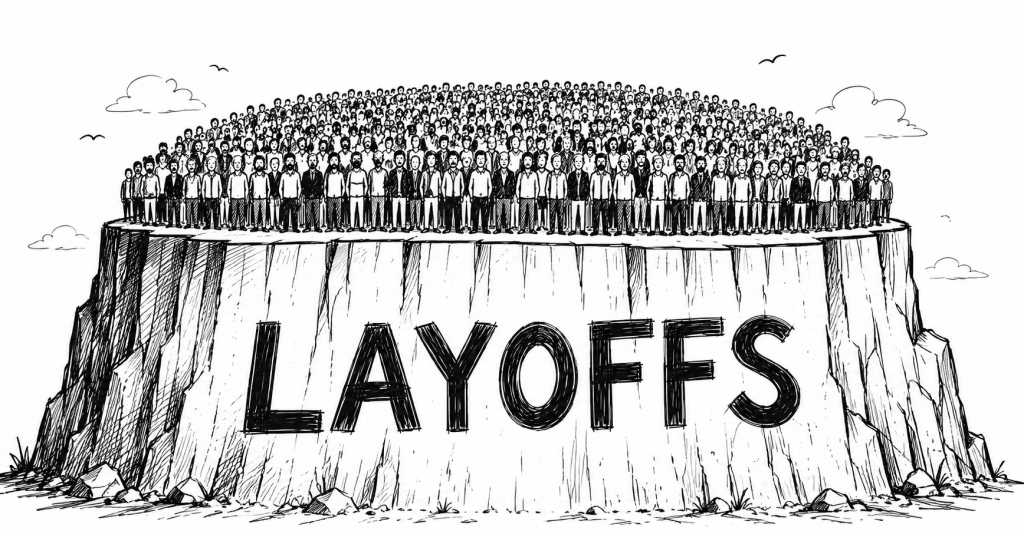
The BBC will cut 550 jobs across its news and content divisions, Reuters reported, as part of new director-general Matt Brittin’s plan to save £500 million over the next three years — the first phase of a downsizing that’s expected to eliminate 1,800 to 2,000 positions total. The cuts will close several long-running programs, including some Radio 4 shows and the Sunday edition of BBC Breakfast, merge production teams across Newsnight and Sunday with Laura Kuenssberg, and reduce senior leadership roles by at least 10%. Brittin, a former Google executive who took the role in May after his predecessor resigned over a Panorama documentary that spliced two of Trump’s January 6 remarks into what appeared to be a single statement, told staff in an internal note that “the scale of savings requires tough choices” and that the BBC is operating in “very uncertain times.”
Those cuts are landing at the exact moment the Reuters Institute’s 2026 Digital News Report, published the same week, documents the steepest erosion of news trust the report has measured since it began surveying in 2015. Trust in news overall has fallen to 37% globally, and for the first time, social media and video platforms have overtaken television and news organizations’ own websites as the most widely used source of news, now reaching 54% of audiences surveyed across 48 markets. More than half of 18-to-24-year-olds say social media, video, or AI chatbots are their main news source. Trust in news encountered on social media sits at 22%; trust in AI chatbot answers sits at 20% globally, though notably higher among people who already use them regularly, at 44%. The BBC’s own news services still reach 48% of UK audiences on television and radio and 45% online, among the highest trust figures of any outlet measured — which makes Brittin’s task less about chasing a smaller audience and more about whether a public broadcaster can hold onto institutional trust while cutting the staff that produces it.
That’s the tension sitting underneath this story: public media is being asked to stabilize trust at precisely the moment the economics that produce trustworthy reporting are deteriorating. The BBC’s funding has fallen 40% in real terms since 2010, and Brittin must negotiate an entirely new funding settlement before the broadcaster’s Royal Charter expires at the end of 2027, with options on the table ranging from keeping the license fee to moving toward subscriptions or advertising. Every one of those funding models pulls the BBC further from the universal, license-funded structure that’s historically insulated it from the platform incentives now reshaping the rest of the news industry — the same incentives that are pushing audiences toward sources research shows they trust less, not more. A newsroom can be reduced in size and still produce good journalism for a while. What’s harder to reduce and rebuild later is the institutional capacity — the duplicated verification, the senior editorial judgment, the slower accountability journalism — that’s precisely what cost-cutting tends to target first, and precisely what high-trust journalism depends on to stay high-trust. The BBC is betting it can cut its way to a sustainable structure before that capacity erodes enough for audiences to notice the difference. The Reuters data suggests the audience is already drifting toward sources that don’t require noticing at all.