The Subpoena Doesn’t Need a Conviction to Work
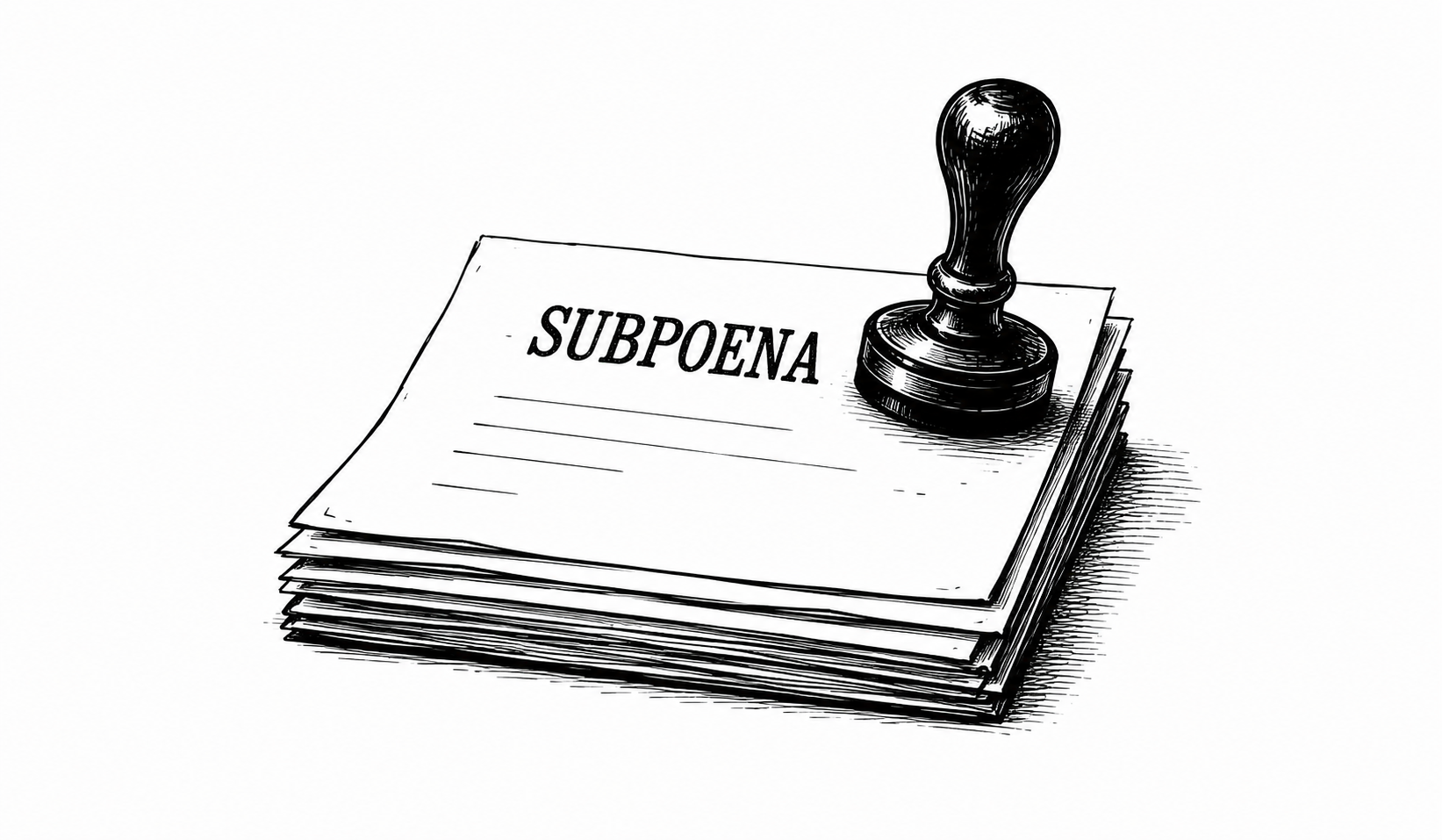
Four New York Times reporters were subpoenaed by a U.S. attorney days before his confirmation hearing to run national intelligence. The instrument is the message.

The Justice Department has subpoenaed four New York Times journalists — Julian Barnes, Eric Lipton, Tyler Pager, and Eric Schmitt — according to the Times’ own reporting. The subpoenas were issued by Jay Clayton, the U.S. attorney in Manhattan, whose confirmation hearing to serve as director of national intelligence is scheduled for Wednesday.
The reporters named are not incidental. Barnes and Schmitt cover national security and the military; Lipton covers government ethics and money; Pager covers the White House. These are the beats where journalism depends most completely on officials willing to describe what documents don’t show. A subpoena aimed at reporters on these beats is functionally aimed at their sources — the career officials, military officers, and civil servants who now must weigh whether a conversation with a journalist can be reconstructed by prosecutors.
A subpoena of this kind rarely needs to survive a court challenge to accomplish its work. The Times will fight it, press freedom organizations will condemn it — the Committee to Protect Journalists’ Jodie Ginsberg called it an extraordinary escalation — and the process will run for months. During those months, every potential source inside the national security apparatus recalibrates. The chilling effect is not a side effect of the instrument. It is the instrument.
Clayton issued the subpoenas while awaiting confirmation to run the intelligence community — the very institutions whose internal dissent most often reaches the public through the reporters he subpoenaed. A Senate that confirms him ratifies the sequence: demonstrate willingness to pursue journalists, then receive authority over the secrets journalists pursue.
Reporting on military operations, intelligence assessments, and government spending does not come from press releases. It comes from people taking professional risk to describe what their institutions won’t. Raise the price of that risk and the reporting thins — not visibly, not attributably, just fewer stories that anyone in power would have preferred unwritten. The cost lands on readers who will never know what didn’t reach them.
The Times’ lawyer called the subpoenas an attempt to keep the public from knowing what is happening in their country by intimidating journalists. Whether the courts agree may take a year to learn. The recalibration inside government sources’ heads happened last week.