
Why Should It Be Remarkable That a Company Solved a Real Problem While Making Profit? What Gilead and Merck’s HIV Pill Reveals About Institutional Choice
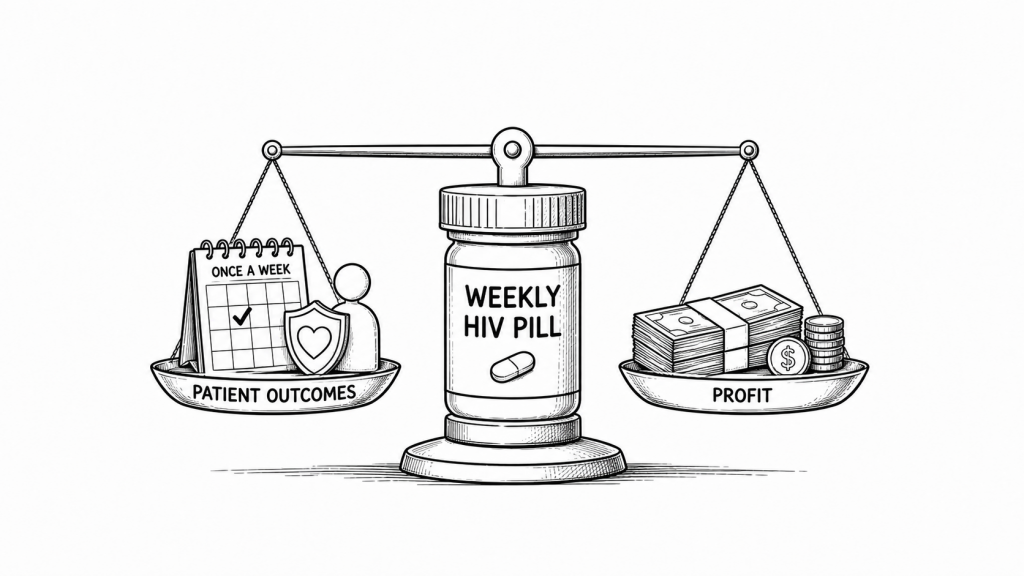
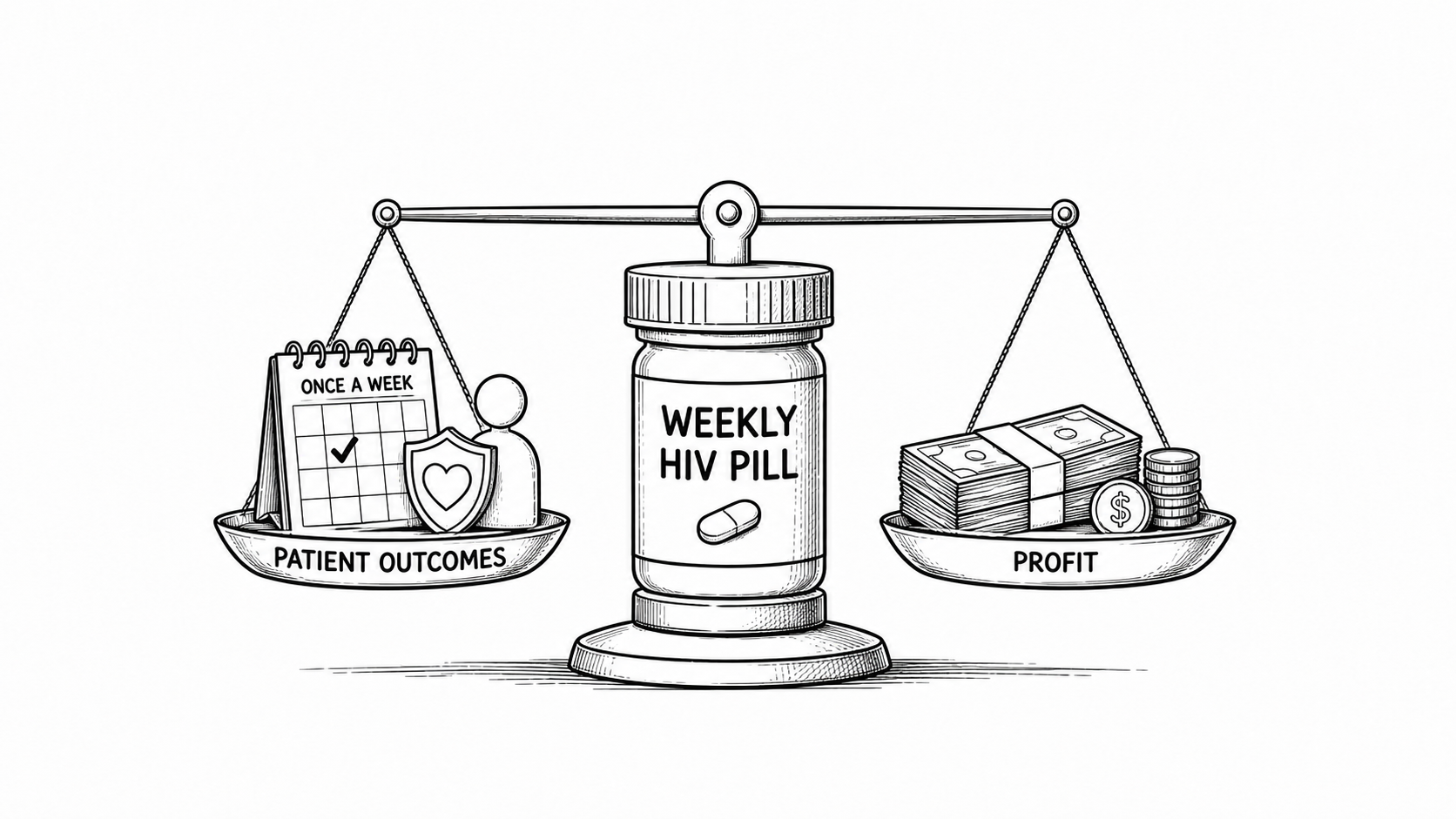
Phase 3 data shows that Gilead and Merck’s weekly HIV pill works, representing a major advance in treatment adherence and patient outcomes. This should be unremarkable news. A pharmaceutical company developed an innovation that solves a genuine medical problem. Patients benefit. The company profits. This is how the system is supposed to work.
But it’s remarkable precisely because most pharmaceutical companies don’t operate this way.
A weekly HIV pill is medically superior to daily regimens. Better adherence means better treatment outcomes. Patients who miss doses face treatment failure and drug resistance. Patients who remember one dose a week face dramatically better health trajectories. This is straightforward medicine. The innovation solves a real problem. And Gilead and Merckare making profit on it.
They could have made a different choice. They could have pursued the same strategy Eli Lilly is choosing with retatrutide: pursue biologic classification specifically to extend patent protection and maximize monopoly pricing for 15-20 years. This strategy works. It’s legal. It’s how modern pharmaceutical companies operate. Lilly is choosing to structure regulatory pathways for profit maximization rather than patient access.
Gilead and Merck looked at the same toolkit and made a different calculation. They developed a treatment that works better for patients and remains profitable. Not because they’re altruistic—profit is still the outcome. But because they calculated value differently. They decided that solving a real patient problem while maintaining profitability was the path to shareholder returns, not regulatory strategy.
Here’s what’s important: both companies had access to the same incentive structures. Both operate in the same market. Both face the same investor pressure. Both need to achieve profitability. Yet they made opposite choices about how to get there. Lilly optimized for extraction through regulatory strategy. Gilead and Merck optimized for solving problems that happen to remain profitable.
This reveals something structural about institutional choice. When companies argue they have no choice—that profit maximization requires cutting access, extending patents, or optimizing for shareholder extraction rather than patient outcomes—they’re not describing inevitability. They’re describing a choice they’ve made about what to optimize for. Gilead and Merck prove the alternative is available to everyone. Most companies choose differently.
What does that choice reveal? That institutional decisions aren’t driven by external market forces that leave no room for alternatives. They’re driven by internal calculations about what matters most. Lilly calculated that regulatory strategy matters most. Gilead and Merck calculated that solving a real problem profitably matters most. Both calculations were available to all three companies. Each chose based on institutional values, not market constraints.
The remarkable thing about the HIV pill isn’t that it works. It’s that it’s remarkable when a pharmaceutical company chooses to solve a real problem while remaining profitable. The remarkability reveals that most companies are making different choices—not because they have to, but because they’ve decided to prioritize something else.