The HIV Funding Cut Is Bigger Than $46 Million, and the Reason Is a Discount Program
Ariel Cohen reported for Roll Call on July 20 that the Office of Management and Budget informed the Centers for Disease Control and Prevention late the previous week that it will not renew 46 million dollars in funding for 96 community-based organizations providing HIV testing, linkage to care, referrals for pre-exposure and post-exposure drug treatment, and outbreak response. The figure that has circulated since is that 46 million dollars. It is the smallest of the numbers that matter here, and treating it as the size of the loss misreads how these organizations are financed.
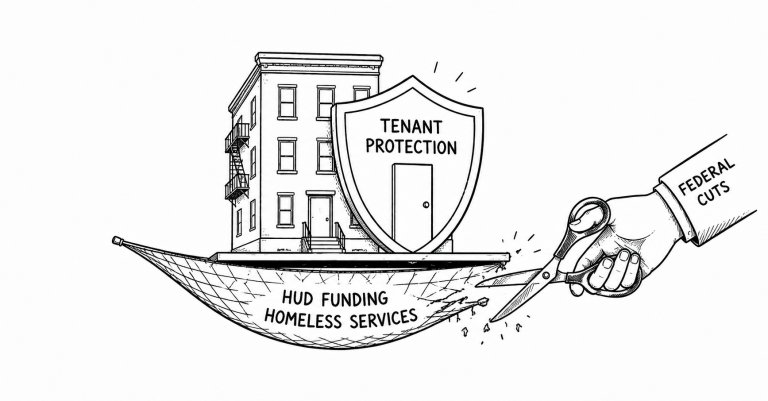
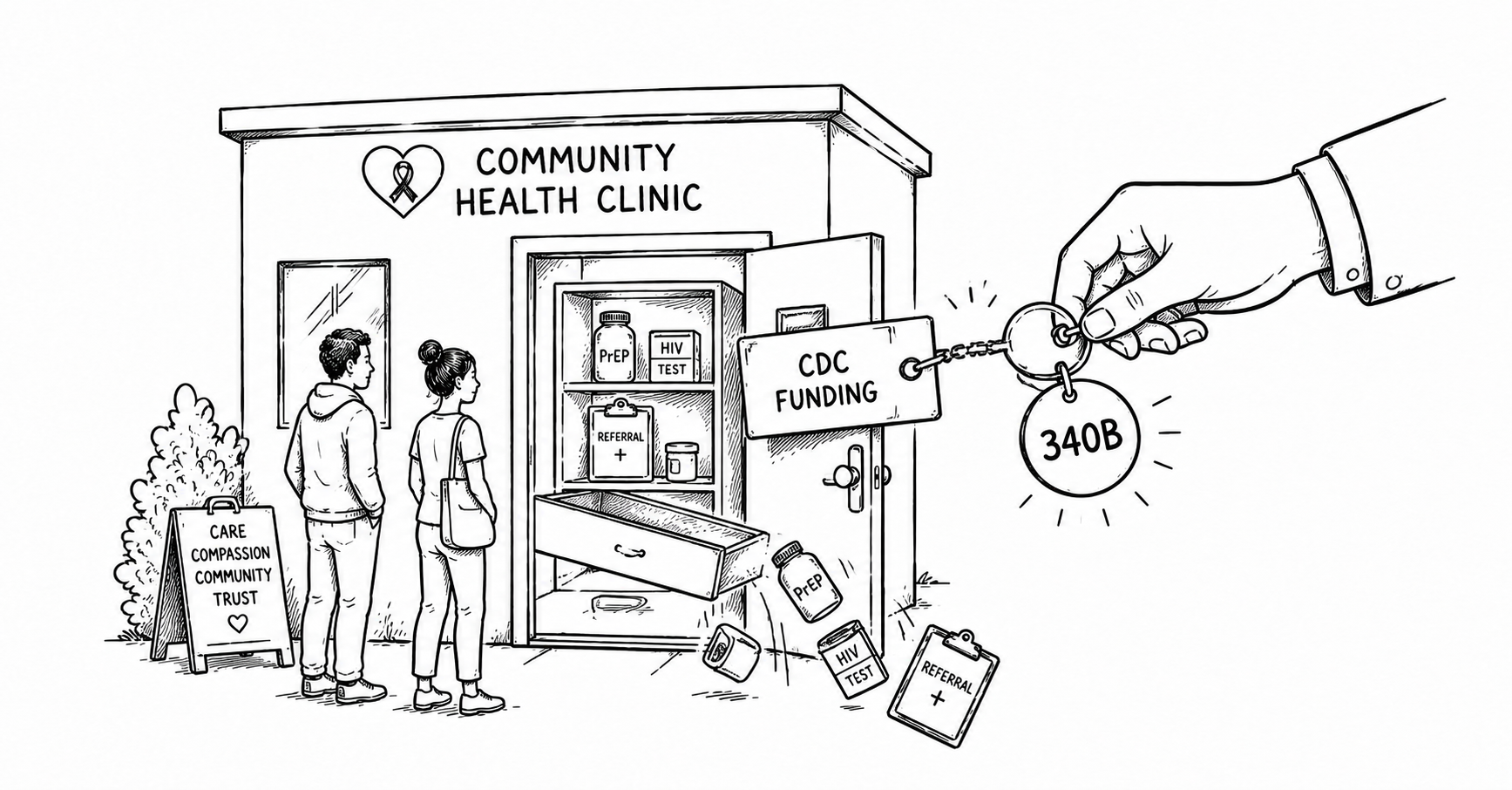
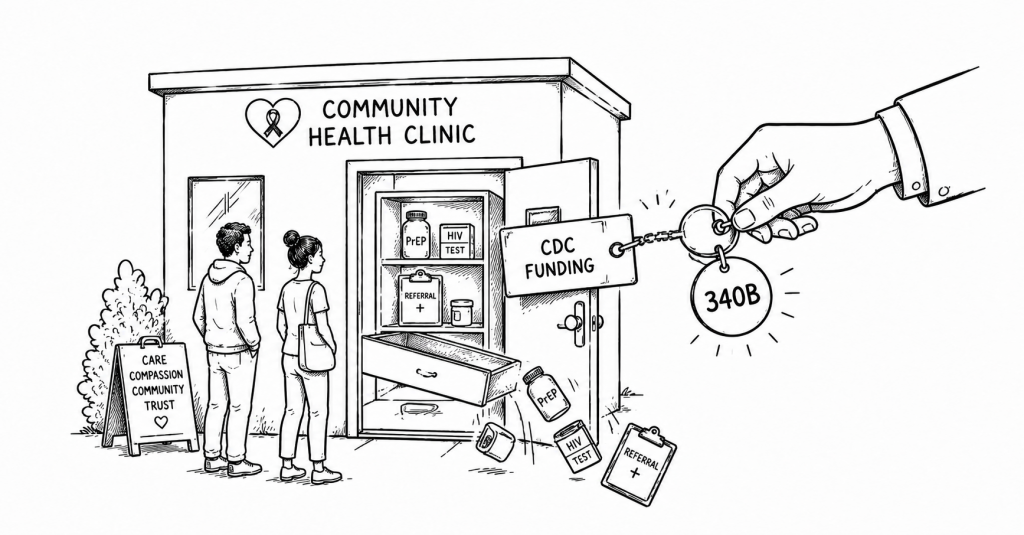
Cohen’s reporting includes the detail that explains the rest. When community-based organizations hold directly contracted federal funding, that contract makes them eligible to participate in the 340B drug discount program, which requires manufacturers to sell outpatient prescription drugs at reduced prices to qualifying health care organizations. The federal grant is not only revenue. It is the credential that unlocks discounted drug pricing, and the margin an organization earns on 340B purchases is what funds the services no grant covers.
So the loss compounds. An organization that loses its direct federal contract loses the grant, then loses 340B eligibility, then loses the pricing that made its pre-exposure prophylaxis program financially possible. The Buckeye Flame reported that PrEP is 99 percent effective at reducing the risk of acquiring HIV, and it is exactly the kind of ongoing medication whose cost structure determines whether a clinic can offer it at all. Withdrawing 46 million dollars in grants removes considerably more than 46 million dollars in capacity, and nothing in the announcement quantifies the difference.
The money is not disappearing. The Buckeye Flame reported it will be rerouted to local and state health departments. That reads like a transfer of administration rather than a cut, and in budget terms it is. In service terms it is a change in who does the work and therefore in who receives it. Community organizations built their reach through years of relationships with populations that have specific reasons not to walk into a government building and disclose their sexual history. A state health department can run a testing program. It cannot inherit twenty years of trust that a neighborhood organization earned by being something other than the state.
That distinction is the whole point of the program’s design. The cooperative agreement, known as PS21-2102 and titled Comprehensive High-Impact HIV Prevention Programs for Community-Based Organizations, exists because reaching people the health department was not reaching required organizations the health department was not. Gayety reported that advocates with the Save HIV Funding campaign raised alarms after word that the agreement would not be renewed, noting the grants had been temporarily extended through September after an original June 30 expiration.
The timing tells you something about how the decision was made. A program extended past its expiration by three months is a program whose future was already uncertain, and organizations operating on a short extension cannot hire, cannot sign leases, and cannot promise a client that the program will exist next spring. The instability itself does damage before any funding actually stops.
What makes the decision harder to read as budget discipline is that it runs against a goal the administration has claimed. Cohen noted the move directly contradicts the White House push to end the HIV epidemic by 2030, and characterized it as the latest step in an effort to eliminate funding for initiatives serving the LGBTQ community. Both things are in the record. The Ending the HIV Epidemic initiative was a first-term Trump accomplishment, and it survives in the FY2027 budget request at 220 million dollars while core CDC HIV prevention funding is eliminated.
KFF’s analysis of that request lays out the arithmetic. CDC has historically accounted for about 91 percent of federal spending on domestic HIV prevention. The request would cut roughly 794 million dollars, a 78 percent reduction from the FY26 level of about 1 billion dollars, and eliminate the division entirely while preserving the geographically targeted initiative and moving it to the Administration for a Healthy America. The House fiscal 2027 Labor-HHS-Education bill matches the request, according to Roll Call.
The design of what survives is the thing to notice. Ending the HIV Epidemic focuses on 57 distinct geographic areas. Nationwide surveillance, testing, education, and outreach is what gets removed. Keeping the targeted program and eliminating the general one produces a prevention system that works where the epidemic was already concentrated enough to attract designation, and does not operate where transmission is rising but has not yet registered. Prevention that only reaches identified hot spots is a system that responds after the surveillance it just defunded would have told it where to go.
The economic case cuts the other direction from the budget case. The Save HIV Funding campaign estimates that every dollar spent on prevention saves between three and seven dollars in future health care costs by averting infections that would otherwise require lifetime treatment. More than 1.2 million Americans live with HIV, more than 500,000 rely on the Ryan White program for medication and care, and Medicaid covers roughly 40 percent of people living with HIV in the United States. A prevention cut does not remove the cost. It defers it into Medicaid and Ryan White at several times the price, on a delay long enough that the savings and the expense land in different budget cycles and get attributed to different decisions.
Advocacy groups have asked Health and Human Services Secretary Robert F. Kennedy Jr. and acting CDC Director Jay Bhattacharya to reverse the decision and fund the program, Roll Call reported. Whether that happens is a question about September, when the temporary extension runs out.
Expect the first measurable effect to appear in testing volume rather than in infection counts. Diagnoses are the lagging number, arriving years after transmission, which means the data that would prove this decision costly will not exist until well past the point where restoring the funding could prevent what it caused. That gap is not a flaw in how the decision was made. It is what makes the decision survivable.