Nigeria Raised Military Pay by 80 Percent. Security Spending Is Becoming Labor Policy.
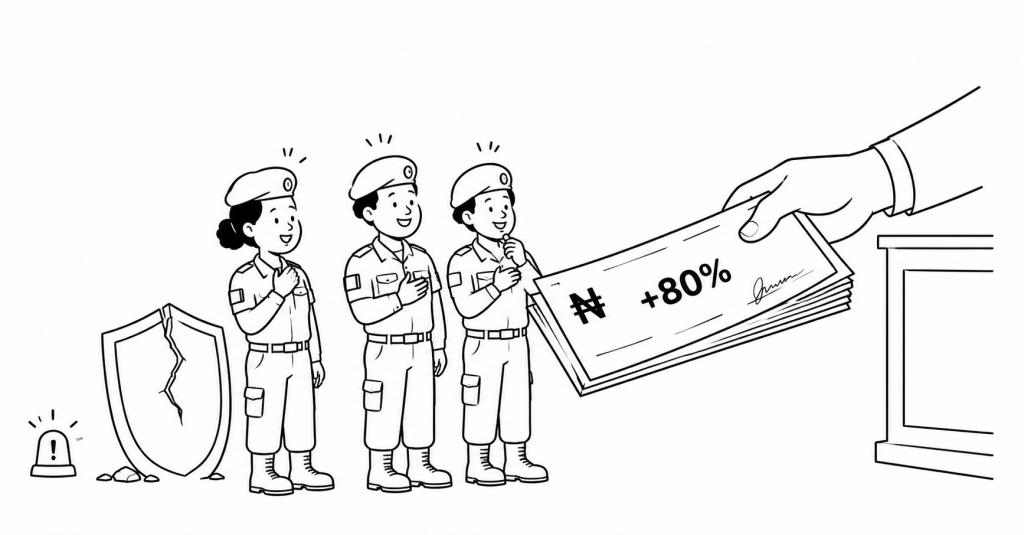
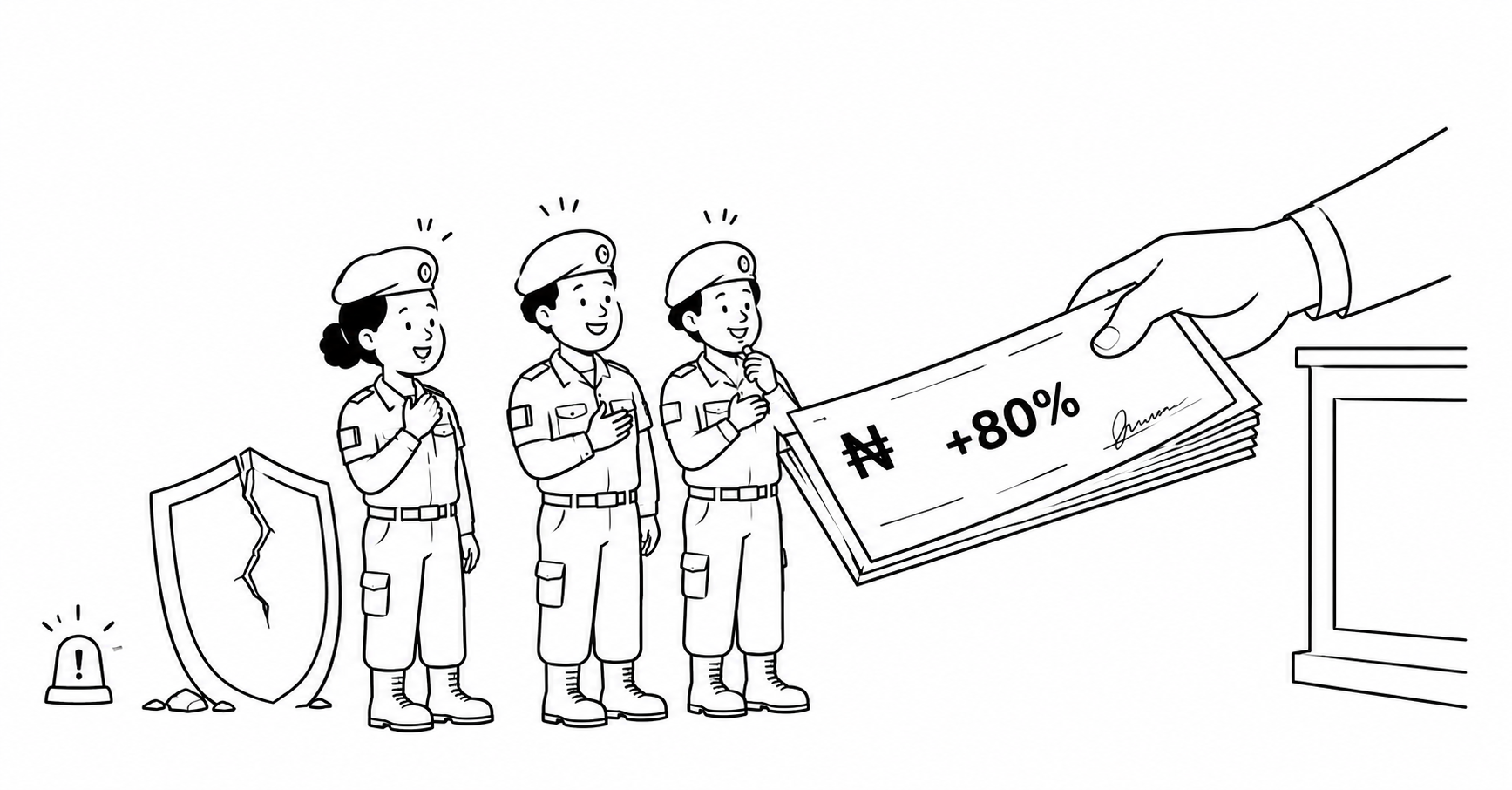
Nigeria approved military salary increases of up to 80 percent this year, with the largest gains directed at lower-ranking personnel — the soldiers most likely to desert, most likely to defect, and most likely to be recruited by the armed groups they are being paid to fight. The annual military wage bill rises from 660 billion naira to 924 billion naira as the country continues confronting insurgency in the northeast, mass kidnapping and banditry in the northwest, and separatist violence in the southeast. The pay increase is the largest single adjustment to military compensation in recent Nigerian history. It is also, in the most honest reading of the policy, a labor intervention dressed in security language — and the distinction matters for what it can and cannot fix.
The case for higher military compensation in Nigeria is not difficult to make. Lower-ranking soldiers have operated for years under conditions that combine physical danger, inadequate equipment, and wages that did not compete with civilian alternatives — or with the payments armed groups have used to recruit from within the same population the military draws from. Desertion has been a documented problem. Morale failures have contributed to tactical losses in the northeast, where Boko Haram and ISWAP have fought the military to a sustained stalemate across more than fifteen years of conflict. When soldiers calculate the ratio of personal risk to personal reward and find it unfavorable, compensation policy is the most direct lever a government can pull. President Bola Tinubu’s administration pulled it.
What a pay raise cannot do is address the reasons Nigeria’s security institutions have struggled beyond the recruitment and morale problems it directly targets. The country’s counter-insurgency failures are not primarily wage failures. They are failures of accountability, logistics, command coherence, and the political conditions that make armed groups viable in the first place. Soldiers in the northeast have operated with equipment shortages that no salary adjustment resolves. The military has also faced credible and documented accusations of human rights abuses against civilian populations in conflict zones — abuses that have complicated the civilian trust required to make counter-insurgency effective. A soldier earning more does not become more accountable through the raise. The institutional conditions that produced the accountability failures remain in place.
This is the pattern that Nigeria’s decision exposes at a broader scale. Governments confronting institutional instability in their security forces increasingly reach for compensation policy as the first response because it is legible, budgetable, and politically communicable in a way that command reform, accountability mechanisms, and equipment overhaul are not. A pay increase has a number attached to it. Institutional reform does not produce a press release with the same clarity. The result is that governments tend to do the thing that is measurable — raise wages — while the things that are harder to measure and harder to announce continue to go unaddressed. Nigeria is not unique in this. It is a particularly visible example of a pattern that runs through military and police institutions across the continent and beyond: compensation as the available substitute for the reform that hasn’t happened.
The 264 billion naira increase in the annual wage bill also arrives inside a broader fiscal environment that deserves attention. Nigeria is managing debt servicing costs that have consumed a significant share of government revenue, implementing fuel subsidy removal that has driven up costs for ordinary Nigerians, and navigating inflation that has reduced the real value of wages across the economy. The military pay increase is partly a political signal — to the armed forces, to the public, and to the international partners watching whether the Tinubu administration can stabilize institutions that have shown visible strain. Signals are not nothing. They shape behavior and they shape expectations.
What to watch is whether the compensation increase produces measurable changes in desertion rates, recruitment numbers, and operational performance in the northeast and northwest — and whether those changes, if they come, prompt the harder institutional investments that wages alone cannot deliver. Higher pay can restore the will to serve. It cannot, by itself, restore the conditions that make service effective.