
Texas Republicans Are Turning Gender Identity Into a School Employment Rule
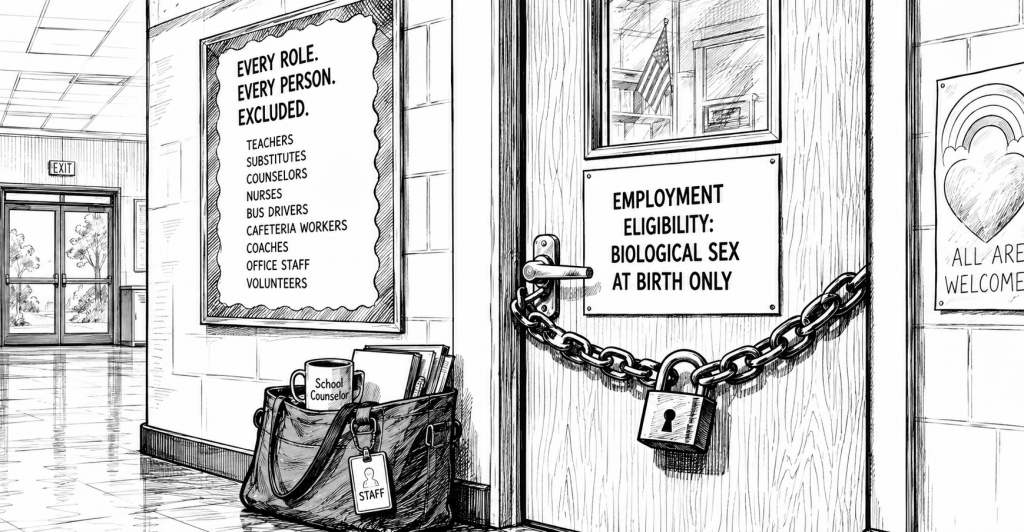
The Texas Republican Party held its biennial convention at Houston’s George R. Brown Convention Center last month and produced a platform that Gwen Howerton reported for Chron on June 25 includes a prohibition on transgender people serving in any school district position — teachers, substitutes, counselors, nurses, bus drivers, cafeteria workers, coaches, office staff, or volunteers. The platform also mandates pronouns tied to biological sex at birth, extends restrictions on gender-affirming care to age 26, and calls for criminal prosecution of parents of transgender youth under child abuse statutes.
A party platform is not a law. It is a pressure document. In Texas, that distinction matters less than it does in most states — several provisions from previous convention cycles have already moved from platform language into legislation, agency action, and school board policy. The document functions as a legislative agenda drafted in advance, and the timeline from plank to bill in Texas has shortened over the past decade as the ideological alignment between the party’s base, its legislative caucus, and statewide elected officials has tightened.
The employment provision is the sharpest escalation in the platform. Previous fights over schools centered on curriculum — what could be taught, which books could be shelved, which language could be used in the classroom. Banning a category of person from the workforce is a different move. It does not regulate behavior inside the school. It regulates existence at the hiring stage. A district that implements this language has to determine how to identify transgender workers, process complaints, protect privacy, and manage the legal exposure from federal civil rights claims — bureaucratic infrastructure that would fall entirely on local administrators to build and defend.
The platform targets private employers as well, calling for the removal of laws that require businesses to accommodate transgender employees and prohibiting businesses from expressing support for transgender people. Taken together, the platform proposes that a person’s gender identity determine their eligibility for public employment, private employment, and participation in commercial life. That is not a school safety argument. It is an eligibility argument — and the distinction is worth naming directly because the legislative framing almost never does.
Texas already bars gender-affirming care for minors. The 2026 platform extends that bar to age 26 and adds criminal prosecution of families. A federal judge issued a preliminary injunction in February 2026 blocking portions of SB 12 from enforcement in Houston ISD, Plano ISD, and Katy ISD while litigation continues. The legal constraint has not slowed the legislative ambition. Power moved toward state party discipline and away from local districts, individual employers, and the families the provisions most directly affect — and in Texas, the distance between platform language and enforceable law has never been shorter.