The World Cup Is Exposing the Service Economy Behind American Welcome
Fans are praising U.S. hospitality, but the tournament is also testing heat, transit, customer service, and the public systems that make enjoyment possible.
The Guardian’s Heather Timmons reported Saturday that hundreds of U.S. readers described customer service in 2026 as a source of financial and emotional exhaustion, with automated bots repeatedly blocking access to real help. A day later, Reuters reporters William Schomberg and Karolos Grohmann described Scotland fans leaving Boston after a World Cup visit that filled bars, lifted local sales, and left many visitors praising the American welcome. In Houston, Naina Srivastava and Kathleen Ortiz of the Houston Chronicle reported that Swedish fans marched through muggy streets, celebrated Midsummer, ate brisket, and tested the city’s hospitality under a heat advisory.
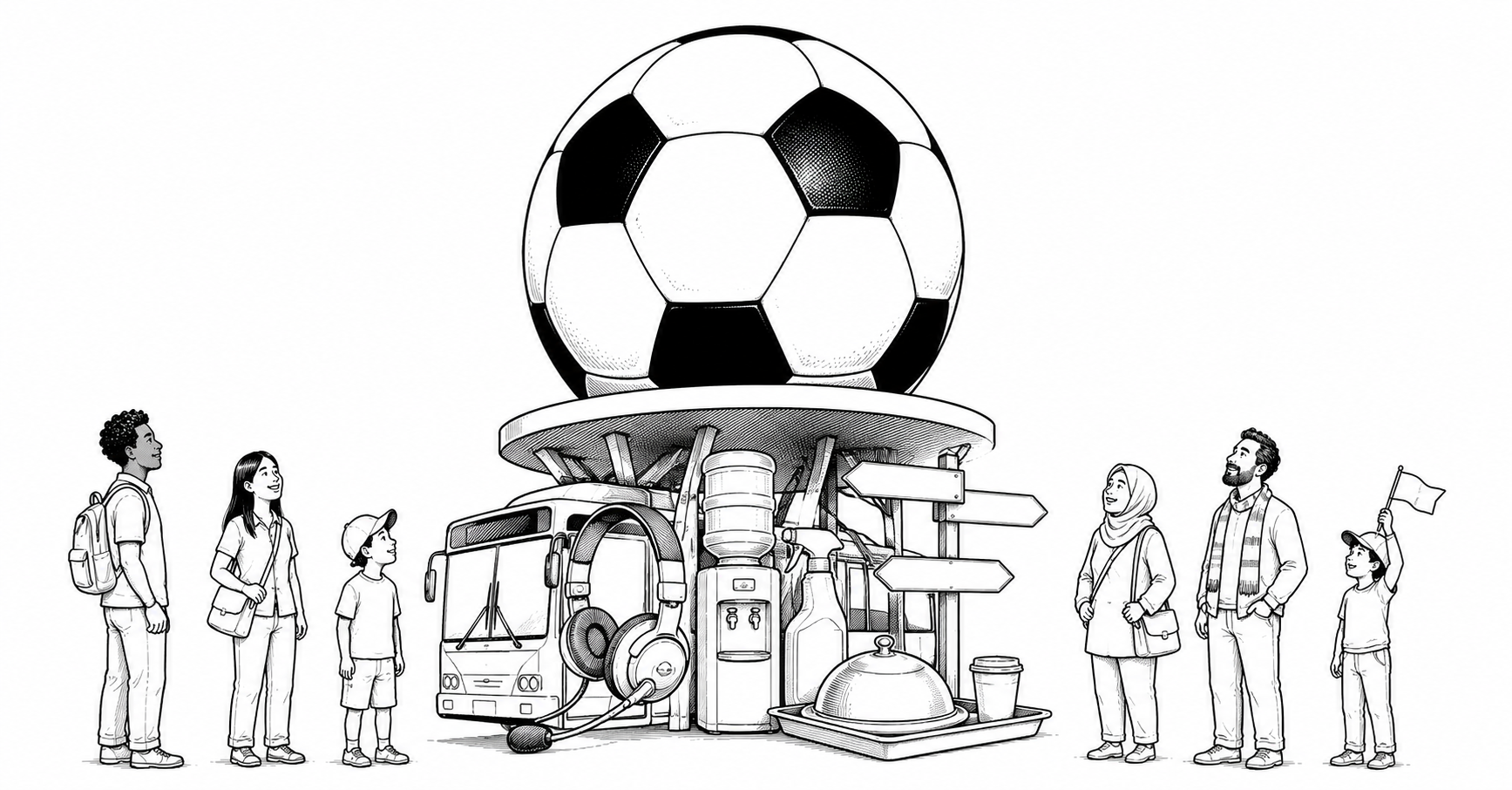
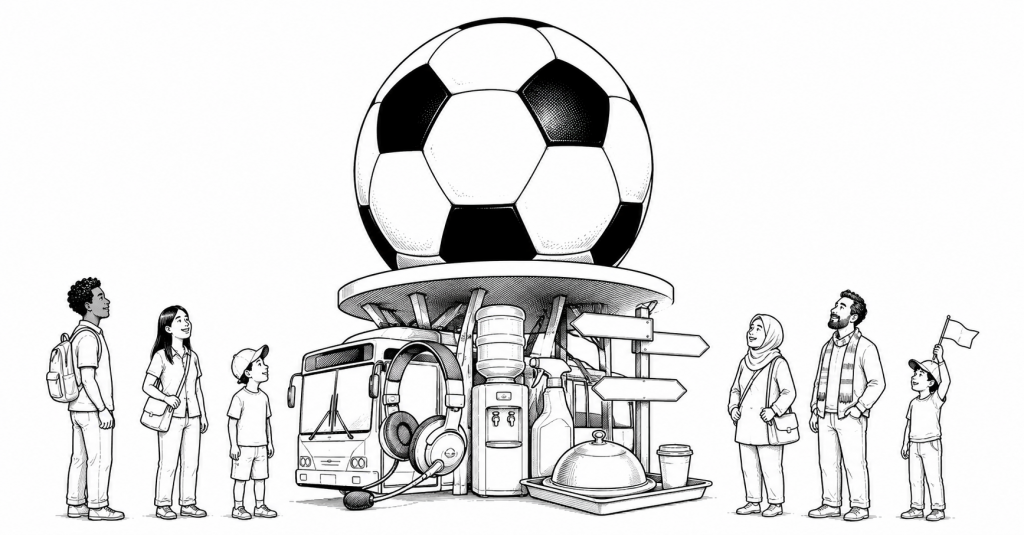
The mechanism tying these stories together is service capacity. The World Cup sells spectacle, but the experience depends on systems that rarely get treated as the main event: transit, water, shade, staffing, customer service, payment systems, policing, airport flow, signage, food service, and the ability to reach an actual human when something breaks.
That is where the contradiction sits. The United States is being praised by visiting fans for warmth and openness at the same time American consumers are describing daily commercial life as a maze of bots, delays, broken escalation paths, and companies optimized to avoid human contact. The country can still perform hospitality in moments of civic pride. It struggles to deliver care in ordinary transactions.
Timmons reported that Guardian readers from across the U.S. described battles with big companies that imposed time, expense, and emotional strain. Automated chatbots were a recurring complaint, with roughly one in 10 reader responses calling out bots as endless loops and barriers to resolving product problems or fraud claims. The frustration was not only that the systems felt impersonal. Readers said they often did not work for anything beyond basic tasks.
The World Cup shows the other side of the service economy: what happens when cities have an incentive to make visitors feel cared for. In Boston, Reuters reported that tens of thousands of Scotland fans filled the city for the country’s return to the World Cup after 28 years, packing bars and creating a surge for local businesses. Castle Island Brewing Co. said sales of its beer at the Cheers bar were 75% higher than the same period last year, and Meet Boston said some bar staff were receiving tips totaling almost $1,000 a day.
Houston’s version of the same story was shaped by climate. The Chronicle reported that thousands of Swedish fans marched from Helix Park toward NRG Stadium wearing yellow and blue, flower crowns, flags, and cowboy hats. A heat advisory remained in effect, and fans used cold water bottles and ice cubes to cool themselves while fire trucks sprayed water and Metro buses provided air conditioning along the route. About 600 Swedes packed Pitch 25 the day before to celebrate Midsummer.
The incentive is clear. During a global event, cities know the visitor experience becomes reputational infrastructure. A bar worker, bus driver, police officer, volunteer, server, hotel clerk, or transit staffer becomes part of the national image. Hospitality stops being a private transaction and becomes public diplomacy.
But that model has limits. A global sports event can concentrate attention and resources for a few weeks. Ordinary consumers do not get that level of institutional urgency. They get chatbots, outsourced call centers, broken apps, and support systems designed to reduce cost by making people give up.
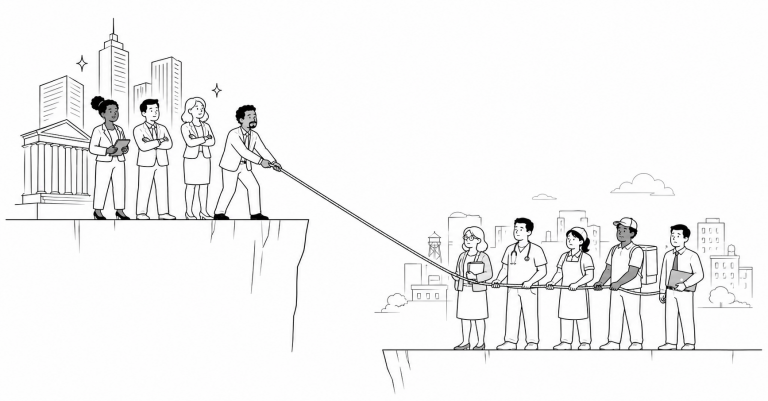
Power moved in two directions. In the tournament economy, visitors temporarily gain attention because cities and businesses want their money, their images, and their approval. In the everyday consumer economy, companies retain power by controlling the path to resolution and making customers spend their own time to recover value they already paid for.
The World Cup will leave behind highlight reels of crowd joy, local flavor, and American welcome. The harder test comes after the visitors leave, when the same service systems return to ordinary users who cannot trigger a civic mobilization just to get someone on the phone.