
New Orleans’ Affordable Housing Shortage Has Grown 40 Percent Since 2015. Its Eviction Rate Is Nearly Double the National Average.

New Orleans has a shortage of more than 47,000 affordable housing units in 2026, up from 33,600 in 2015 — a 40% increase over a decade, according to data compiled by PBS NewsHour, Eviction Lab, and the Jane Place Neighborhood Sustainability Initiative. The city’s eviction rate is nearly double the national average. More than half of New Orleans residents rent. Nearly a quarter live below the poverty line. Federal housing subsidies that have underwritten the affordable units that do exist are expiring on schedules set years ago, and the replacement pipeline is not keeping pace with the expirations.
The 40% shortage growth figure requires context. New Orleans lost significant affordable housing stock to Hurricane Katrina in 2005 and then again to the subsequent redevelopment that followed — a process that, in many cases, replaced public housing with mixed-income developments that included fewer deeply affordable units than the public housing stock they replaced. The city has been operating with a structural housing deficit for nearly twenty years. What the 2026 numbers show is that the deficit is not shrinking. It is growing, even in a period of relative economic stability, because the rate of affordable housing loss — through expiring subsidies, conversion to market-rate use, and deterioration — exceeds the rate of new affordable production.
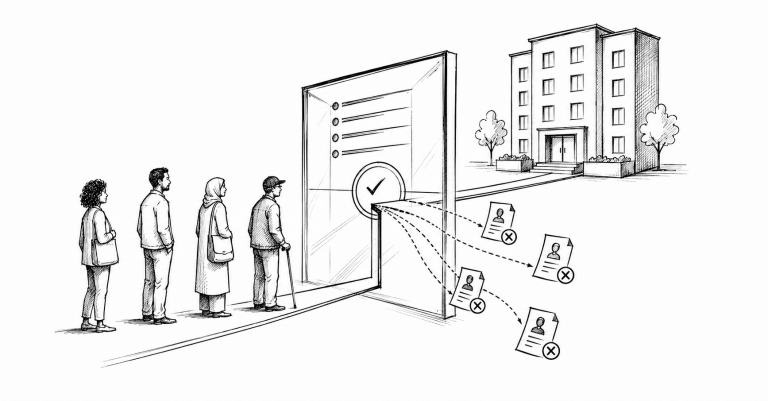
The eviction rate is the visible consequence of that math. When affordable units disappear faster than they are replaced, the households that depend on them must find alternatives in a market that does not have them. Some double up with family or friends. Some move to cheaper outer neighborhoods where transit access and employment proximity are worse. Some cannot find stable alternatives and are evicted when their rent rises faster than their income. New Orleans’ eviction rate reflects the distribution of those outcomes across a city where the renter majority has limited legal protection, limited access to free legal representation, and limited affordable alternatives when eviction proceedings begin.
The expiring federal subsidies represent the next phase of the shortage. Section 8 project-based vouchers and Low Income Housing Tax Credit properties both carry regulatory agreements that expire on fixed timelines. When those agreements expire, property owners are no longer bound to maintain affordability restrictions. Some renew — but many convert to market-rate use, particularly in neighborhoods where land values have risen enough to make market-rate operation significantly more profitable. New Orleans has multiple properties approaching expiration in the coming years, and the city’s capacity to preserve affordability at expiration depends on resources it does not currently have at scale.
The city also has an eviction infrastructure problem: the New Orleans housing court processes evictions efficiently. The system for preventing evictions — through emergency rental assistance, tenant legal representation, and early intervention — does not operate at comparable scale. The asymmetry produces predictable outcomes: evictions proceed faster than the support systems designed to prevent them can respond. The double the national average number reflects this asymmetry more than it reflects any particular characteristic of New Orleans tenants.
What New Orleans is running out of is not just affordable units. It is the accumulated reserve of subsidized affordability that has allowed a low-income majority-renter city to function as a place where low-income people could live. The floor is not disappearing all at once. It is going unit by unit, subsidy expiration by subsidy expiration.