FAMU’s Revived $2 Billion Underfunding Lawsuit Against Florida Is Bigger Than One School
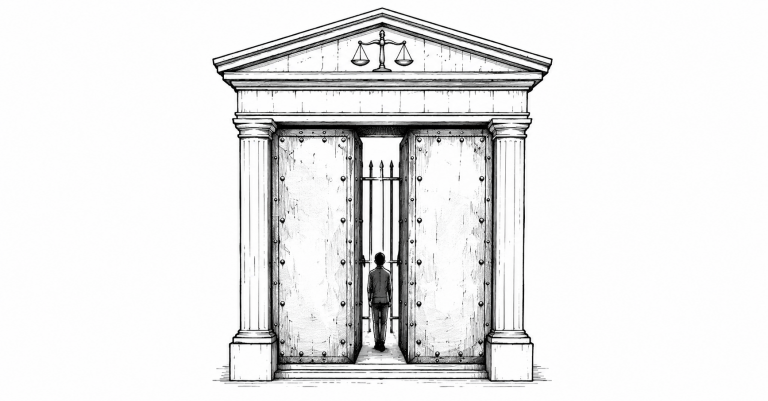
A federal court just decided a decades-old segregation funding claim deserves a real hearing, not an early dismissal. The U.S. Court of Appeals for the Eleventh Circuit revived a lawsuit this month alleging Florida underfunded Florida A&M University by nearly $2 billion over the past three decades. HBCU Gameday reported that in a split decision , the court ruled a lower court acted too quickly when it dismissed claims that the state failed to fully eliminate the lingering effects of segregation in its higher education system. The ruling does not determine whether Florida actually discriminated against FAMU; it only reopens the question for further litigation.
That distinction matters. This isn’t a finding of guilt. It’s a finding that FAMU’s underlying claim deserves a real hearing. The state disputes the premise entirely: when the U.S. Department of Education flagged a $1.97 billion funding gap in a 2023 letter, the Florida State University System countered that FAMU’s operational funding had actually increased 37.6% under Governor Ron DeSantis, with System Chancellor Ray Rodrigues calling FAMU “the no. 1 public HBCU in the nation” and pointing to “unprecedented state investments” in faculty, classrooms, and housing. Both claims can be true at once — recent funding increases and a multi-decade structural gap operate on different timelines.
The mechanism behind the lawsuit has implications well beyond Florida. Nearly every Southern state ran a parallel public university system before integration, funding the Black public institution at a fraction of its white counterpart. The legal theory FAMU is now allowed to pursue is that those funding gaps were never actually closed; they were inherited, generation after generation, by the institution and the students it serves. Maryland already settled a comparable claim in 2021, agreeing to pay $577 million to its four HBCUs after a 15-year legal fight over identical underlying allegations.
If FAMU’s argument succeeds, it becomes a template other HBCUs in other states can point to, not as binding precedent outside the Eleventh Circuit, but as a roadmap for what a successful underfunding claim looks like in court. One university’s lawsuit just became a live test of whether decades-old segregation-era funding gaps are still legally actionable today, and how many other state HBCU systems are sitting on the same unresolved math.