Ice Cream Is On The Rise
Ice cream prices at scoop shops have risen more than 35% since 2019, Bloomberg Businessweek reported June 15, the product of what the piece called a “perfect storm” — pandemic-era supply disruption, tariffs, and social-media-driven premiumization all compounding at once.
Ingredient costs have surged alongside it: egg prices alone rose roughly 600% between 2020 and 2025. Food economist David Ortega told Bloomberg that ice cream, as a discretionary purchase, “may get cut when budgets get tight” — meaning the category most exposed to this summer’s price pressure is also the one consumers can most easily walk away from.
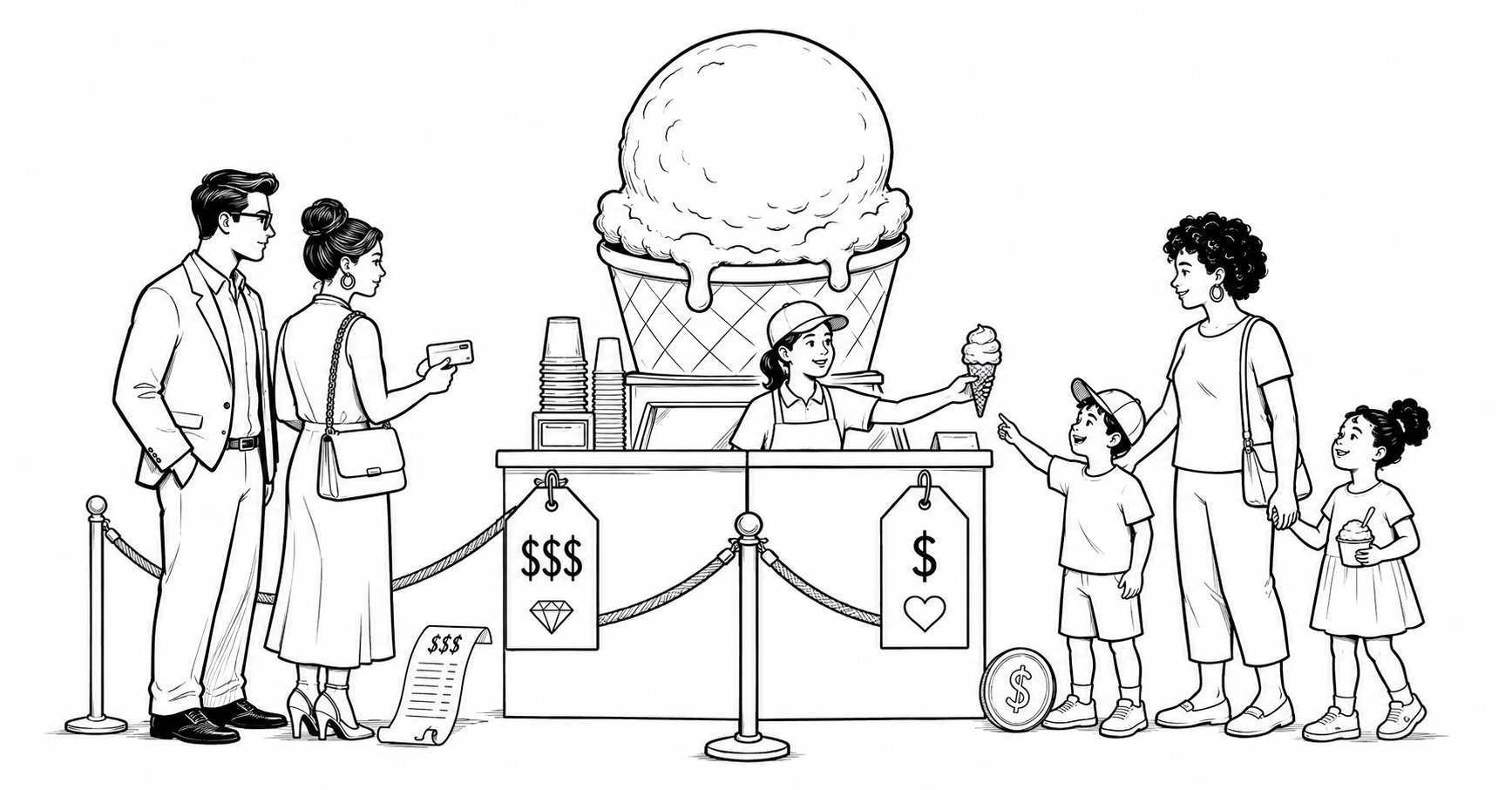
That exposure is producing two different responses from shop owners, and the difference is the actual story. Some shops have passed the full cost increase through to the cone, treating $7 or $8 as the new baseline price a customer should expect. Others are holding the line deliberately. Millie’s Ice Cream owner Chad Townsend has kept a single scoop frozen at $6 for two consecutive years, telling Bloomberg, “It still needs to be a family experience. Where guests can come in and have a great time, and not feel like they’re getting robbed.” That’s not a business absorbing costs by accident. It’s a pricing decision built around what the product is supposed to mean to the people buying it — treating the $6 scoop as the thing the business sells, with everything else, including margin, negotiable around it.
The reaction to Bloomberg’s reporting tracked the same split. One commenter called ice cream’s shift “an infuriating” move from “an everyday, affordable source of joy” into “a luxury good” — a complaint about category drift, not just price. Townsend’s own family used the coverage to make the opposite point explicitly: that holding a price isn’t incidental to the brand, it’s the brand. Both reactions are responding to the same underlying mechanism. When an entire product category’s input costs rise simultaneously, every business in that category faces the same choice Townsend and the price-raising shops made differently — pass the cost to the customer and protect margin, or hold the price and accept a thinner one, betting that the relationship with the customer is worth more than the difference.
What that choice actually tests is which kind of value a scoop shop is selling. A shop that raises prices to $8 is pricing ice cream as the product itself — a frozen, dairy-based good subject to the same input costs as any other manufactured item, passed through transparently. A shop holding at $6 is pricing the experience around the product — the birthday visit, the after-Little-League stop, the predictable treat a family can afford weekly rather than as a rare splurge — and treating margin compression as the cost of keeping that experience intact. Neither bet is obviously right. The shops passing costs through are protecting the business that has to survive long enough to serve anyone. The shops holding the line are betting that what they’re actually selling was never really the ice cream.