India Confronts Its AI Dependency Gap After U.S. Export Suspension
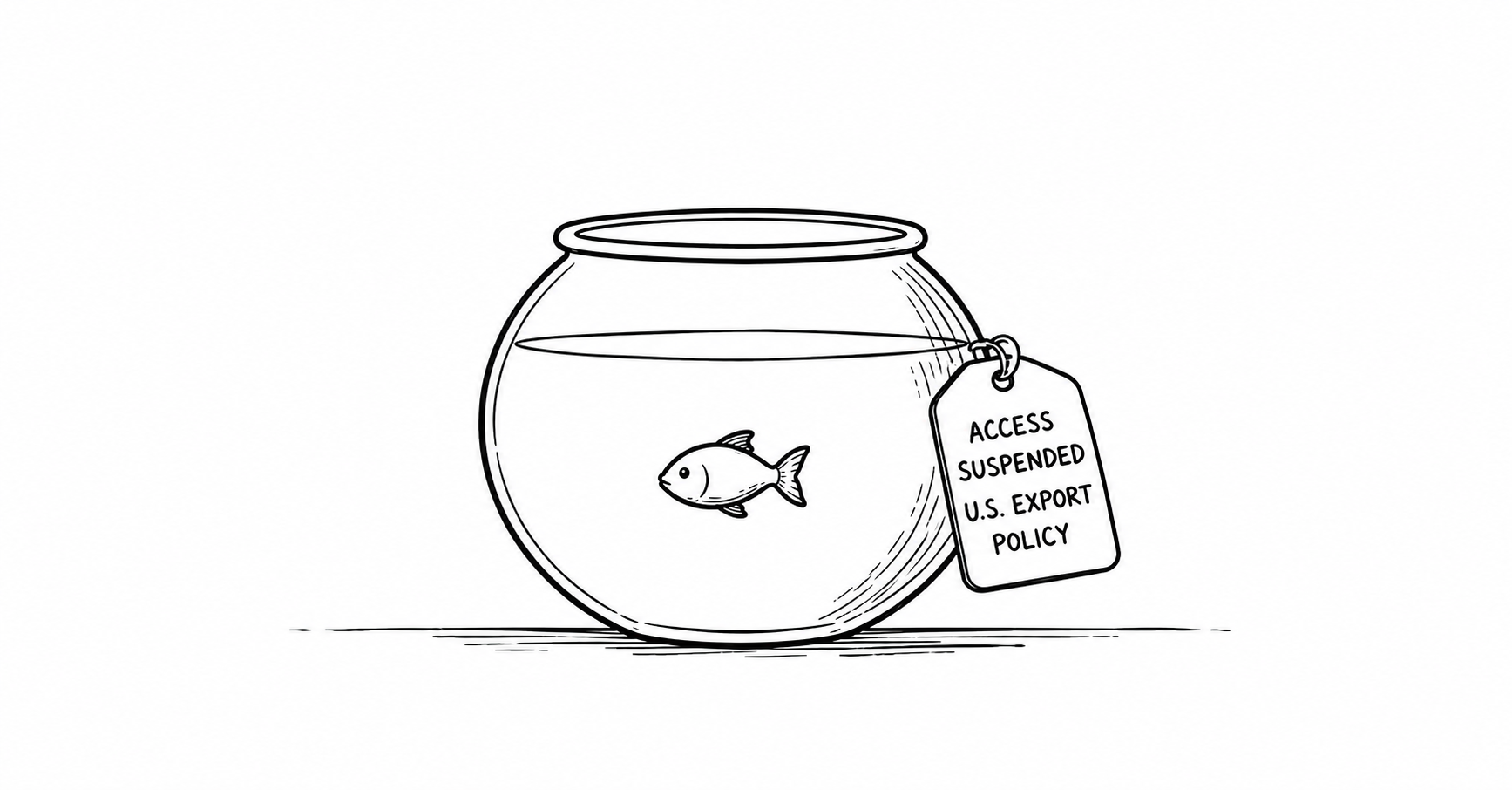
The U.S. government’s decision to suspend foreign national access to Anthropic’s Fable 5 and Mythos 5 models, on national security grounds, landed as a direct policy signal to every country that depends on American AI labs without owning frontier capability of its own. India is one of the largest such countries, and the suspension has sharpened a debate inside Indian policy circles about what that dependency actually costs.
The scale of the gap is not close. India spends roughly 0.6% of GDP on research and development, with the private sector responsible for about a third of that. OpenAI alone has projected $50 billion in compute spending this year, more than six times India’s total annual private R&D spend across every sector combined. Against that gap, a strategy built on India simply outspending its way to frontier AI capability isn’t realistic on any near-term timeline. India’s technology and app companies still need to use the best available foreign models to remain globally competitive, which means the dependency the export suspension just exposed isn’t optional in the short run. It’s the current operating condition of the entire sector.
The policy response taking shape in Indian commentary, including a Hindu op-ed making the rounds in policy circles this week, doesn’t try to resolve that tension by rejecting foreign AI. It tries to resolve it by treating the dependency itself as a risk category the state should manage, rather than a market condition individual firms are left to absorb on their own. The proposed mechanism borrows directly from an existing tool: export credit insurance, which governments have long used to protect firms engaged in international trade against risks, currency shocks, political instability, counterparty default, that no individual company can price or hedge efficiently by itself. Applied to AI, the same logic would have the Indian state underwrite the risk that a firm building its products on foreign AI infrastructure faces if that access gets suspended, restricted, or repriced by decisions made entirely outside India’s control, the exact scenario the Anthropic suspension just demonstrated is not hypothetical.
The reasoning behind that approach is specific about what firms can and cannot do for themselves. A company can diversify its AI vendors, negotiate better contract terms, or build in technical redundancy across providers, all normal commercial risk management. What a company cannot do is insure itself against a foreign government’s national security policy, or against the possibility that the AI infrastructure its entire product line depends on becomes unavailable overnight for reasons that have nothing to do with the company’s own conduct. That is a sovereign-level exposure, and the argument is that only a sovereign-level actor, the state, is positioned to absorb or spread that risk in a way that keeps Indian firms competitive without pretending the dependency doesn’t exist.
This is a notably different posture from the pure self-sufficiency push some other countries have taken toward frontier AI. It treats diffusion, widespread use of the best available foreign AI right now, and dependence-reduction, building toward independent Indian frontier capability over time, as sequential rather than competing goals. The logic is that using foreign AI today, and using it well, builds the economic surplus and technical familiarity that make reducing dependence on it possible later. Trying to skip straight to independence, given the size of the resource gap, risks leaving Indian firms both uncompetitive today and no closer to frontier capability tomorrow.
What the Anthropic suspension exposed is that this sequencing plan has a hole in it that no amount of patient industrial policy closes on its own: the interim period, however long it lasts, leaves India’s AI-dependent economy exposed to decisions made by foreign governments and companies with no obligation to consider Indian interests. An insurance mechanism doesn’t close that gap either. It just gives the Indian state a tool for absorbing the shock instead of leaving individual firms to eat it alone the next time a similar suspension happens somewhere else in the stack.