The Inflation Number Is 4.2%. The Cost Is Not Shared Equally.
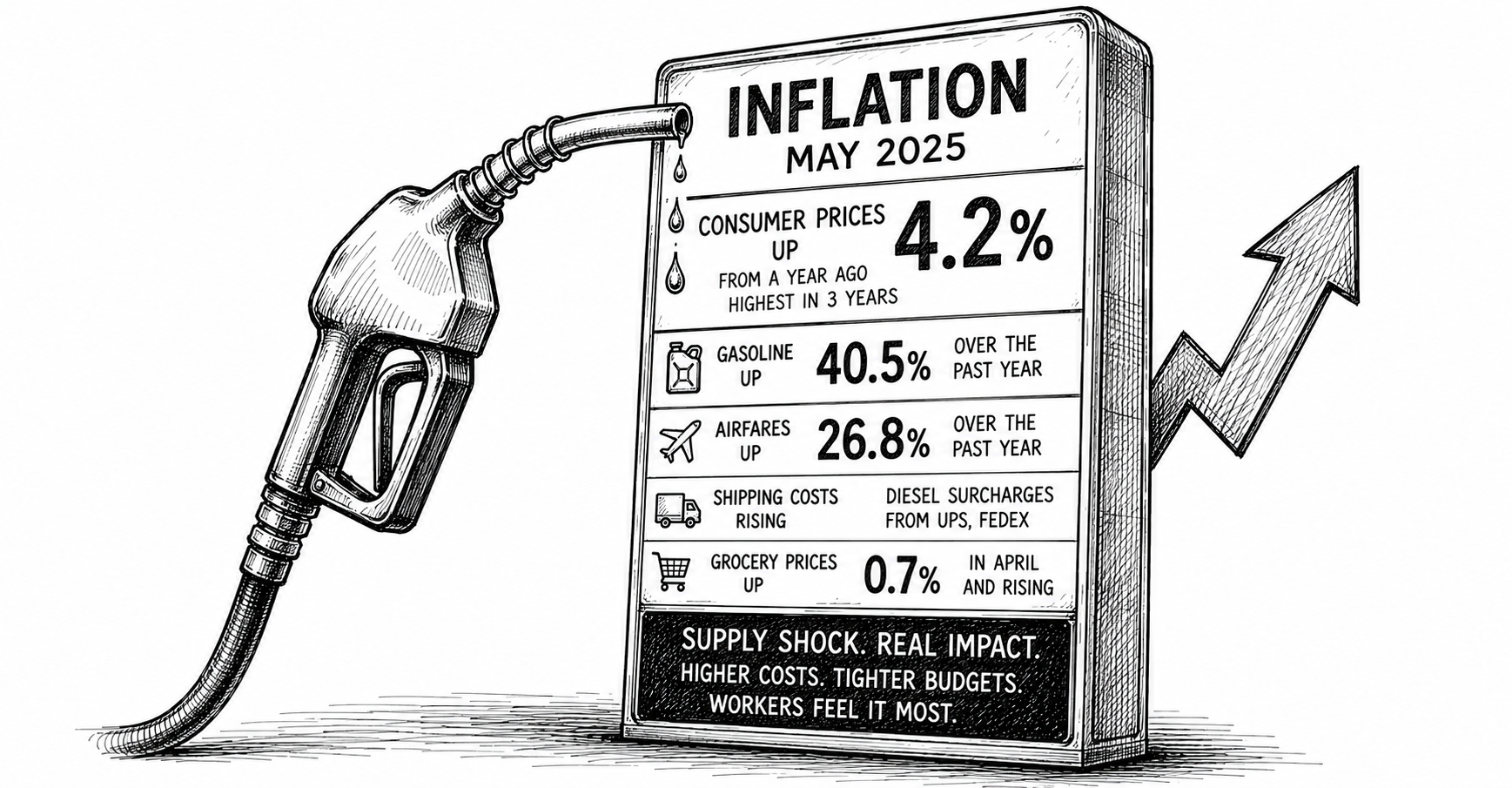
AP reported that consumer prices rose 4.2 percent in May from a year earlier, the highest inflation rate in three years and the third consecutive monthly increase, according to the Labor Department. Energy prices drove more than 60 percent of the monthly gain. Gasoline prices are up 40.5 percent over the past year. Prices at the pump averaged $4.49 in mid-May before easing back to $4.16 by late June, according to AAA. A gallon of gas has remained above $4 since March.
The mechanism is not complicated. Iran’s closure of the Strait of Hormuz cut off roughly a fifth of the world’s oil supply. That supply shock moved through the energy market, lifted fuel costs, and then began transmitting into adjacent spending categories: airline fares are up nearly 27 percent year over year, diesel surcharges from UPS and FedEx are already raising shipping costs, and grocery prices, which jumped 0.7 percent in April, are projected to keep climbing as those fuel costs move through the supply chain. The headline number is 4.2 percent. The categories households cannot avoid are running considerably hotter.
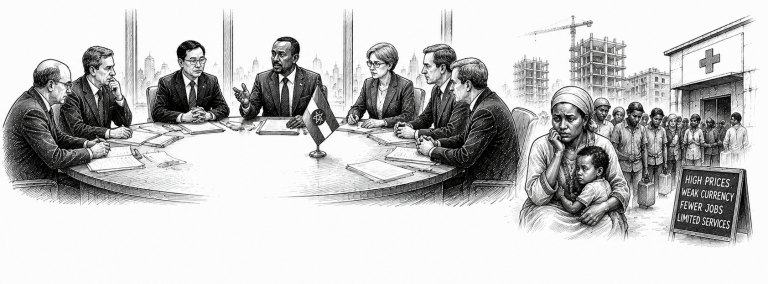
The distribution question is the SSC story here. Inflation is not an equal-opportunity cost. Households with higher incomes can shift spending, draw down savings, or absorb higher gas prices as a smaller share of their monthly budget. Households at the lower end of the income distribution spend a higher proportion of their income on energy and food — the two categories running the hottest — and have fewer substitution options when prices rise. The family cutting summer camp because gas costs too much is not making a lifestyle preference. They are absorbing the cost of a geopolitical decision they had no part in making.
For the Federal Reserve, the inflation reading shifts the calculus on rate cuts. Policymakers had signaled at the start of the year that two rate cuts were likely in 2026. Stubborn inflation now makes that timeline less certain, with the Fed holding rates steady at 3.50 to 3.75 percent while it watches whether the energy shock spreads further into core prices. Core inflation — excluding food and energy — came in at 2.9 percent annually, modestly above the prior month but not yet alarming. The concern is contagion: if higher fuel costs continue feeding into airfares, shipping, and grocery distribution, core inflation follows headline inflation upward, and the rate environment stays elevated longer.
The political frame will focus on the headline number and on gas prices as a consumer grievance. The structural frame is different. This inflation cycle was not produced by excess consumer demand or an overheated labor market. It was produced by a supply shock in a commodity market, running through a pricing system that passes costs downstream faster than wages can respond. Workers are not getting paid more. Everything they have to buy is costing more. That gap — between the pace of price increases and the pace of wage recovery — is where the real affordability story lives, and the 4.2 percent headline does not capture it.