
Cuba Is Opening the Economy Under Pressure, Not Abundance
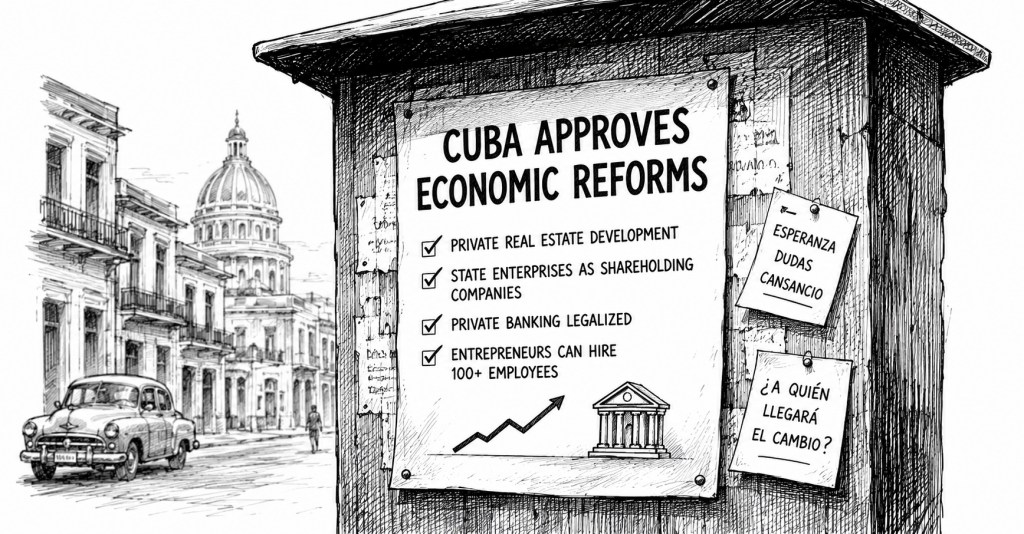
Reuters reported that Cuban lawmakers approved sweeping economic reforms this week with backing from the Communist Party and former leader Raul Castro. The package would permit private real estate development, allow some state enterprises to convert into shareholding companies, legalize private banking, and allow entrepreneurs to operate multiple businesses with more than 100 employees. Those are significant changes for an economy defined by state control across most sectors for more than six decades. President Miguel Diaz-Canel framed the reforms not as a departure from socialism but as a mechanism for preserving it — a way to keep the existing political system functioning under economic conditions that have made sustaining it increasingly difficult.
The conditions forcing the reforms are not ambiguous. Cuba has been managing inflation, fuel shortages, food scarcity, and power outages that have made daily life materially harder for most citizens. The government is not opening the economy from a position of confidence or ideological evolution. It is adapting because the alternative — maintaining full state control over an economy that is visibly failing to produce basic stability — is producing its own political costs. Reuters reported that Prime Minister Manuel Marrero acknowledged the market could allocate some resources more efficiently than the state. That is not a theoretical concession. It is a description of what years of documented failure look like from inside the government making the adjustment.
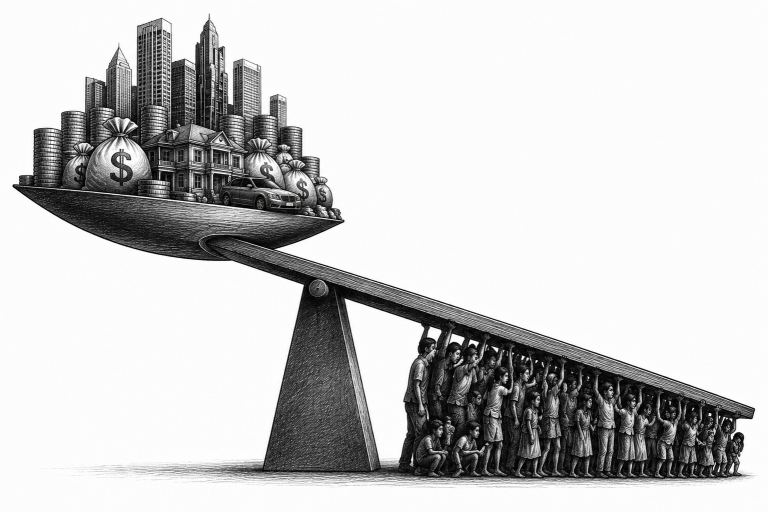
Public response has been mixed. Reuters reported that many Cubans greeted the announcement with a combination of hope, doubt, and fatigue — people who have watched previous reform cycles produce uneven results, capture by those already holding capital or connections, and outcomes that reached the well-positioned before they reached the ordinarily situated. The structural question at the center of any economic opening is not whether the legal framework changes. It is who has access to the new possibilities the framework creates.
Who will be able to buy property, access private banking, attract foreign investment, or build a legitimately operating business under the new rules depends entirely on who enters the transition with capital, relationships, and geographic proximity to opportunity. For Cubans already under economic stress, the reforms may represent real change that arrives later than needed, in a form that still does not reach them directly. The state is attempting to loosen parts of the economy without relinquishing political control. Citizens are trying to survive an economic crisis without yet knowing whether the loosening will reach them. The question is not only whether Cuba is changing. It is who gets access to the change.