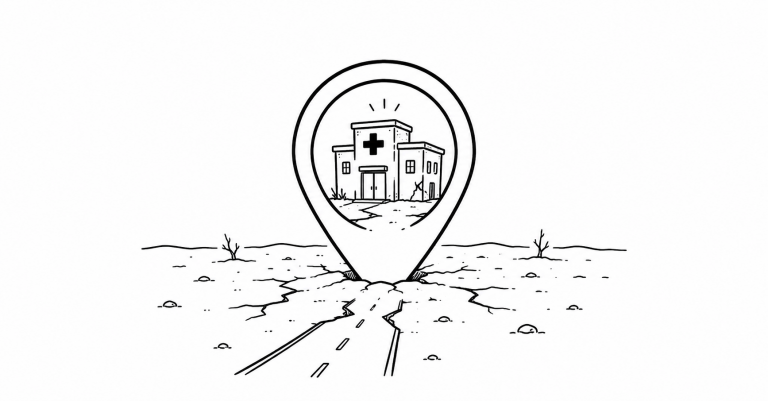
The Grocery Store Is Becoming the Doctor’s Office
America’s largest retailers are expanding primary care, pharmacy, and preventive health services, accelerating a shift that is redefining where healthcare begins — and who controls access to it.
For most of the last century, healthcare followed a predictable geography. People became sick, called a doctor’s office, and went to a hospital if the problem was serious enough. That sequence is beginning to break apart.
Reporting by Annika Kim Constantino of CNBC and additional industry reporting throughout 2026 show retailers including CVS Health, Walgreens, Walmart, and Amazon continuing to reposition themselves as healthcare companies rather than traditional retailers. Pharmacy chains have expanded clinical services. Retail clinics now provide preventive care, chronic disease management, vaccinations, and diagnostic testing. Digital health platforms increasingly connect those services to prescription delivery and virtual care.
The expansion is often framed as convenience. It is also a redistribution of where healthcare begins.
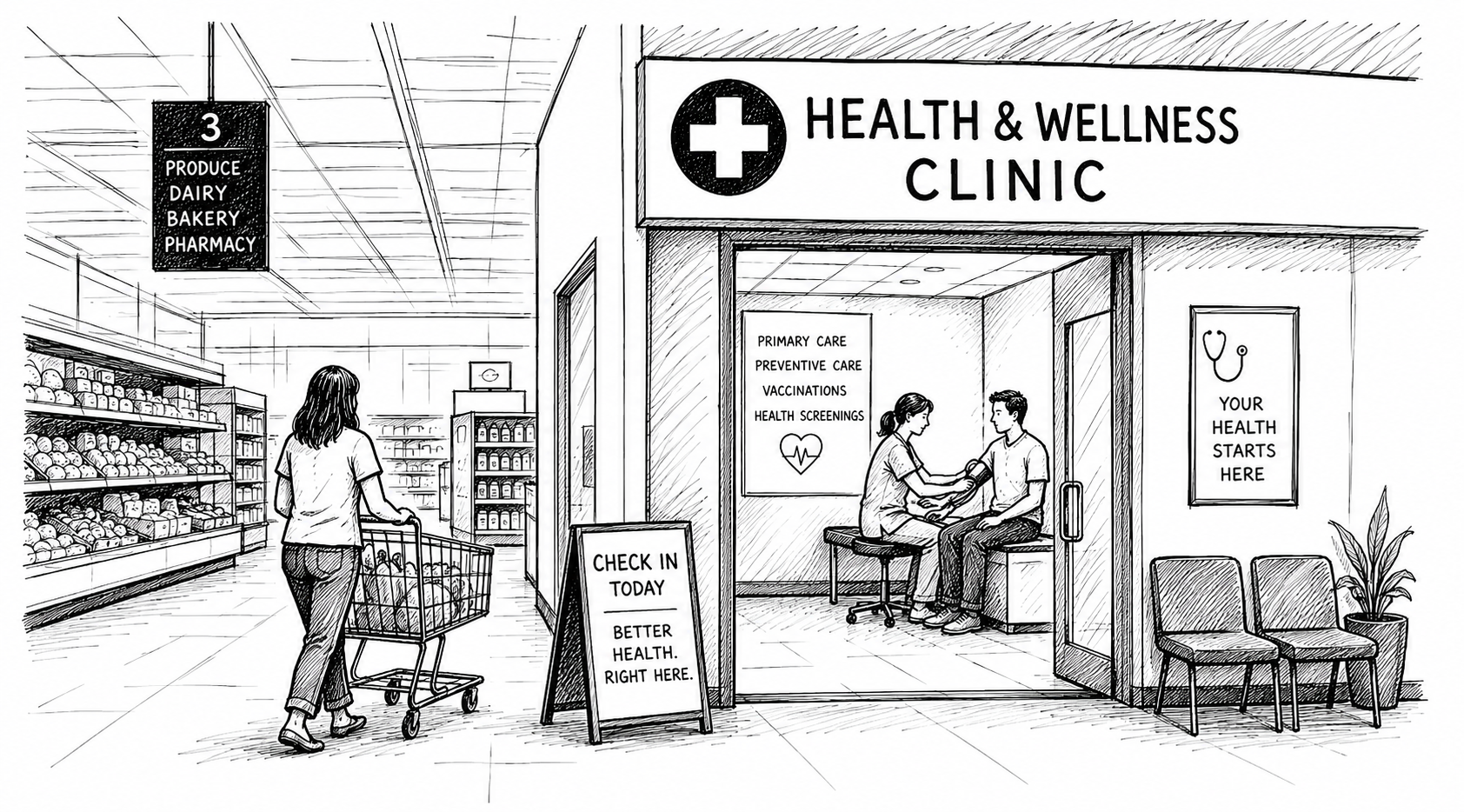
Primary care has historically functioned as the front door to the healthcare system — physicians evaluated symptoms, coordinated referrals, and maintained long-term patient relationships. Retail health models reorganize that process around places consumers already visit every week. The grocery trip becomes an opportunity for a blood pressure screening. A prescription refill becomes a diabetes consultation. A vaccination becomes another stop between buying groceries and household supplies. The location changes. The relationship changes with it.
Retailers understand something hospitals do not. Consumers visit stores voluntarily. Patients visit healthcare facilities because something has already gone wrong. That difference gives retailers a strategic advantage — they interact with people before illness becomes acute. They collect purchasing information, pharmacy records, wellness data, and increasingly biometric information through digital health platforms. Individually, those datasets appear ordinary. Together, they create one of the most comprehensive pictures of consumer health ever assembled outside traditional medical systems.
The business model extends beyond healthcare delivery. It is built around ecosystem expansion. A patient who fills prescriptions through one company may also purchase insurance, schedule virtual appointments, receive chronic disease coaching, and buy groceries through the same platform. Healthcare becomes another customer relationship rather than a standalone service.
The arrangement creates genuine public value. Millions of Americans live in areas with persistent shortages of primary care physicians. Evening and weekend clinic hours improve access for workers who cannot leave jobs during business hours. Routine preventive services become easier to obtain. Vaccination rates often improve when care is available where people already shop.
The efficiencies are real. So are the structural consequences.
Power shifts away from independent physician practices toward corporations capable of integrating retail, insurance, pharmacy, logistics, and digital infrastructure inside a single business model. Healthcare decisions increasingly occur inside organizations accountable to both patients and shareholders. Those incentives do not always conflict. Neither do they always align.
Independent physicians compete against companies with national distribution networks, sophisticated consumer analytics, and the ability to subsidize healthcare services through unrelated revenue streams. Smaller practices increasingly struggle to match that convenience even when clinical quality remains high. Patients experience greater accessibility. The healthcare market experiences greater concentration.
The next phase of American healthcare will likely be determined less by who owns hospitals than by who owns the everyday relationship with consumers before they become patients.
The waiting room has not disappeared. It has begun moving into places that were never designed to look like one.