
Sickle Cell Gene Therapy Is Moving From Breakthrough to Access Test
The medical victory is real. The system now has to prove the cure can reach the people who need it.
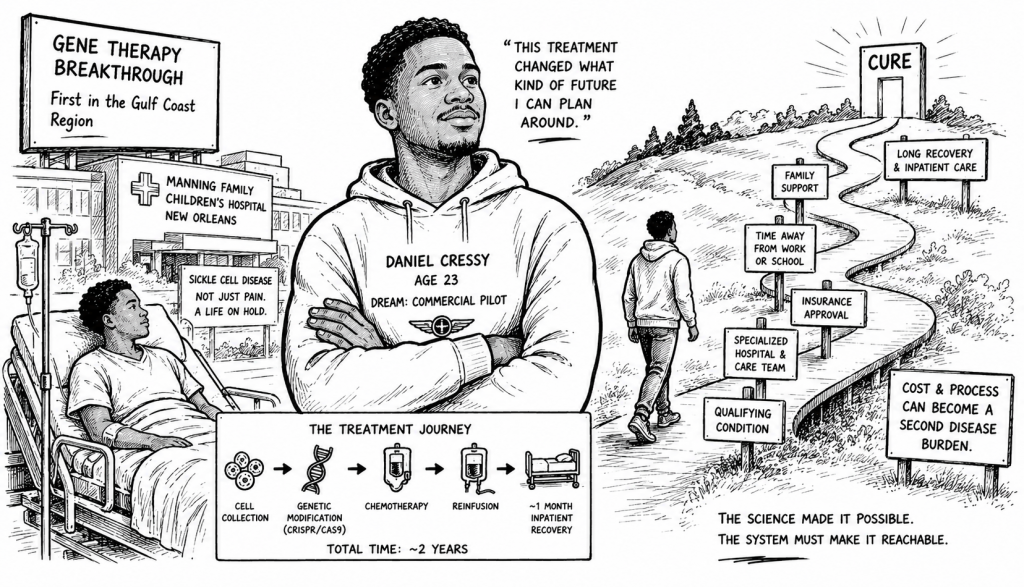
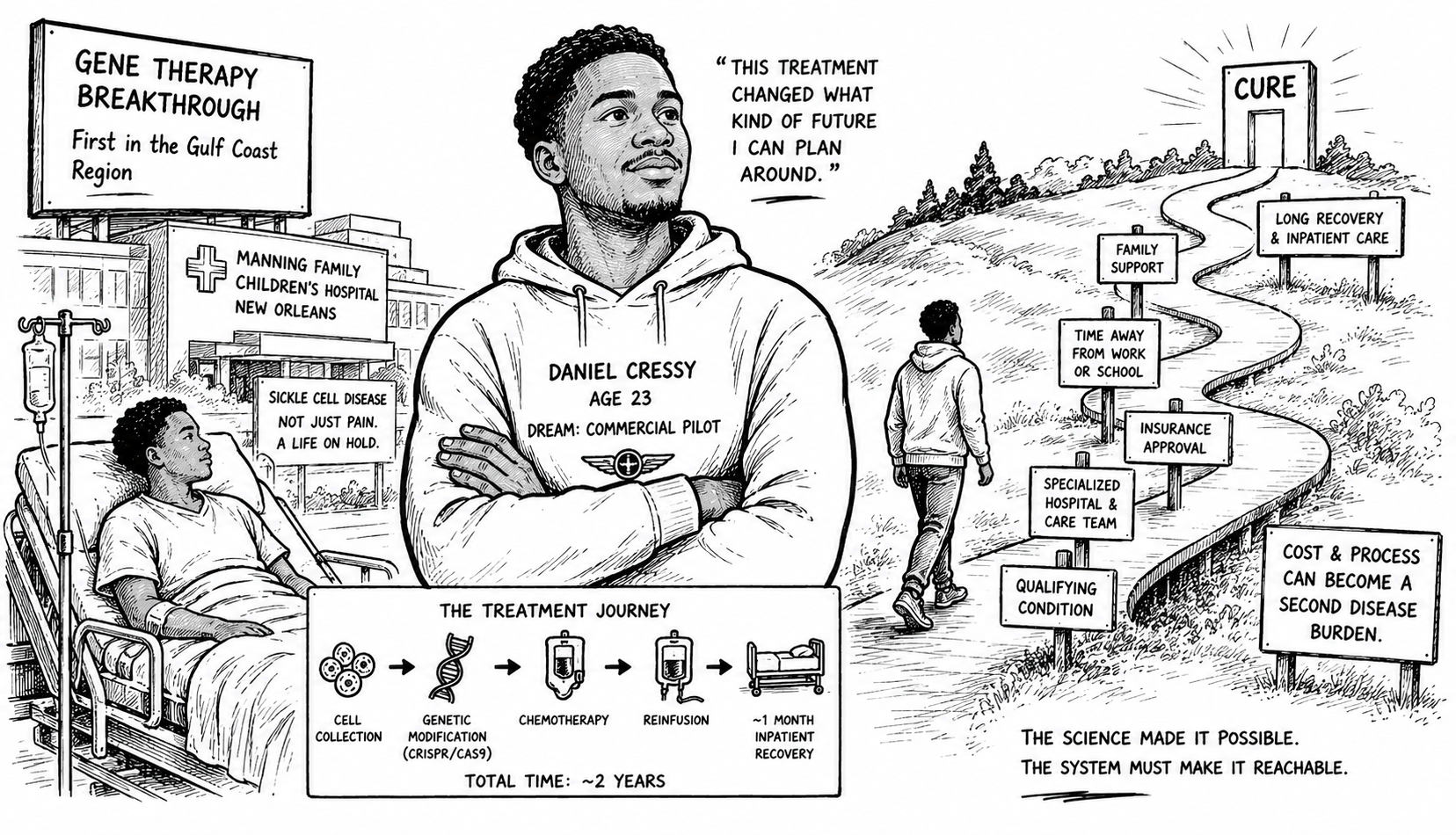
The Guardian’s Ramon Antonio Vargas reported on June 24 that Daniel Cressy, a 23-year-old man from Metairie, Louisiana, became the first person in the Gulf Coast region to be functionally cured of sickle cell disease through gene-editing therapy at Manning Family Children’s Hospital in New Orleans. The treatment used Casgevy’s CRISPR/Cas9 technology, required about two years, and included cell collection, genetic modification, chemotherapy, reinfusion, and a month of inpatient recovery.
Medical breakthroughs redistribute possibility before they redistribute access. Cressy’s case shows what gene editing can do for a disease that has long shaped pain, hospitalization, career choice, and life expectancy for many Black patients. The treatment did not merely reduce symptoms. It changed what kind of future he could plan around, including his long-held goal of becoming a commercial pilot.
That is why the access layer matters immediately. A therapy that requires specialized hospitals, cell collection, lab modification, chemotherapy, inpatient monitoring, insurance negotiation, and a long recovery is not a normal prescription. It is an infrastructure event. A patient needs a qualifying condition, a care team, a treatment center, insurance approval, time away from work or school, family support, and the ability to survive the waiting period before the cure arrives.
The system rewards patients who can reach the full pipeline. That group will be smaller than the population living with sickle cell disease unless health systems build the bridge deliberately. The Guardian reported that Cressy had previously been hospitalized up to 12 times a year and that accessing the treatment required months of insurance negotiation. That detail matters because cost and process can become a second disease burden after the science has already worked.
Sickle cell disease has always exposed how medical neglect follows social hierarchy. The condition disproportionately affects Black patients, but investment, pain recognition, and care access have not matched the burden. Gene therapy raises the scientific ceiling. It does not automatically change the medical system that patients must move through. A cure can exist and still be practically unreachable for families without the right geography, coverage, transportation, job flexibility, or specialist referral.
The hospital milestone also creates institutional pressure. Once one patient is functionally cured in the region, other patients and families will ask why access remains limited. That pressure is appropriate. Breakthrough medicine cannot remain a ceremony reserved for exceptional cases. Health systems will have to decide whether gene therapy becomes a rare success story or a planned public-health strategy.
Power moved from the disease toward the treatment system. That is progress, but it also means insurers, hospitals, regulators, and manufacturers now hold the gate. The next sickle cell story will not be whether gene editing can work — it can. The harder story is whether the cure becomes a durable access pathway, or another medical miracle that arrives first for the patients who can navigate the system most effectively.