The Creator Economy Is Becoming a Labor Market Without Labor Protections
A congressional resolution, an academic report, and SSC’s own reporting from Dubai are converging on the same finding: the creator economy runs on labor law that was never built for it.
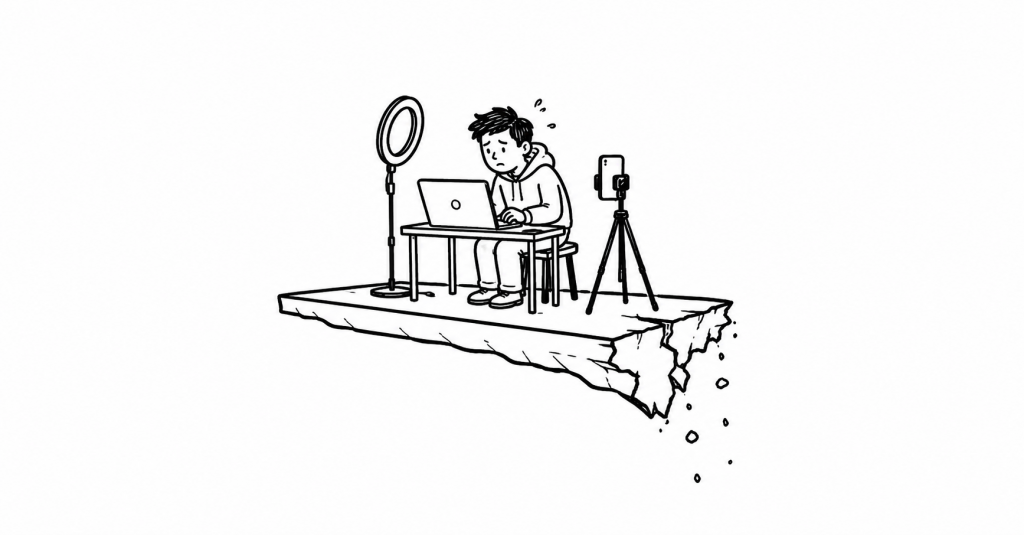
The creator economy is worth $250 billion globally and is projected to reach $480 billion by 2027. It provides income for 12 percent of U.S. adults and has become a full-time job for more than 10 million Americans. By scale alone, it now functions as a labor market. The legal and policy infrastructure governing it has not caught up to that fact.
Representative Ro Khanna introduced the “Creator Bill of Rights” on January 15, 2026 — a non-binding resolution addressing working conditions for an industry his office estimates reaches 10 million Americans. The resolution calls for protecting workers against misclassification under existing federal labor law, transparent revenue-sharing terms, and the ability for creators to maintain direct relationships with their audiences across platforms — explicitly noting that many creators are classified as independent contractors, which limits access to employer-sponsored health care, retirement plans, and paid leave.
The mechanism is misclassification at scale. Creators generate the content, distribute it, and often build the audience relationship themselves — three functions that in traditional media were split across separate roles, each with its own labor classification. Loyola University Chicago marketing professor Jenna Drenten describes this as a “triple burden” with no historical equivalent in labor law: creators are simultaneously the producers of content, the content itself, and the distribution channel — which is precisely why existing labor protections fail to reach them.
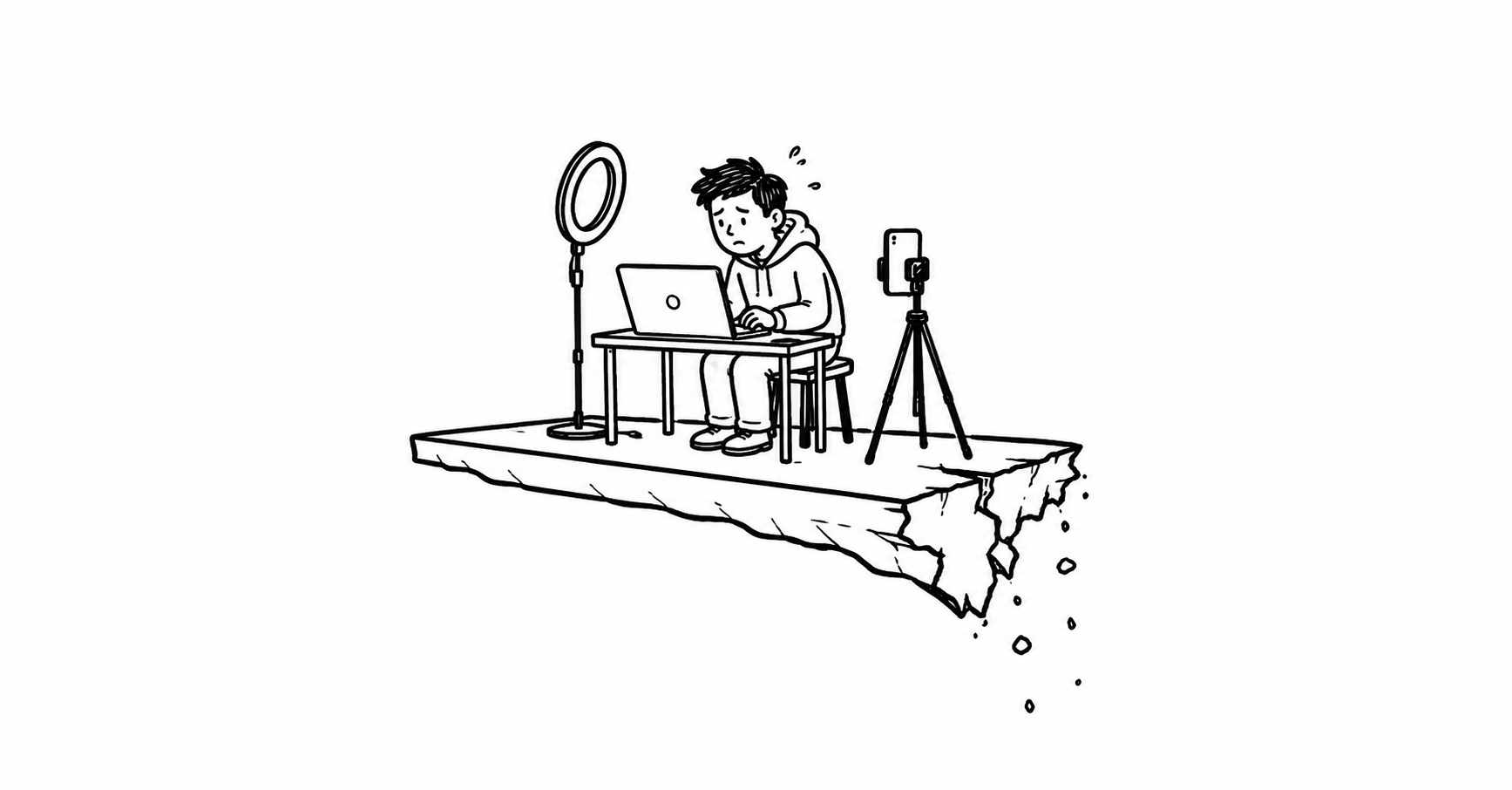
The human cost is documented, not speculative. A study from Creators 4 Mental Health and Lupiani Insights & Strategies found that a majority of full-time creators report experiencing burnout or anxiety, with some reporting suicidal ideation linked to income instability and unpredictable platform changes. The resolution frames this directly as a mental health and economic security issue tied to unpredictable income — not simply a workplace satisfaction problem.
A creator’s own testimony captures the structural mismatch precisely. “The economy has changed dramatically, but our labor protections haven’t kept pace,” said Lisandra Vásquez, a creator and digital worker. “Freelance and non-linear careers are now the norm, yet creators are still operating in systems built for W-2 employees. As independent contractors, we generate enormous value for multi-billion-dollar platforms while having little protection when our livelihoods disappear overnight.”
The gap is gendered as well as structural. The American Influencer Council’s fourth annual trend report — the first drawing on academic researchers rather than brand marketers or platform executives — found that women hold 70 percent of market share within the creator economy, while 90.7 percent of women-owned U.S. businesses overall are solo operations with no employees and no formal SBA classification. The population most reliant on creator income is also the population least covered by existing small-business infrastructure.
Internationally, the regulatory response is further along than in the U.S. The ILO’s Convention on Decent Work in the Platform Economy, expected to be finalized in 2026, takes a different approach than the U.S. resolution — preserving the employee/self-employed distinction under domestic law generally, but recognizing a broad list of substantial labor rights for platform workers independent of their legal classification.
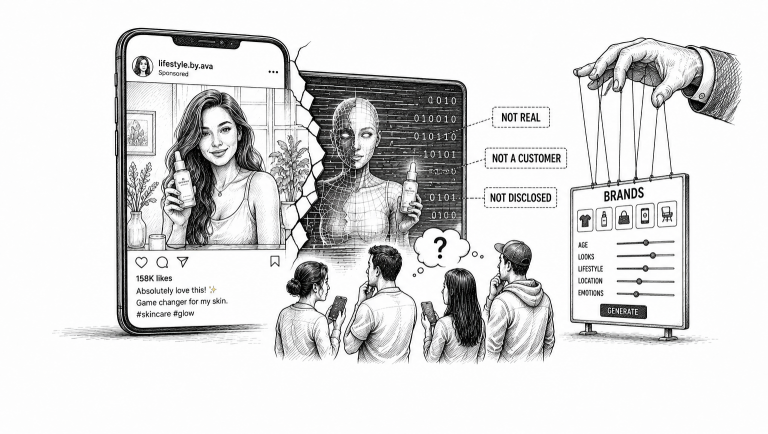
This is the domestic mirror of what SSC has documented internationally. In Dubai, governments are recruiting creators — disproportionately African and diaspora professionals — into a “creative economy” built on visas and ownership structures that capture the value those creators produce without granting them a permanent stake in the infrastructure they help build. In the U.S., Patreon has noted that creators build businesses without the protections traditional businesses have — insurance, disaster relief, access to loans — even as the platforms themselves profit from creator-generated value. The geography differs. The structure does not: visibility and output generate value that flows upward to platforms and institutions, while the people producing it remain classified in ways that exclude them from the protections that value would normally come with.
What this signals going forward: the Creator Bill of Rights is non-binding and unlikely to produce immediate platform changes, but its introduction — alongside the ILO’s 2026 convention and the AIC’s first academic-sourced labor report — marks the point where “creator economy labor conditions” stopped being a niche complaint and became a recognized policy category. The next phase of this story is whether classification law actually changes, or whether the recognition stays rhetorical while the economy that needs the protection keeps growing past it.