Political resistance to large data-center projects has not yet materially slowed U.S. expansion, according to Goldman Sachs, which increased its estimate for U.S. data-center capacity at the end of 2026 by 5 gigawatts to 64 GW. The bank simultaneously lowered its 2027 projection by 5 GW to 90 GW, indicating that permitting fights, electricity constraints and local opposition could push some projects farther out without reversing the buildout. The numbers reinforce the scale of AI infrastructure demand while shifting attention toward the communities supplying the land, electricity and water required to support it. Local objections may not stop the boom, but they are increasingly affecting when and where capacity can be added.
The University of Colorado system enrolled 17.8% fewer international students this fall, including a 22.5% decline among international graduate students, accounting for nearly two-thirds of the system’s overall enrollment decline. The CU numbers offer an early institutional example of a national problem NAFSA has been warning about: visa bottlenecks, declining applications and tighter immigration rules could leave U.S. colleges with as many as 111,000 fewer international students this fall. NAFSA estimates that decline could remove $3.4 billion from the U.S. economy and nearly 40,000 jobs, because international enrollment supports tuition revenue as well as housing, retail and local employment. That makes the international-student slowdown more than an admissions problem; universities that have built budgets around full-pay international enrollment may increasingly have to absorb immigration policy as a financial constraint. The University of Colorado published its preliminary fall enrollment figures here, while NAFSA estimates the broader national exposure here.
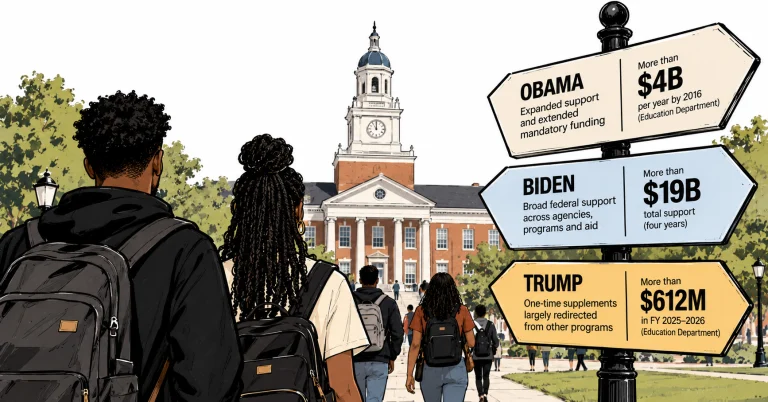
The administration has directed more than $600 million in additional money to HBCUs. That does not mean it has outspent Obama or Biden. The numbers being compared measure different things.
A federal judge in Oklahoma suppressed evidence after ruling that a warrantless search across automated license-plate reader systems, including Flock Safety cameras, violated the Fourth Amendment. The search allowed law enforcement to reconstruct a driver’s movements without obtaining a warrant first. Automated plate-reader networks have expanded rapidly because individual cameras can be installed by police departments, neighborhoods and private businesses, but the ruling focuses on what happens when those separate data points become a searchable record of a person’s travel. The case does not eliminate license-plate readers, but it puts new legal pressure on the ability of police to use aggregated camera networks as retrospective tracking systems.
September’s weak jobs report looks different when separated by gender. Hundreds of thousands fewer women are participating in the labor market than at the beginning of 2026, while the number of men has barely changed.
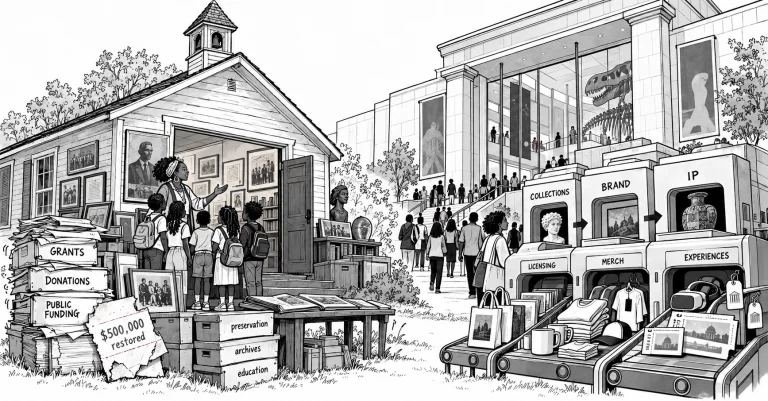
Boston’s Museum of African American History lost nearly $500,000 in federal funding before eventually getting it restored. Its disruption came as larger cultural institutions increasingly turn collections, brands and intellectual property into new revenue streams.
Audiobook walking clubs are turning a solitary habit into a low-pressure social ritual — and offering a glimpse at how adults are rebuilding friendship around activities that do not demand constant conversation.
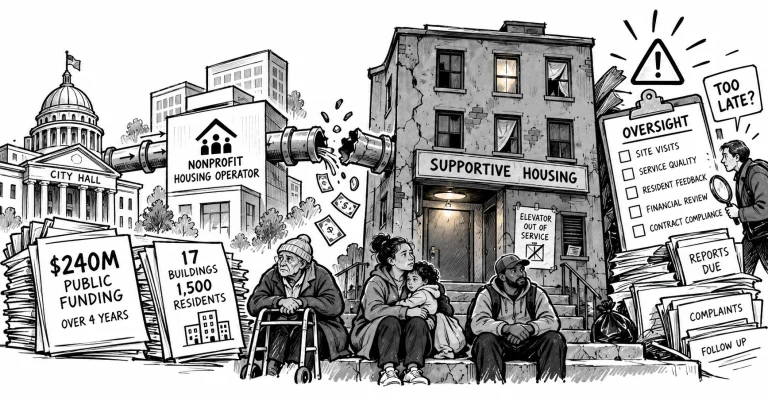
HomeRise once stood as a model of supportive housing. After receiving about $240 million in public money over four years, the nonprofit is shutting down amid investigations into financial dysfunction, neglect and resident deaths.
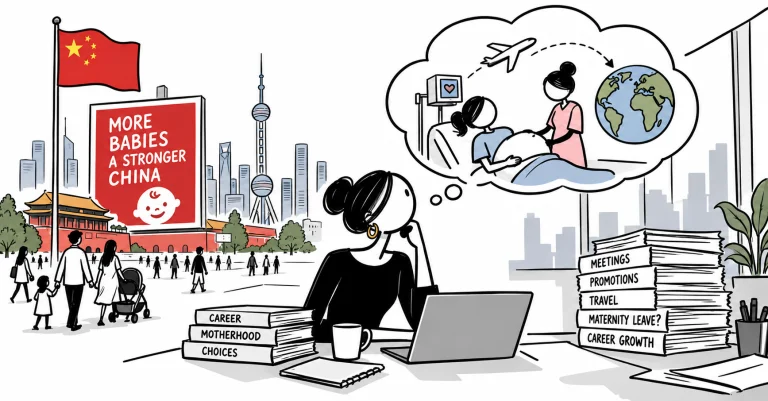
The country's fertility problem is colliding with another one: pregnancy and motherhood can still impose professional costs that government incentives have not removed.
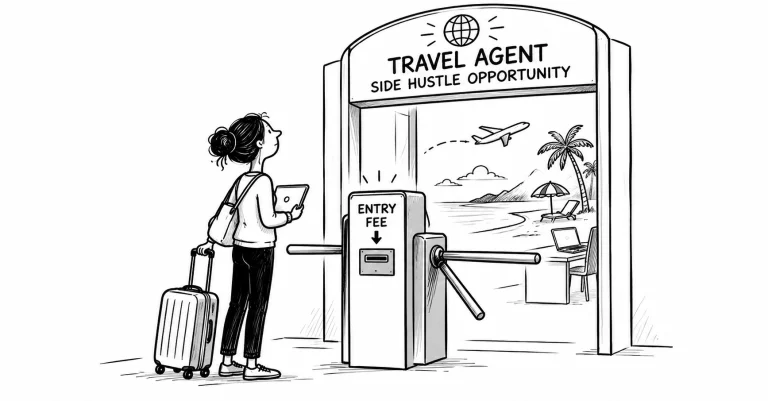
Travel-agent opportunities are spreading through social media with promises of flexible income. Some recruits are discovering that earning money can begin with paying someone else first.
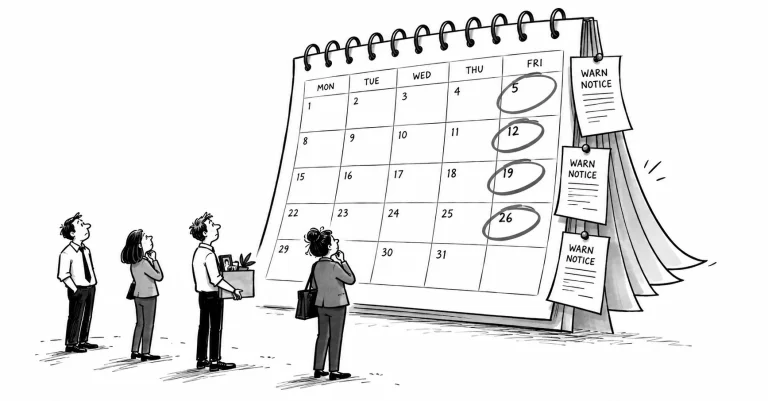
WARN notices offer a forward view of job losses. Across the states currently tracked, thousands of workers already have termination dates on the calendar.
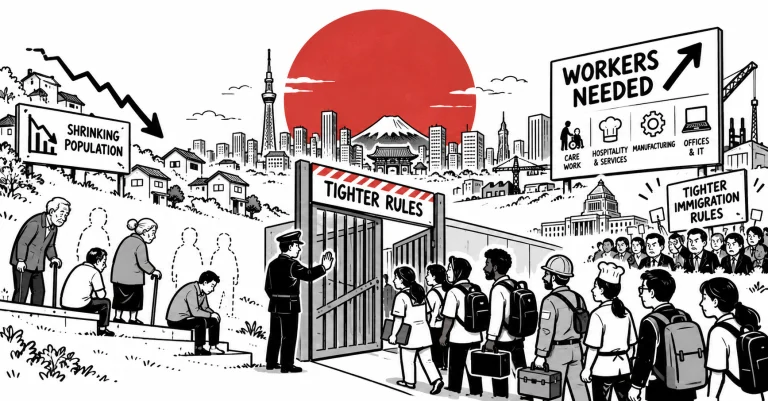
Japan's population fell again while its foreign population reached a record, exposing a widening gap between the country's demographic needs and its tightening politics on immigration.