SSC Daily Brief | Saturday, June 27, 2026
Food Aid Is Becoming a Paperwork Test
Opening Brief
More than 4.7 million people have lost Supplemental Nutrition Assistance Program benefits since Donald Trump’s tax and spending law took effect, with Arizona recording the steepest decline in the country — over 457,000 residents, including nearly 196,000 children, according to state Department of Economic Security data through the end of May. Leah Douglas and Erica Stapleton reported for Reuters on June 24 that the mechanism driving these losses is not a program elimination. It is administrative friction: stricter vetting processes, overloaded phone lines, expanded documentation requirements, and financial penalties on states that exceed error-rate thresholds. Qualified households are losing benefits they legally still qualify for because the system processing their eligibility cannot keep up.
The Policy Signal
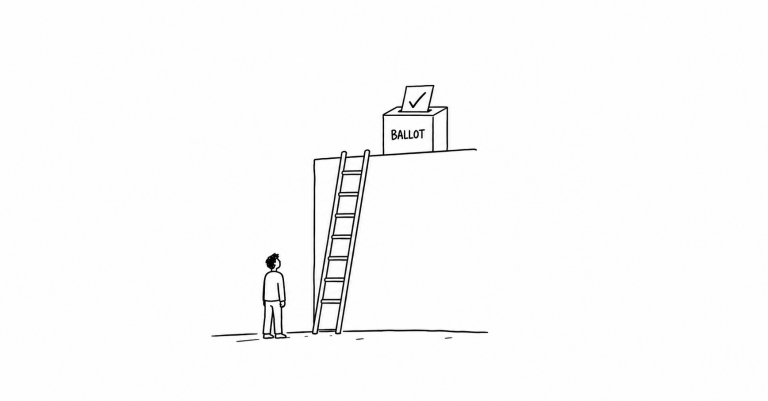
The governing question underneath this story is not whether SNAP should exist. It is whether administrative design is being used as a policy instrument to reduce enrollment without formally cutting the program. The new law reduces SNAP funding by $187 billion — about 17% — over ten years, in part by imposing financial penalties on states whose error rates exceed 6%. Arizona’s 2024 error rate was 8.84%, below the national average of 10.9% but above the new threshold. To avoid hundreds of millions in fines, Arizona introduced stricter vetting processes that, in practice, have produced longer wait times, higher documentation demands, and more dropped calls. Katie Bergh, a senior policy analyst at the Center on Budget and Policy Priorities, told Reuters directly that the longer wait times are a result of this stricter vetting. The policy mechanism here is penalty-driven tightening that produces enrollment decline as a byproduct of compliance — not as an explicit program cut, but as the operational consequence of one.
What’s Driving It
The federal law creates a fiscal incentive structure that pushes states toward administrative tightening regardless of whether that tightening serves program integrity. A state with an error rate above 6% now faces a penalty covering up to 15% of SNAP costs — a potential liability large enough that accelerating the vetting process, even at the cost of eligible households losing access, becomes the rational institutional response. Arizona implemented the federal changes faster than most other states. The Democratic governor acknowledged the bind directly: comply with the new standards or face fines that would cause even more Arizonans to lose assistance. Investors in telehealth and direct-pay platforms are watching GLP-1 drug coverage retreat for similar reasons — when federal policy raises the cost of inclusion, institutions exit the category, and private markets fill the gap for those who can pay. The SNAP dynamic is the same logic operating inside a public entitlement.
Who Feels the Impact
The households most likely to lose benefits through administrative friction are the ones already operating under the most compounding pressure: unstable housing, inconsistent income, limited English, unreliable internet access, and no capacity to absorb bureaucratic delays. Angelica Garcia, a single mother of three in Tucson, completed the renewal process, called the DES repeatedly until lines dropped, and visited an understaffed office — and still missed two months of benefits before reapproval. Her family survived on food pantry donations and cheap staples in the gap. Children — nearly 196,000 in Arizona alone — are disproportionately affected, as households with children are more likely to have complex eligibility situations requiring additional documentation.
What to Watch Next
The federal penalty structure applies nationally, which means Arizona’s enrollment decline is a preview, not an outlier. States currently above the 6% error-rate threshold face the same fiscal pressure to tighten administrative processes in ways that will produce similar enrollment drops. Watch whether advocacy organizations file formal challenges to Arizona’s administrative changes on the grounds that the tightening constitutes de facto discriminatory enrollment policy. Watch also whether any state legislatures move to fund emergency caseworker capacity to absorb the processing load the federal law has created — and whether that spending is treated as a line item in state budgets or an invisible cost of federal compliance.
Social Storytellers Collective · socialstorytellerscollective.com Free. Daily. Five minutes. Subscribe: https://share-na2.hsforms.com/2jD9_djO_TwSG78HS537WBQ42qyoe