
Texas Senate Race Turns Masculinity Into a Campaign Platform

Texas Attorney General Ken Paxton’s first general-election ad against Democratic state Sen. James Talarico didn’t open with a policy contrast. It opened with an accusation that Talarico doesn’t have enough testosterone.
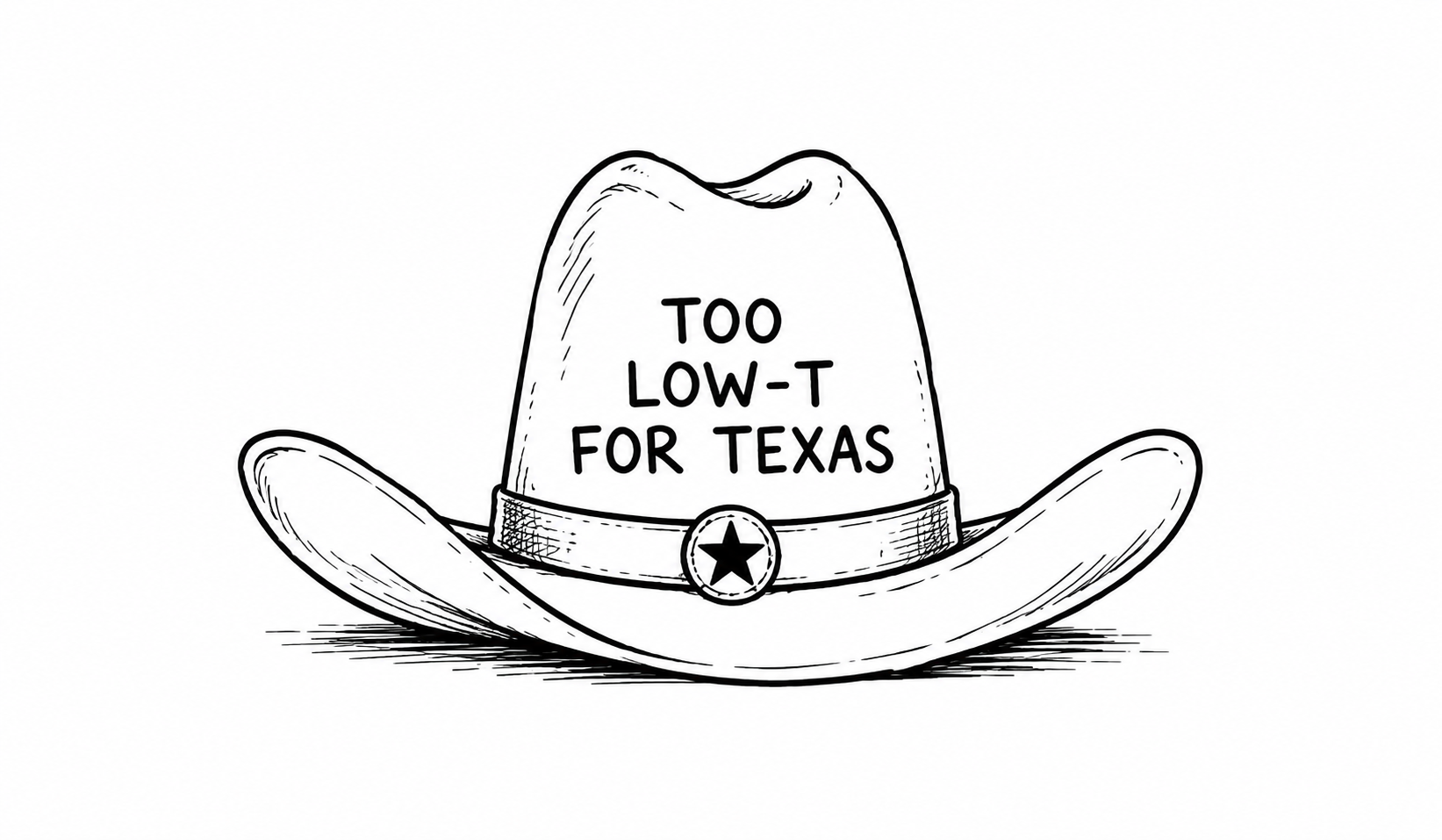
The ad, released the day after Paxton clinched the Republican Senate nomination, ends with an image of Talarico beside the words “Radical Talarico: too low-T for Texas.” It set the tone for what followed: a coordinated wave of gendered attacks from Republican officials and allies, White House deputy chief of staff Stephen Miller calling Talarico the Democrats’ “first transgender Senate candidate” (Talarico is cisgender), Fox News host Jesse Watters referring to him as a “gay vegan,” an AI-generated deepfake video circulated by the Trump-aligned group Citizens for Sanity showing Talarico dressed as Maria from The Sound of Music singing a parody song about gender transition, and a six-figure ad buy built around that clip.
Political scientists studying the race describe this as a deliberate strategy with a name. Meredith Conroy, who researches gender in political messaging, calls it “gender conflict framing”: using masculinity as a competitive axis to cast an opponent as fundamentally unfit, not through policy disagreement but through failure to perform an expected gender role convincingly enough. Dan Cassino, a political scientist who studies the manosphere’s influence on political discourse, has pointed to how explicit the language has become, testosterone levels cited as a qualification for office, red-pill and black-pill terminology moving from online forums directly into a statewide Senate campaign.
The strategic logic behind the attacks is not subtle, and Republican strategists have said as much on the record. Paxton enters the race carrying his own liabilities: a securities fraud indictment from 2015, an impeachment by the Texas House later acquitted by the Senate, and a divorce filing from his wife last year citing “biblical grounds.” Texas-based Republican strategist Brendan Steinhauser has acknowledged the campaign is testing which attacks land, adjusting if they don’t. University of Houston political science professor Brandon Rottinghaus has framed the gendered attacks as an attempt to sever Talarico from his strongest asset, credibility as a messenger on economic issues, by recasting him instead as culturally foreign to the state he’s running to represent.
Talarico has given the campaign real material to work with. Past comments, that there are “six biological sexes” referencing chromosomal variations, that “God is non-binary,” that his 2022 campaign had “officially become a non-meat campaign,” have all been recirculated as evidence of inauthenticity. Talarico has since walked some of it back, telling reporters the remarks “missed the mark” and that he was being “intentionally provocative.” But the through-line connecting testosterone jokes, transgender insinuations, and vegan mockery isn’t really about any of those specific positions. It’s a single argument repeated in different vocabularies: that Talarico doesn’t share the cultural markers of the electorate he’s asking to represent him, and that a Boy Scout-adjacent seminarian with soft public affect can be recast as suspect simply by placing him outside a narrow, aggressively reasserted definition of what a Texas man is supposed to be.
Whether the strategy works is genuinely unresolved. Fordham political scientist Monika McDermott and others studying the tactic note it may resonate strongly with the most online, most ideologically committed segment of the Republican primary electorate while landing very differently with the broader general-election electorate that decides Senate races in a state Democrats haven’t won since 1988. Progressive strategist Cliff Walker has argued that voters focused on rising costs and economic strain are unlikely to weigh Talarico’s meat consumption heavily against Paxton’s own record of fraud charges and impeachment.
What’s already clear, independent of the outcome, is that a race for one of the most consequential Senate seats in the country has been organized, by design and from the opening ad, around a single question that has nothing to do with either candidate’s legislative record: whether one of them measures up to a specific, contested, increasingly explicit definition of masculinity. That the definition is being litigated in campaign ads and deepfake videos rather than debate stages says something about where that definition currently has to be fought over to matter.