New York City’s Poverty and Inequality Crisis Deepens as Federal Policy Strips Safety Nets
The city entered 2026 with a record poverty rate. Washington is about to make it worse.
Robin Hood and Columbia University’s Center on Poverty and Social Policy released their eighth annual Poverty Tracker report in April 2026 with a finding that should have dominated the news cycle for days: New York City’s poverty rate reached 26% in 2024 — twice the national average, the highest level recorded since the Poverty Tracker began collecting data more than a decade ago, affecting 2.2 million people including nearly 450,000 children. Nearly 5 million New Yorkers, or 3 in 5, live below 200% of the poverty line, meaning they are one setback — a medical bill, a lost shift, an eviction notice — from falling below it entirely.
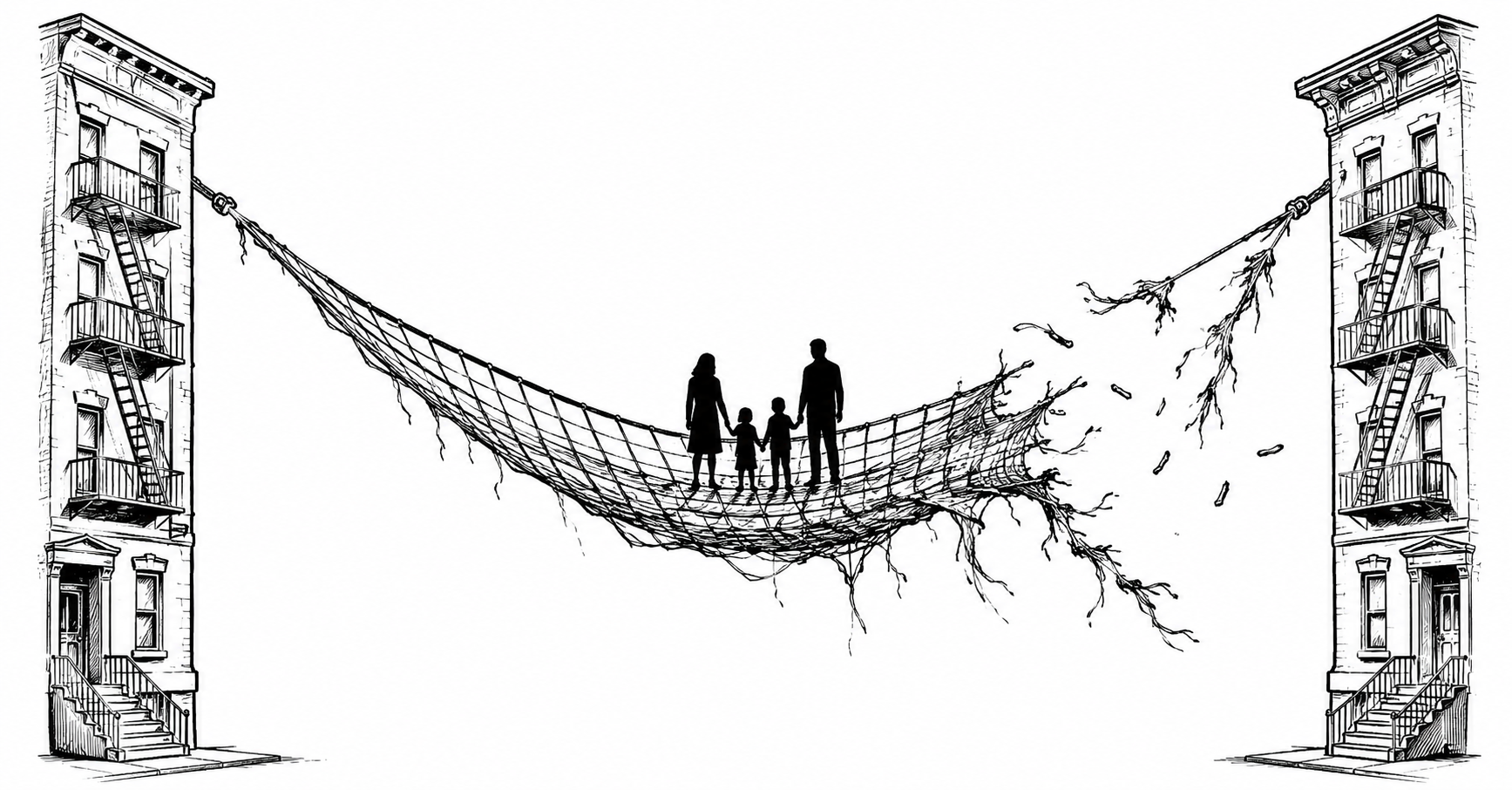
Those numbers arrived before the federal cuts took effect. The Poverty Tracker report was released in April. The SNAP reductions driven by Donald Trump’s tax and spending law began moving through state administrative systems this spring. The report itself warned that SNAP cuts alone could push an additional 70,000 New Yorkers into poverty each year. That is not a projection about what might happen to an already struggling city. It is a projection about what is happening to one.
The poverty the Tracker documents is not distributed evenly, and that matters for understanding what the federal withdrawal actually does. Asian and Latino New Yorkers are twice as likely to live in poverty as white New Yorkers — 30% and 33% versus 14%. Black New Yorkers experience poverty at 27%. The Bronx carries the highest rates of disadvantage across every measure the survey tracks. Women face higher rates of every form of hardship than men. These are not new patterns. They are durable ones — and the safety net programs being cut were disproportionately serving the populations already carrying the most exposure. Removing them does not reduce inequality. It accelerates it.
Mayor Zohran Mamdani has proposed expanding no-cost childcare, raising the minimum wage, and increasing affordable housing supply — measures the Poverty Tracker researchers said could meaningfully offset federal cuts at the city level. The Center for New York City Affairs has separately warned that the city faces substantial and growing budget shortfalls as a result of the One Big Beautiful Budget Act, and that city and state leaders are being forced into impossible choices to stave off outcomes they did not create. That framing deserves direct examination: cities absorbing the cost of federal withdrawal are not experiencing a local failure of policy. They are experiencing a transfer of obligation — one in which the federal government reduces its role in poverty reduction and asks local governments to fill a gap they do not have the fiscal capacity to close. New York City is the most visible example of that transfer, but it is not the only one. It is simply the city with the data infrastructure to measure, in real time, what a poverty cliff looks like before you go over it.