A D.C. Circuit Ruling Just Narrowed What Workers Can Say About Their Employer
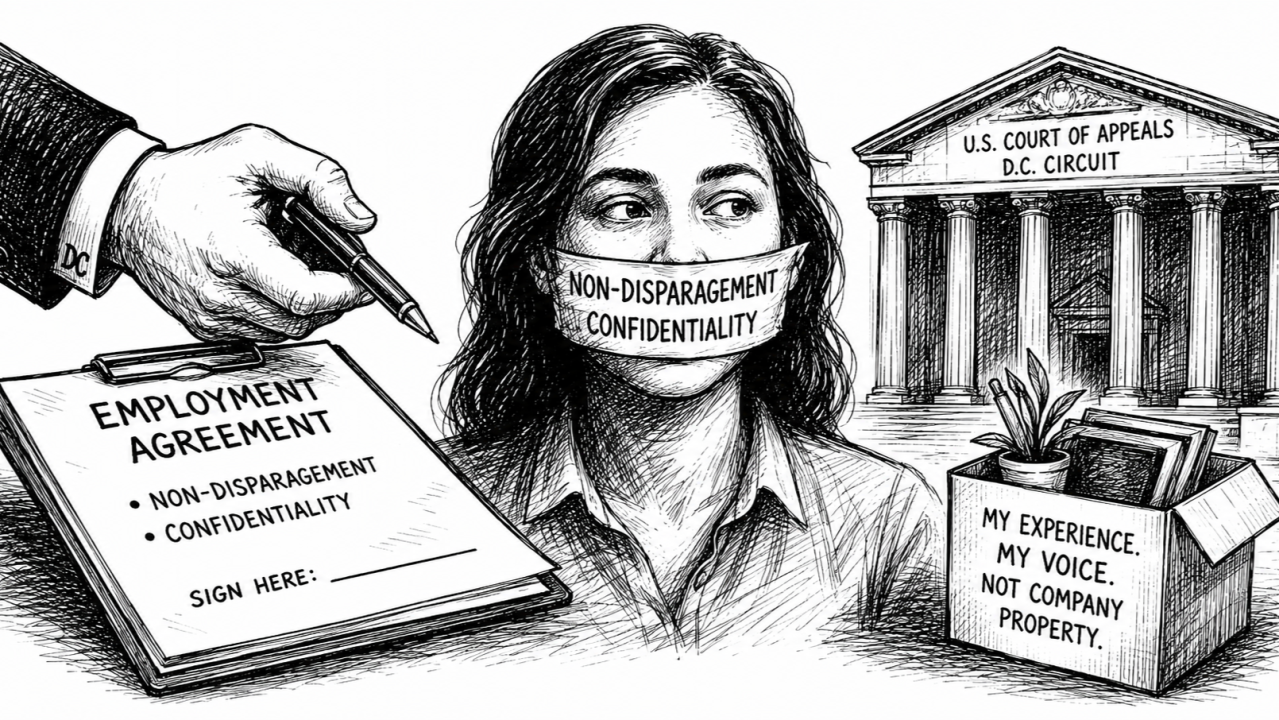
A federal appellate court decision reshaped what workers are legally permitted to communicate about their workplaces, narrowing the scope of protected speech in ways that shift the balance between employer control and worker voice.
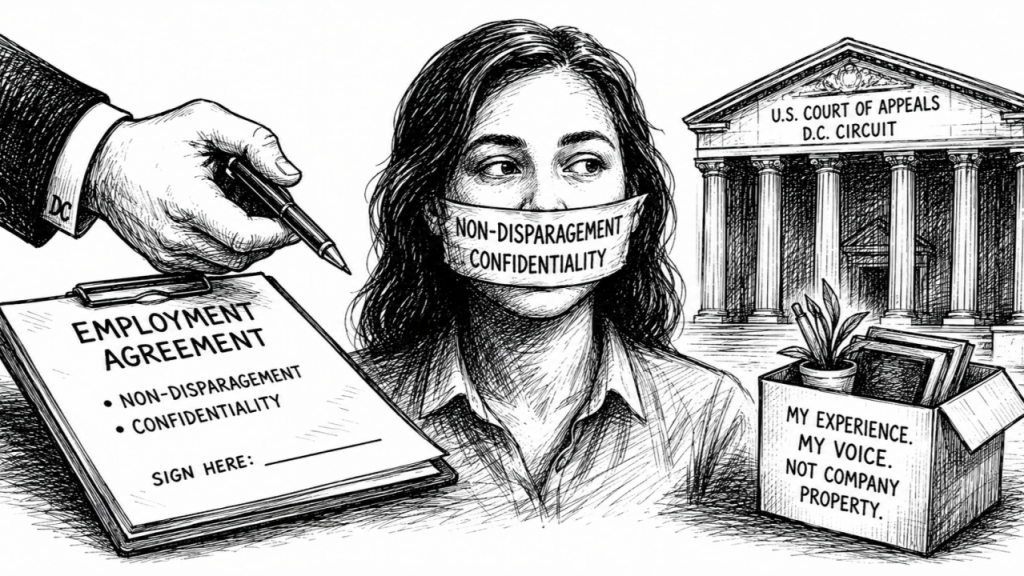
The National Labor Relations Act has long protected certain worker speech as a matter of federal law. That protection is not unlimited—it covers organizing activity, wage discussions, working condition complaints, and collective action, but does not shield all workplace criticism equally. The question a court faces when interpreting that protection is where the line sits between employer interests -maintaining workplace order, protecting reputation, controlling internal communications – and worker interests -discussing conditions, coordinating with colleagues, publicizing grievances.
When courts move that line, they reshape the actual terrain of what workers can say without legal risk. A ruling that narrows protected speech categories doesn’t eliminate those conversations—it moves them into riskier territory. A worker can still criticize management, but now the legal question is whether that criticism falls inside the protected category or outside it. The uncertainty itself becomes a constraint. Even if a worker ultimately prevails in a legal challenge, the cost of fighting that battle creates a chilling effect on speech that falls in the gray zone.
The D.C. Circuit’s decision represents a specific narrowing in a jurisdiction that covers federal employees and federal contractors—a significant portion of the American workforce. The ruling doesn’t eliminate worker speech protections wholesale. Instead, it redefines which categories of communication qualify for that protection. Speech that would have been protected under a broader interpretation is now potentially exposed to employer retaliation without legal recourse.
The structural consequence is that employer power over workplace communication increases. When workers have less legal certainty about what they can say, they communicate less. Fewer workers coordinate with colleagues. Fewer workers reach out to organizers. Fewer workers discuss wages with coworkers or publicize working conditions externally. The ruling doesn’t require employers to suppress speech; it just removes the legal protection that made that speech safe.
That shift matters because worker organizing, wage transparency, and working condition disclosure historically require collective communication. A worker acting alone has limited leverage. Workers coordinating with colleagues have more. Legal protections for collective speech are what make those conversations possible without individual workers bearing all the risk.
When those protections narrow, power redistributes toward employers. The mechanism is subtle but structural: the same speech that was legally protected yesterday is legally exposed today. That’s not a change in employer policy or worker behavior—it’s a change in the legal landscape that workers navigate. And in that changed landscape, fewer workers take the risk of speaking at all.