Paris and London Homes Were Built for the Wrong Climate
Michaela Cabrera and Sam Tabahriti reported for Reuters on June 26 that residents in Paris and London are struggling through a heatwave in homes built to retain warmth rather than shed heat. Paris reached a June record of 40.9 degrees Celsius, or 105.6 degrees Fahrenheit, while Britain recorded its highest June temperature at 36.7 degrees Celsius, or 98.1 degrees Fahrenheit, in southwest England.
Housing stock built for cold is failing during heat. Thick walls, small apartments, limited cross-ventilation, and heat-retaining design made sense when winter protection was the dominant concern. Those same features are now turning homes into thermal traps during longer and hotter summers. The buildings have not changed. The climate has changed around them.
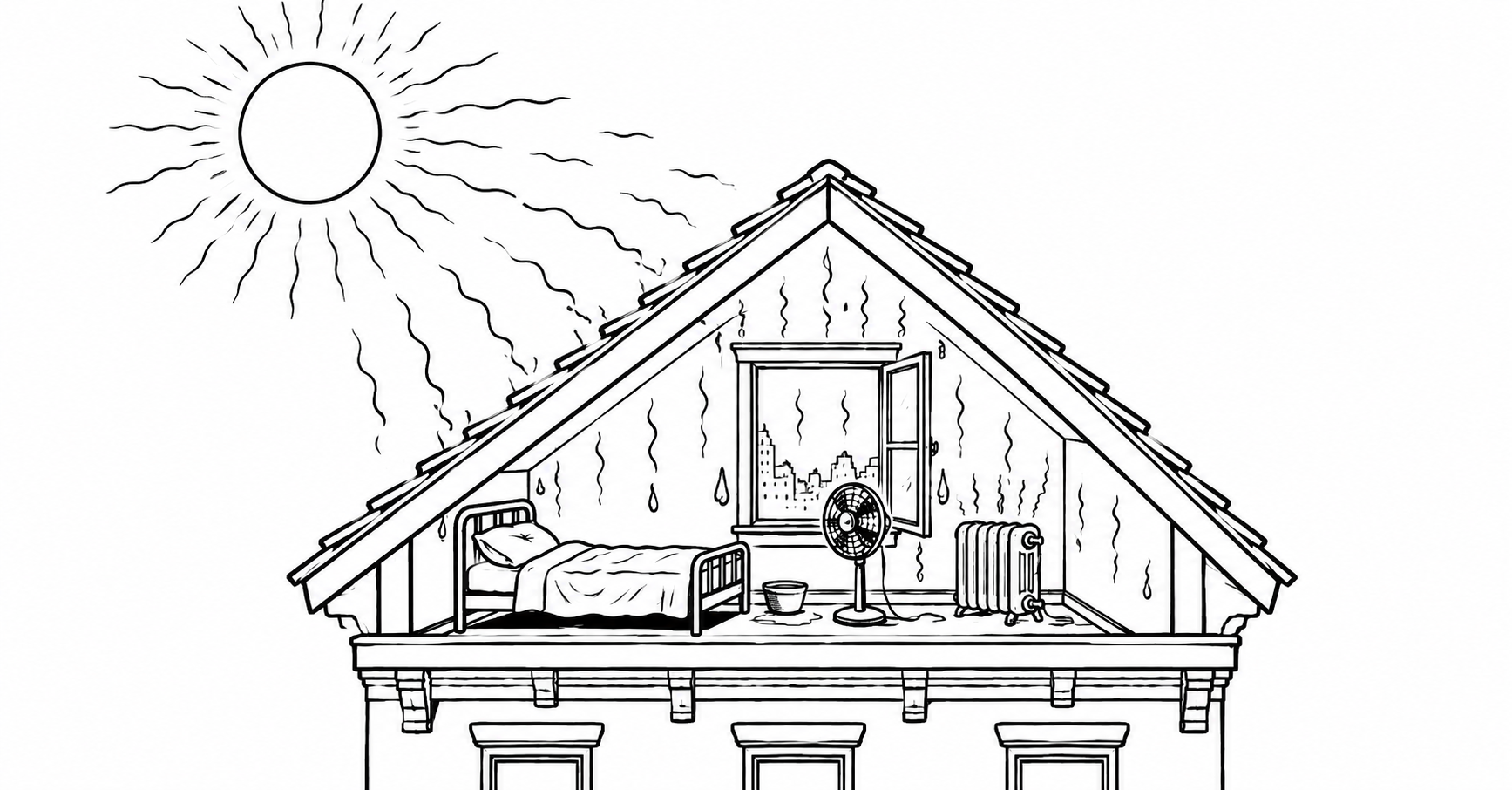
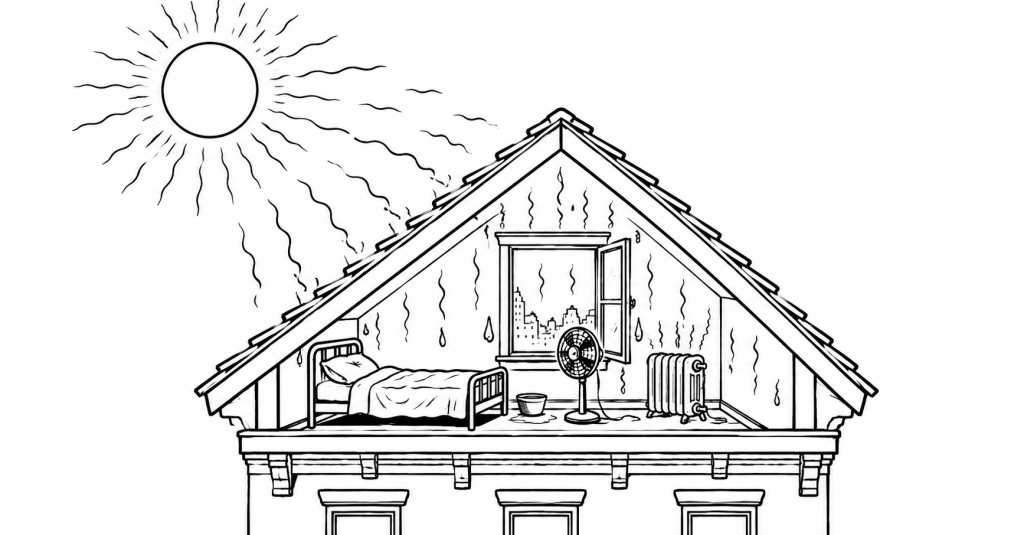
Reuters described a 9-square-meter, or 97-square-foot, attic flat in Paris where a 21-year-old resident slept under wet towels as soap melted and pressure in wine bottles pushed out corks. Heat is not only weather outside the building. It is a physical force inside the room — one that residents in small, top-floor, poorly ventilated units have no practical way to escape.
Cooling access is becoming a class divide. Wealthier households can install air conditioning, relocate temporarily, work from cooler spaces, or choose homes with better insulation and ventilation. Lower-income renters often have fewer options in small units, older buildings, top-floor apartments, or homes where landlords control major improvements. The same heatwave produces a different experience depending on which floor, which building, and which income level a person occupies.
Governments face a difficult policy tension. Reuters noted that air conditioning divides opinion because it can increase energy use, strain power grids, and worsen the warming that makes it necessary. But telling people to avoid air conditioning does not solve the immediate risk for residents sleeping in dangerously hot rooms.
Retrofit policy is the real battleground. Shade, insulation, reflective materials, ventilation, heat pumps, cooling centers, tenant protections, and energy support will determine who can safely remain in place. Without public investment in those upgrades, climate-safe housing becomes another amenity distributed by income.
Paris and London are offering a preview of the next housing affordability debate. Rent will still matter, but so will whether the unit can keep a person safe during extreme heat. The cities that fail to adapt their housing stock will create a new category of displacement: people priced not only out of neighborhoods, but out of livable indoor temperatures.