Anthropic Wants Federal AI Rules Without a State-Law Vacuum
The company urged Congress to protect state oversight. Its own relationship with Washington tells the more complicated story.
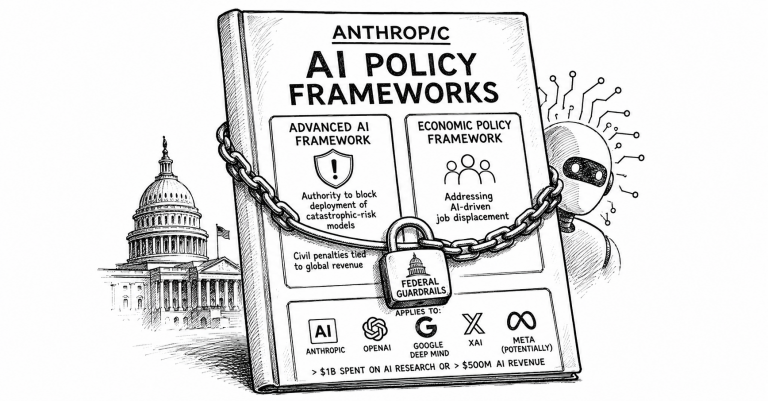
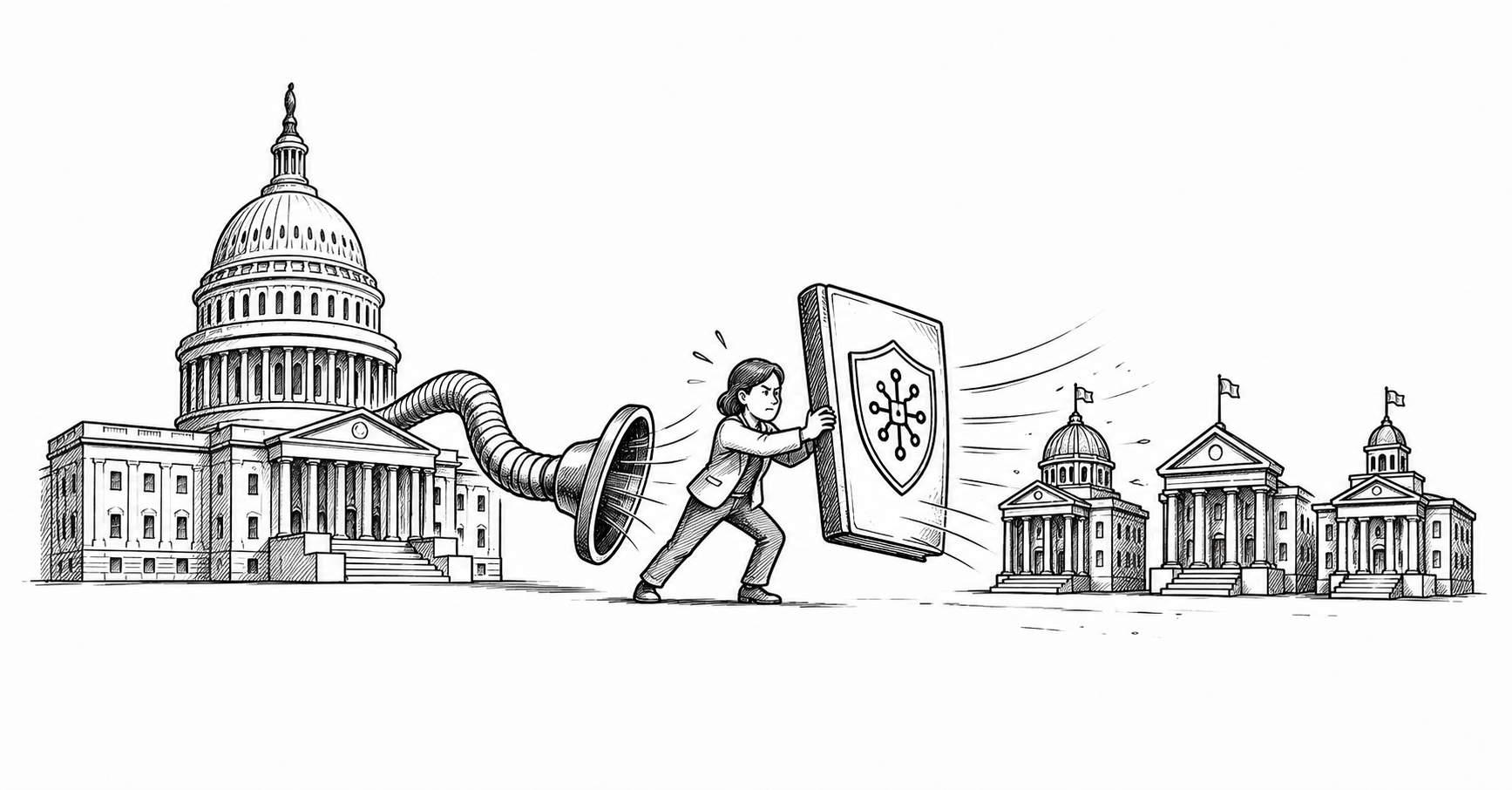
Reuters reported on June 10 that Anthropic urged Congress not to preempt state AI laws unless it passes a federal framework at least as rigorous as the one Anthropic is proposing. The position is substantive: Anthropic released a full policy framework calling for mandatory independent safety testing for the most capable AI models, civil penalties tied to global annual revenue for companies whose models pose catastrophic risks, and a specific technical threshold — models trained using more than 10^25 floating-point operations by companies earning more than $500 million in AI-related revenue or spending more than $1 billion on AI research and development. The company was explicit that preemption is powerful and should be surgical, preserving state authority over consumer protection, child safety, and anything outside specific federal safety functions.
The context around this position is harder to read cleanly. On February 27, 2026, Donald Trump directed federal agencies to immediately stop using Anthropic technology, and the Defense Department designated Anthropic a supply-chain risk to national security after a months-long dispute over Anthropic’s refusal to allow its models to be used for domestic surveillance and fully autonomous weapons. The company’s run-rate revenue had reached $30 billion by April 2026, meaning the administration’s actions carry real financial exposure even if federal contracts are a small share of total business. Advancing the framework Anthropic outlined in Congress would require support from an administration that has spent the past several months treating the company as a national security liability.
The preemption battle itself is worth separating from Anthropic’s positioning inside it. On June 4, Representatives Jay Obernolte and Lori Trahan released a 269-page discussion draft of the Great American Artificial Intelligence Act, which would freeze state laws regulating how AI models are built for three years while imposing federal transparency and audit requirements on frontier developers. The bill’s supporters frame the three-year freeze as a narrow compromise; its critics frame it as a window long enough for the largest labs to entrench their models before meaningful accountability exists. The Colorado AI law reversal — produced by DOJ intervention, executive order pressure, and private litigation rather than legislation — is the real-world preview of what preemption looks like when it arrives through the executive branch rather than through statute.
What Anthropic’s framework does, politically, is stake out a position that separates the company from the industry consensus on preemption. OpenAI has been pursuing what its chief of global affairs Chris Lehane called reverse federalism — passing state bills that function as a de facto national framework, building from the states upward. Anthropic is arguing the reverse: federal action first, state preemption only as a consequence of robust federal standards. Whether Congress moves on either timeline before the 2026 midterms is unlikely. What is not unlikely is that the absence of federal standards will continue producing the same outcome it has produced in Colorado: state authority eroded not through legislation but through the credible threat of litigation, while the voluntary framework remains the only governance architecture actually in place.