Daily Brief — June 30, 2026
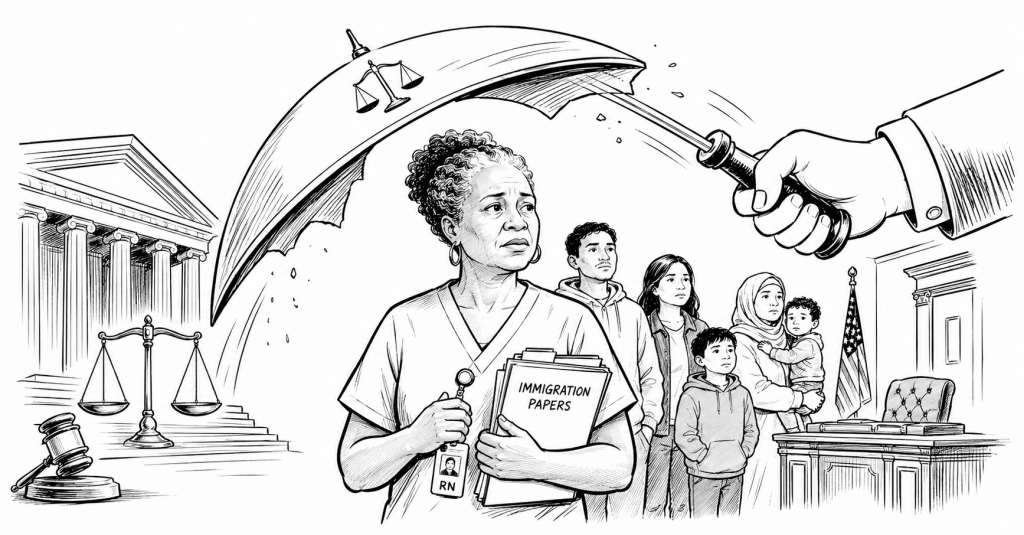
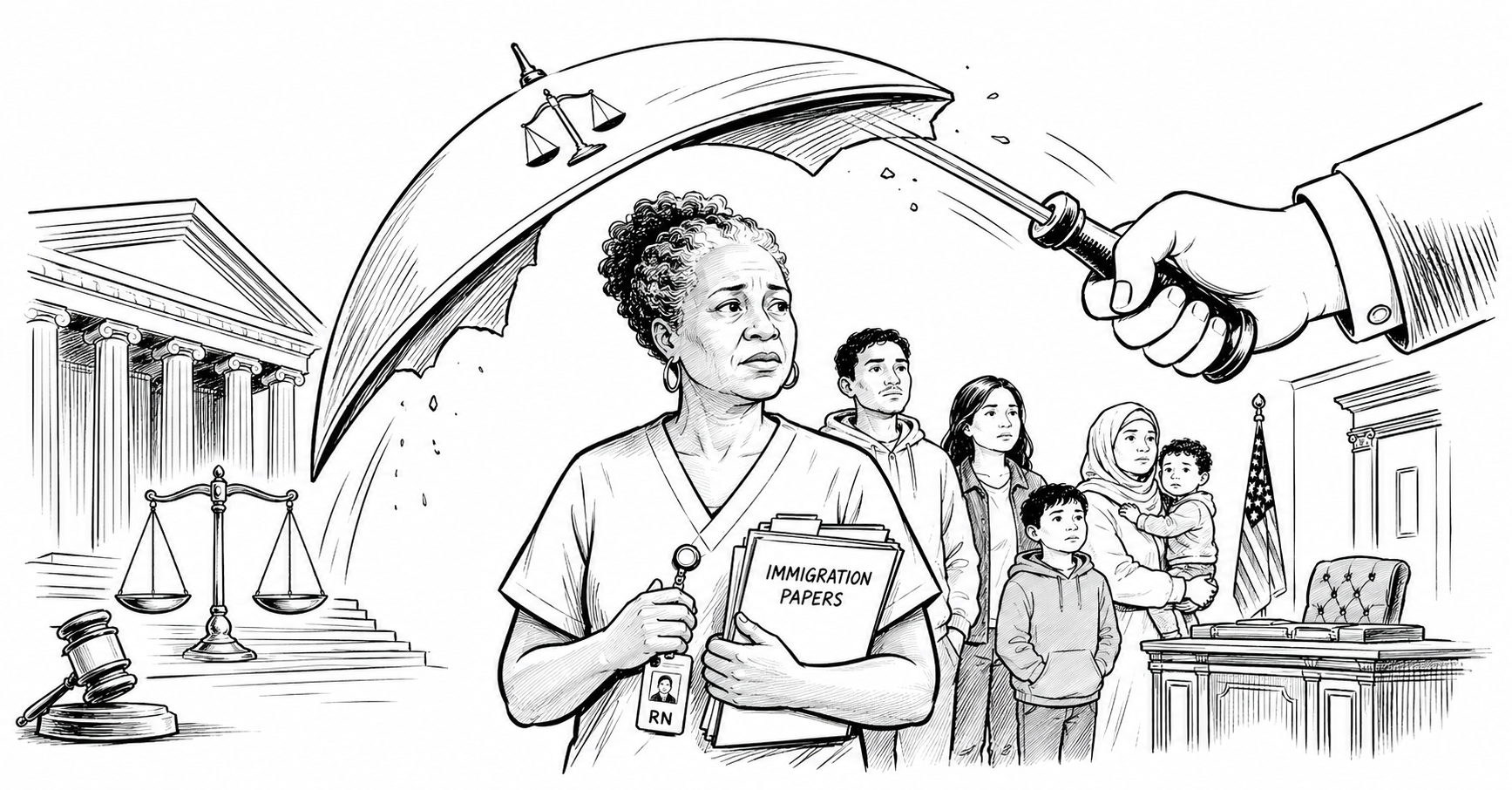
NBC News reporter Daniella Silva reported that Harlaine, an emergency room and travel nurse who has held Temporary Protected Status since her thirties, learned Thursday morning that the Supreme Court had opened the door for the government to end her protection. The Court’s June 25 ruling in Mullin v. Doe held that the TPS statute bars judicial review of nonconstitutional challenges to a DHS termination decision, according to law firm Ogletree Deakins. The 6-3 decision lifts the lower-court orders that had paused the Haiti and Syria terminations since February, clearing the way to strip status from roughly 350,000 Haitians and 6,000 Syrians.
Courts have functioned as the check on executive immigration authority since TPS terminations began moving through litigation in 2025. District court stays and emergency appeals repeatedly delayed terminations after DHS announced them, even when the agency ultimately prevailed. Mullin v. Doe removes that check for a specific category of claim, and it does so at the moment the administration has run out nearly every TPS designation up for renewal.
The mechanism is judicial deference to executive authority over immigration and foreign affairs. The Court ruled that federal courts generally cannot second-guess a DHS secretary’s determination that a country’s conditions no longer warrant TPS, treating that determination as squarely within executive discretion rather than something a judge can weigh against contrary evidence. The Court also rejected a constitutional claim that the Haiti termination was racially motivated, finding it unlikely to succeed — closing off the other pathway TPS holders had used to slow a termination once the statutory review option narrows.
Power moved from the judiciary to the executive branch. For more than a decade, a TPS holder who believed a termination decision was arbitrary, or contradicted by documented country conditions, could ask a federal judge to pause that decision while the case proceeded. That option is now substantially foreclosed for ordinary statutory challenges. DHS general counsel James Percival framed the prior pattern as TPS designations becoming “de facto amnesty.” A White House spokesperson called the ruling proof that TPS is, by design, temporary. Both statements describe the same shift: the decision about who keeps protected status now sits almost entirely with the agency that wants to end it, with little remaining judicial counterweight.
TPS holders carry the weight of that shift directly, including more than 1.3 million people across more than a dozen countries who hold the same protections under the same statute. Haiti’s TPS has not yet terminated. Work permits remain valid for now, and the termination is expected to take effect roughly a month after the ruling — likely late July — pending a final order from the district court that had been holding it in place. That window is procedural, not protective. Immigration attorneys quoted in coverage of the ruling said future challenges to TPS terminations, for any country, will be substantially harder to win, because the venue for contesting them has narrowed rather than because the underlying conditions have changed.
The next TPS designation to come up for review will test how far this precedent extends beyond Haiti and Syria. Every country still holding TPS — Sudan, Ukraine, Lebanon among them — now faces a termination process with one fewer check on it than it had a week ago.