Loneliness Is Becoming Political Infrastructure
Loneliness is usually treated as a private feeling to be solved with better dating apps or an AI companion. That framing is too small for what’s actually happening.
Writer Olivia Laing, whose 2016 book The Lonely City helped move isolation from a taboo subject into a mainstream one, told The Guardian in a June interview that a decade later, loneliness hasn’t gotten less common. It’s gotten more exploited. Far-right groups and the online manosphere, Laing argued, actively prey on isolated people, offering community, purpose, and an enemy to blame in exchange for allegiance. Her answer isn’t romance or an AI substitute for connection. It’s solidarity, public space, and refusing the stigma that keeps lonely people from admitting they’re lonely in the first place.
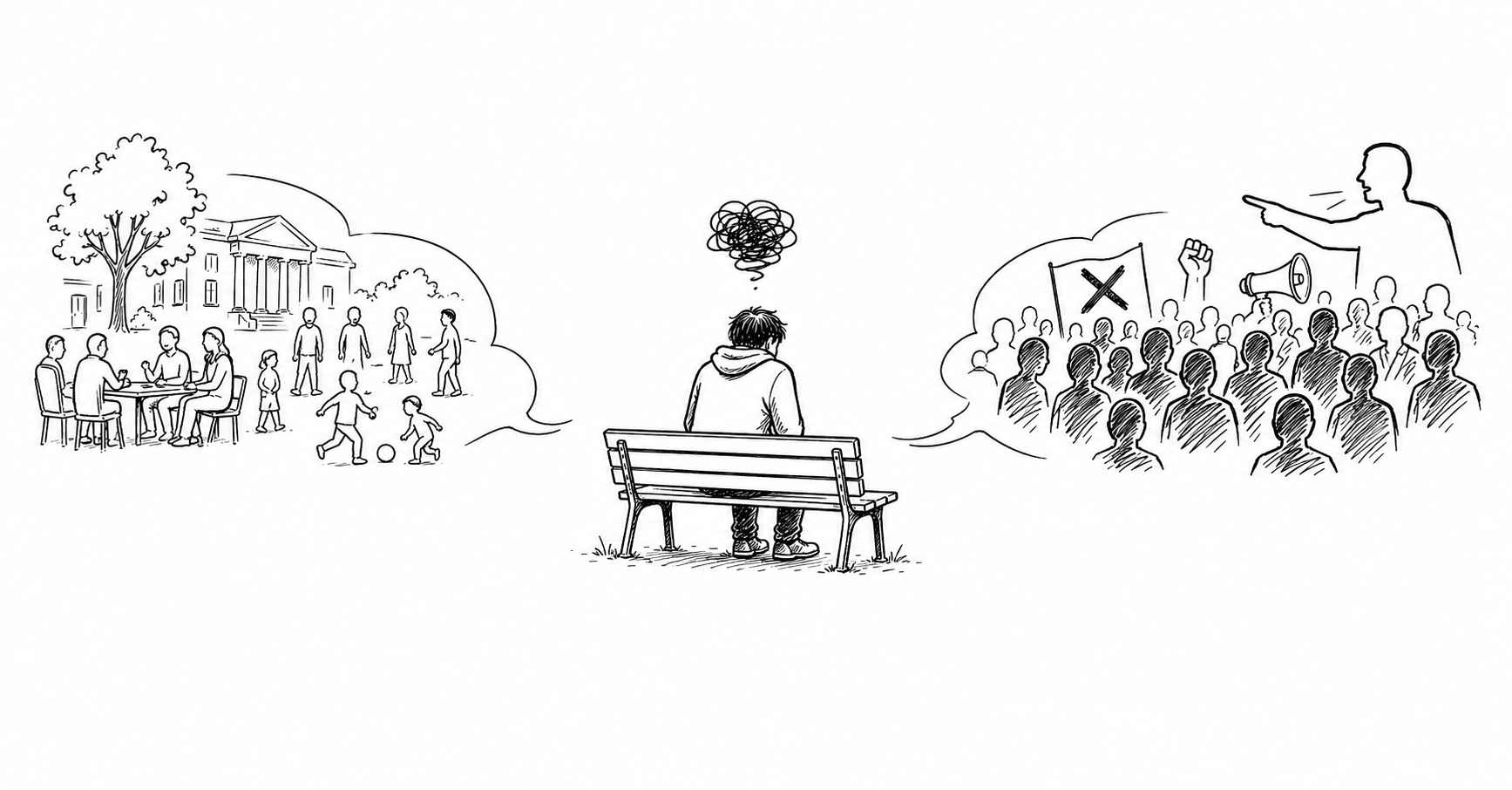
That argument reframes loneliness as political rather than personal, and the distinction matters. A private feeling is something an individual is supposed to solve on their own, through therapy, a new relationship, better habits, or, increasingly, a chatbot designed to simulate a friend. A political condition is something produced by policy choices, and it’s something policy can make worse or better. Laing’s point is that loneliness isn’t randomly distributed. It concentrates where poverty, illness, displacement, stigma, and underfunded public life intersect — which means who ends up isolated is shaped by decisions about what gets funded and what doesn’t, not just by who happens to be unlucky in love.
The mechanism that makes this dangerous is recruitment. Isolated people are easier to organize around grievance because they have less to lose and fewer competing relationships pulling them toward moderation. A person embedded in a dense web of family, neighbors, coworkers, and community ties has social friction working against radicalization — someone in their life is likely to push back, question, or simply provide an alternative source of belonging. A person with none of that has no friction. The far-right and manosphere content Laing describes isn’t subtle about this. It offers exactly what isolation removes: a community, a clear identity, a sense of being seen, and someone to blame for the loneliness itself.
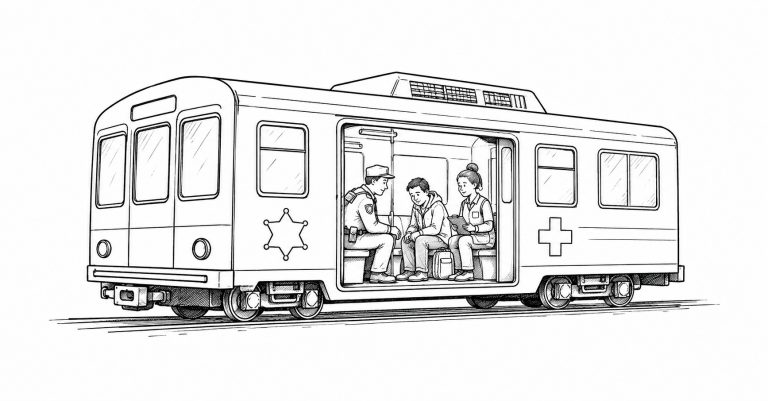
The usual policy response to loneliness treats it as a personal-health issue: public awareness campaigns, hotlines, wellness apps, occasionally a government “loneliness minister.” Those interventions assume the problem lives inside individuals and can be treated individually. Laing’s framing points somewhere else: toward the physical and civic infrastructure that used to generate incidental connection without anyone trying — parks, libraries, youth clubs, community centers, transit systems that put people in shared space, churches and union halls and the dozens of other institutions that have been quietly defunded or hollowed out over decades.
Those “weak ties,” the people you know just well enough to nod at on a regular bus route or recognize at the library, do more civic work than they get credit for. They are not friendships, but they’re not nothing either. They’re the connective tissue that makes a stranger feel like part of a place rather than a threat to it. When public infrastructure shrinks, weak ties don’t get replaced by strong ones. They just disappear, and the isolation that follows doesn’t distribute evenly — it lands hardest on people who already had the fewest resources to build connection privately: the poor, the elderly, the displaced, the chronically ill.
AI companionship products are being marketed directly into this gap, and that’s precisely why Laing is skeptical of them as a solution. A chatbot can simulate attention and never gets bored, contradicts you, or has needs of its own. It can reduce the immediate feeling of isolation without doing any of the civic work that isolation’s absence used to provide — it doesn’t vote alongside you, doesn’t show up to a community meeting, doesn’t create the accidental cross-class, cross-generation contact that a public library reading room does. It treats the symptom while leaving the actual infrastructure gap exactly where it was.
The stakes Laing is describing are not abstract. An electorate with declining social infrastructure and rising isolation is more vulnerable to movements that offer belonging as a political product. That’s not a metaphor — it’s a description of how the manosphere and far-right recruitment pipelines she points to actually function. Treating loneliness as a mental-health footnote misses that it’s also a measure of civic capacity: how many places still exist where people who don’t already agree with each other are forced into the same room. The fewer of those places remain, the more available people become for movements that promise connection in exchange for grievance.