Louis Vuitton’s Waterfall Became a Test of Luxury Under Climate Stress
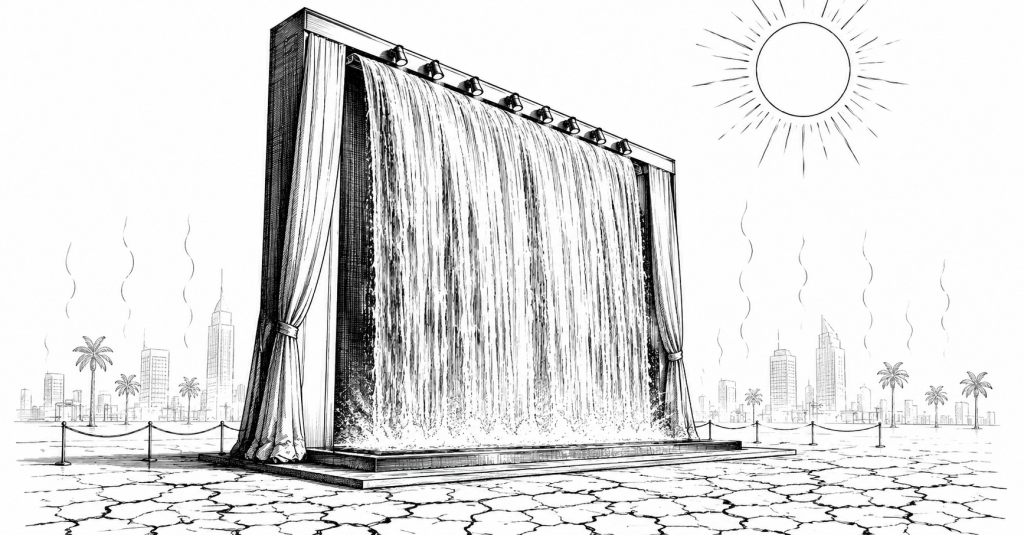
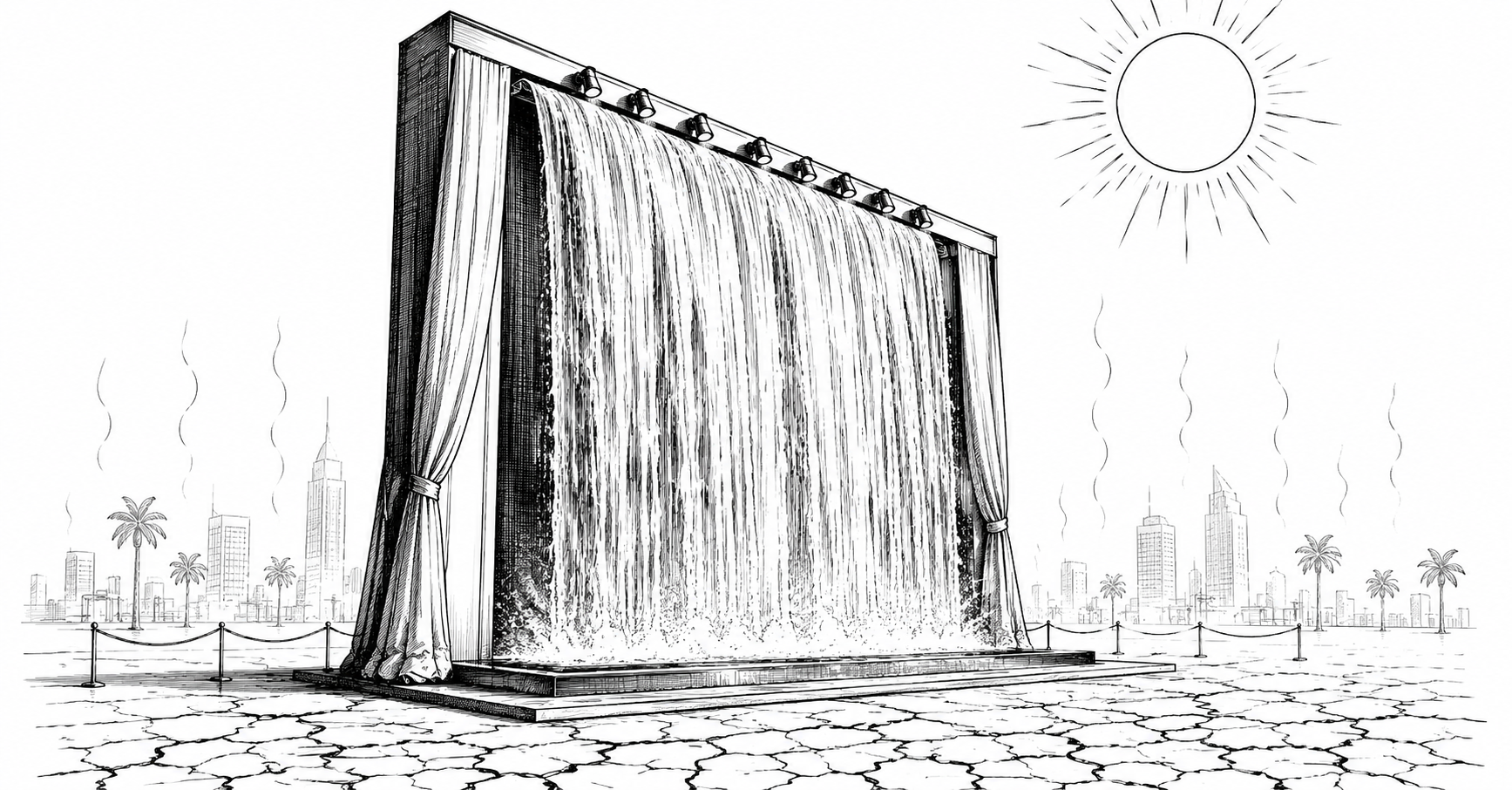
Alessandro Parodi and Tassilo Hummel reported for Reuters on June 26 that Louis Vuitton drew scrutiny for an eight-meter-high artificial waterfall at its Paris Fashion Week show while France was enduring temperatures above 40 degrees Celsius, or 104 degrees Fahrenheit. LVMH said the water came from Paris’ supply and was returned through a closed-loop system, while critics said the installation sent the wrong message during a heatwave.
Luxury brands use abundance as a visual language. Scale, rarity, access, and spectacle are the product, even when what is being sold is clothing, leather goods, or status. Climate stress changes how abundance reads in public.
The installation’s location sharpened the contrast. Reuters reported that the wave stood outside the Cite Universitaire, a residential complex housing 12,000 students a year. A luxury brand staging water, sand, exclusivity, and fashion-week access outside a student environment facing rising costs and public funding pressure is not a neutral juxtaposition. It is a visibility problem.
LVMH’s technical defense should be taken seriously. The company said no water was wasted, the system was closed-loop, the sand would be reused, and the show had been adapted to comply with heatwave regulations. Those details matter because the critique is not only about literal water consumption.
In a heatwave, people are not only measuring gallons. They are measuring access. They see who gets to occupy public space, who gets permits, who gets private cooling, who gets logistical support, and who gets to turn the city into a branded backdrop while residents manage discomfort with fans and wet towels.
Paris has long traded on fashion’s global prestige. Runway shows bring media attention, tourism, cultural capital, and commercial value. The city’s relationship with luxury is economic as much as aesthetic, which is why public officials often tolerate disruptions that ordinary commercial uses of public space would struggle to justify. Extreme heat makes that bargain less stable. A spectacle that reads as theatrical in mild weather reads as careless when hospitals, schools, and public agencies are managing heat stress.
Reuters quoted one student resident saying the show exposed a complete paradox between how students live and what Louis Vuitton had built. Fashion houses will have to adjust to climate scrutiny faster than they expect. Materials, scheduling, venue choices, public-space use, water features, and worker conditions will all become part of brand judgment. The future luxury demonstration may be restraint: proving that a house can command attention without staging abundance outside a city that is sweating through scarcity.