Kroger Is Cutting Prices Because Inflation Changed Consumer Behavior
Consumers are not buying less. They are buying differently.
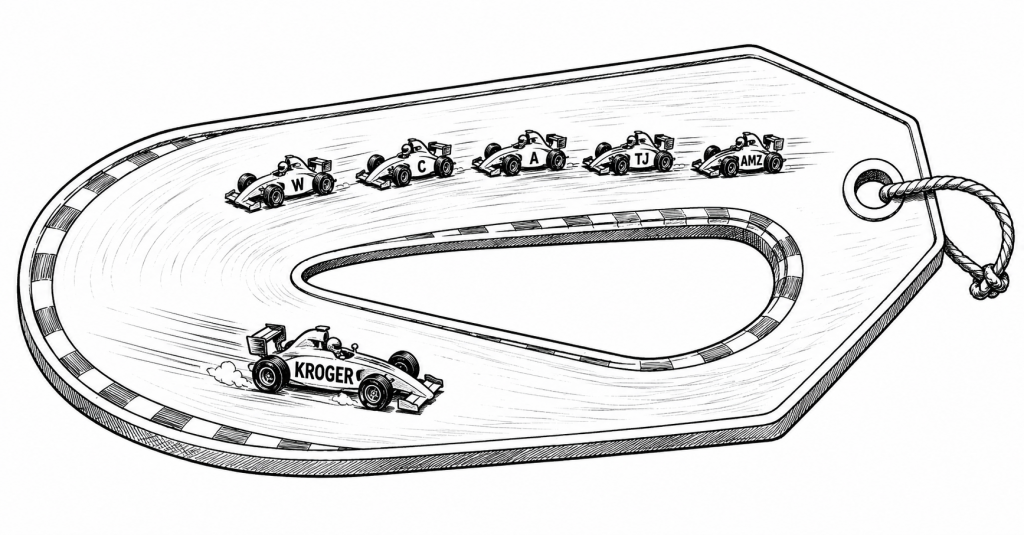
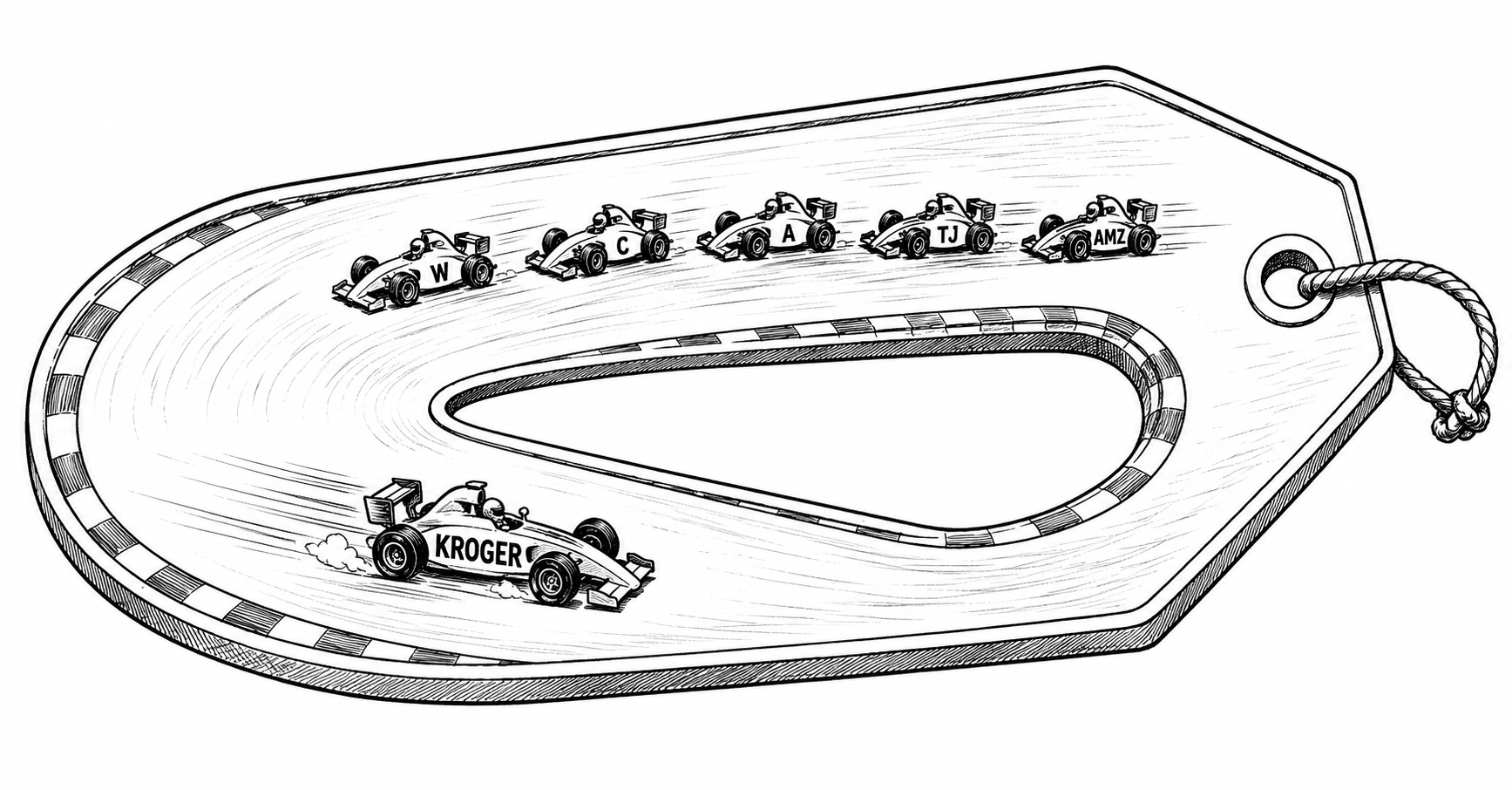
Kroger CEO Greg Foran told Bloomberg News in an interview published May 21 that the company is preparing to cut prices “across thousands of products” to close the gap with Walmart, Costco, Trader Joe’s, Aldi, and Amazon. “I think about our business a bit like a Formula One race,” Foran said. “There’s a lead group of cars that are doing a very good job. Our objective is to get out of the midfield and start lapping faster, make up the gap on the first-group cars and then ideally pass them.” Paul Roberts, a business reporter for the Seattle Times, reported that the promise drew skepticism from shoppers in markets where Kroger operates under regional banners like Fred Meyer and QFC. “Zero confidence,” said George Wing, a customer at a Seattle QFC, when asked whether he expected the cuts to last.
Foran has run this playbook before. He spent a decade fixing Walmart’s grocery business by widening aisles, improving fresh food, and raising pay for store workers, and he is now importing the same low-price, high-execution formula to a company he took over in February, after a blocked Albertsons merger and the abrupt exit of former CEO Rodney McMullen left Kroger without permanent leadership for nearly a year. Foran says the company’s “baskets,” meaning what shoppers actually buy per trip, have been shrinking — a direct read on how cautious consumers have become amid persistent inflation, rising gas prices, and broader economic uncertainty. Walmart did not let the comparison go unanswered: the same week Foran’s interview ran, it announced an expansion of its own price cuts to more than 7,000 items.
Kroger says it will fund the reductions by importing merchandise directly rather than through intermediaries, leaning more on technology, and cutting internal costs, without sacrificing gross margins, executives have said. By the company’s most recent quarterly results, those changes had already lowered prices on more than 3,500 products, alongside roughly 60 store closures and the elimination of nearly 1,000 corporate roles. The mechanism is straightforward: every dollar Kroger doesn’t spend on overhead becomes a dollar it can use to undercut a competitor’s shelf price, and the company is betting customers will reward that trade with loyalty before they notice what was cut to fund it.
What’s notable is who is actually setting the terms of that trade. Kroger isn’t lowering prices because it wants to; it’s lowering them because Walmart, Costco, and Aldi have already trained shoppers to expect it. A Bank of America pricing study cited by TheStreet found Kroger’s price gap with Walmart had narrowed from 14% in 2025 to 10% in 2026 even before this latest push, evidence the market was already moving in that direction with or without Kroger’s cooperation. The company isn’t choosing to compete on price so much as conceding that price was never really its decision to make alone.
This decision moves pricing power away from grocers setting margins in a boardroom and toward the aggregate behavior of cautious shoppers and discount competitors who now effectively set the floor everyone else has to clear. Inflation may keep cooling from here. The basket-level caution it created in shoppers like Wing is going to outlast it, and Kroger’s bet is that meeting that caution on price is now cheaper than losing the trip altogether.