Jeff Bezos Says AI Will Create Labor Shortages. Workers Hear Something Different.
Executives talk about scarcity. Employees see replacement.
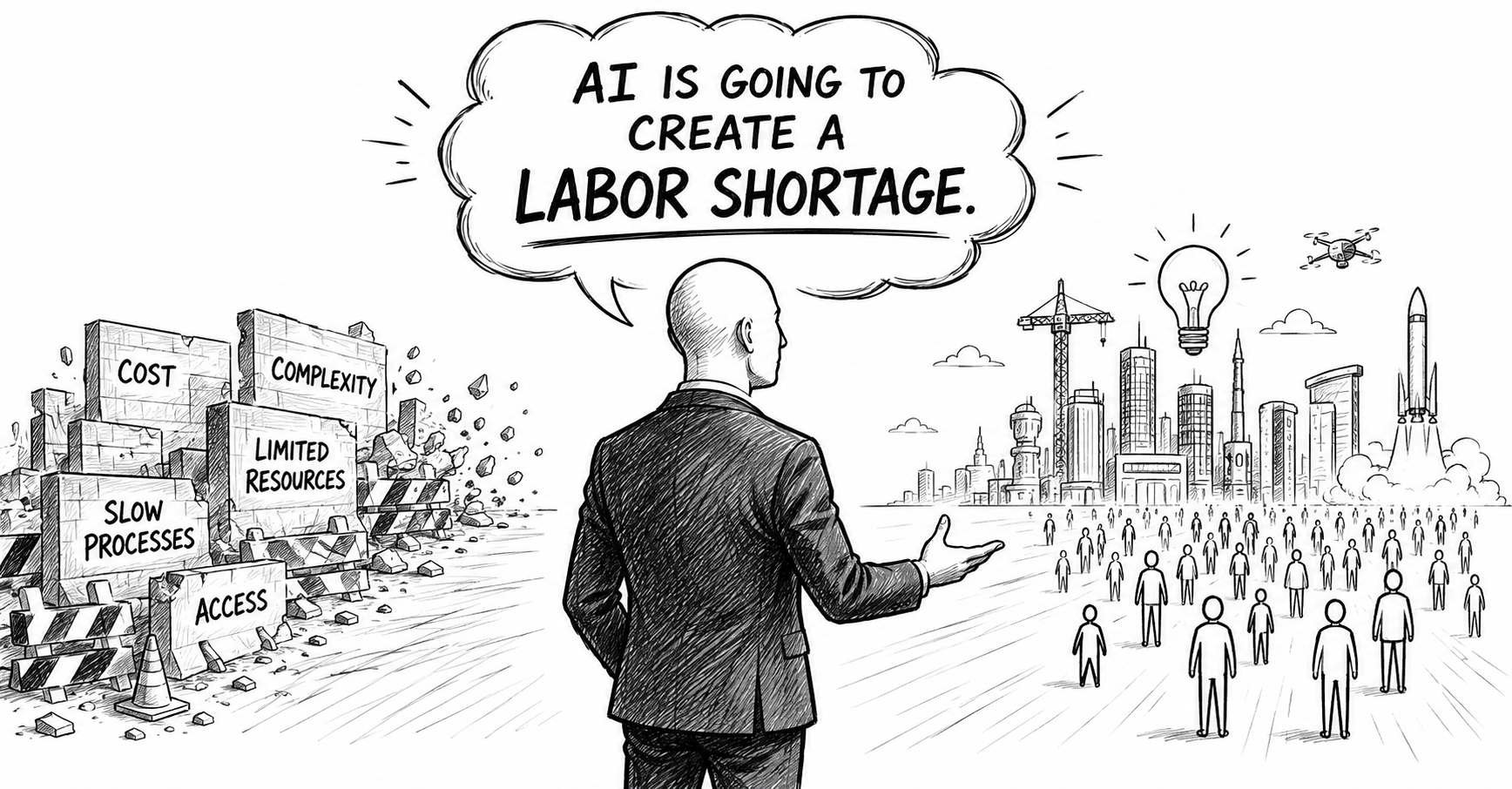
Speaking at the VivaTech conference in Paris on June 17, Jeff Bezos said artificial intelligence will create a labor shortage rather than mass unemployment, directly disputing what he called a fear “that many people have, including many smart people.” Reuters reported that Bezos, appearing alongside Blue Origin CEO David Limp, argued AI removes the barriers limiting what people can build, not the people themselves. “I totally disagree with this point of view,” he said. “And I think, in fact, AI is going to create a labor shortage.” Catherina Gioino, reporting for Fortune, noted Bezos has been building toward this argument for weeks, having used a “bulldozer versus shovel” metaphor in a May CNBC interview to make the same case about AI lifting constraints rather than replacing workers.
Bezos was not speaking as a neutral observer. The VivaTech appearance doubled as a platform for Prometheus, the AI startup he co-founded in November 2025, which has raised $12 billion at a roughly $41 billion valuation to automate engineering and manufacturing across aerospace, automotive, and pharmaceuticals — one of the largest early-stage AI fundraises on record. A labor-abundance narrative is not incidental to that bet; it is the bet. If markets believe AI mostly displaces workers in the near term, the case for pouring tens of billions into AI-driven industrial automation gets harder to sell to investors and regulators alike. If markets believe AI mostly creates new work, the same spending reads as visionary instead of risky.
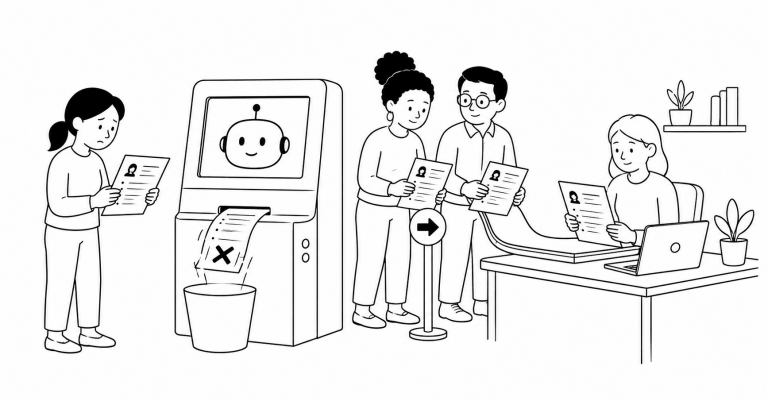
The numbers moving through the economy right now tell a more split story than Bezos’s framing allows. Goldman Sachs estimates AI is eliminating roughly 16,000 U.S. jobs a month, concentrated among entry-level and Gen Z workers. Challenger, Gray & Christmas found that of the 97,006 job cuts U.S. employers announced in May, 38,579 — about 40% — were attributed directly to AI, the highest monthly total the firm has tracked since 2023. Tech layoffs alone topped 115,000 through May, with Meta, Amazon, and Snap all citing AI as a factor. A Reuters/Ipsos poll found half of Americans fear AI could cost someone in their household a job, and a Federal Reserve governor warned in February that a “jobless boom” leaving workers “essentially unemployable” was “totally possible.” Even inside the AI industry, the consensus has been shakier than Bezos suggests: Anthropic CEO Dario Amodei warned in March that AI could cause “unusually painful” disruption to white-collar work, before he and OpenAI’s Sam Altman both softened that message ahead of their companies’ IPOs.
Bezos’s argument and the layoff data are not actually contradictory; they describe different timelines wearing the same headline. Industrial revolutions have historically destroyed specific jobs while expanding total employment over decades, and that pattern could hold again this time. But the workers losing positions this month do not get to wait out a multi-decade adjustment, and the policy response to that gap depends heavily on which story policymakers believe is the operative one right now. A labor market that reads itself as resilient because the long-run forecast is rosy will underbuild the safety net the short-run disruption actually requires.
No vote or regulation is forcing this outcome. It is a narrative contest over whose AI story gets believed, and that contest is already moving power away from displaced workers, whose evidence is a layoff notice, toward the capital allocators whose AI bets depend on the public staying patient a while longer. The next jobs report won’t settle who is right. It will only decide who has to keep waiting.