Anthropic and Washington Are Writing AI Rules Together
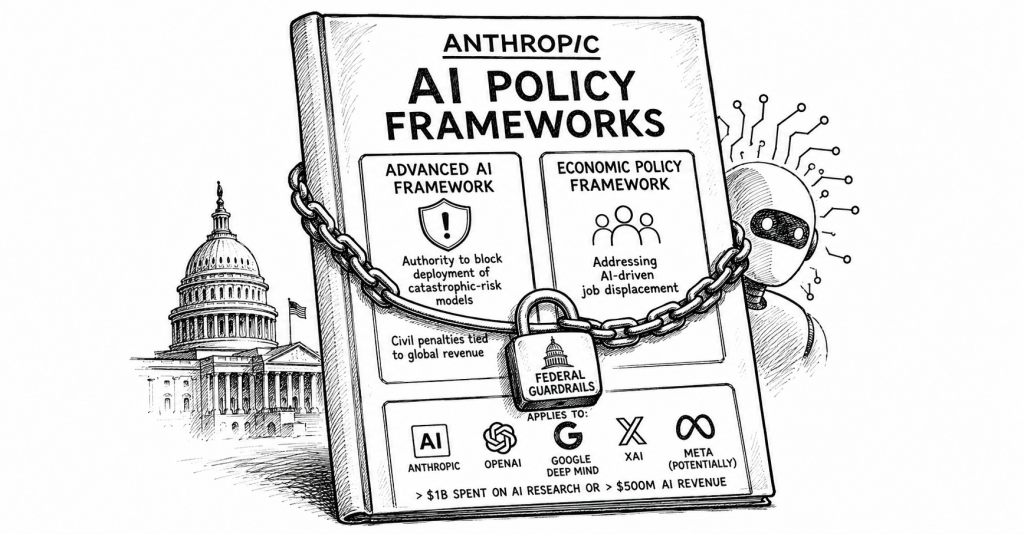
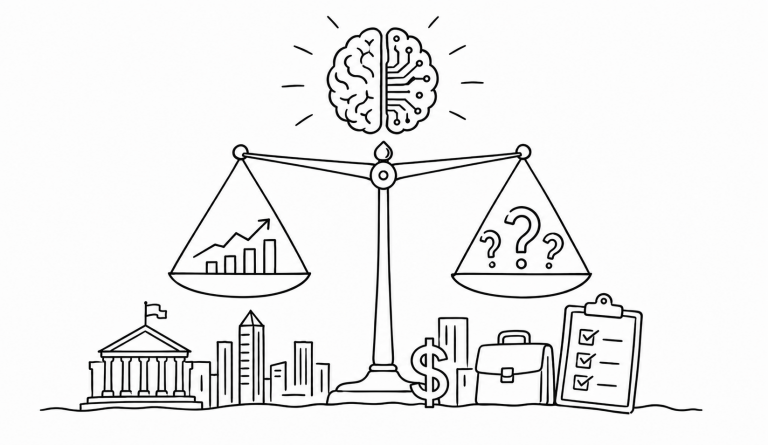
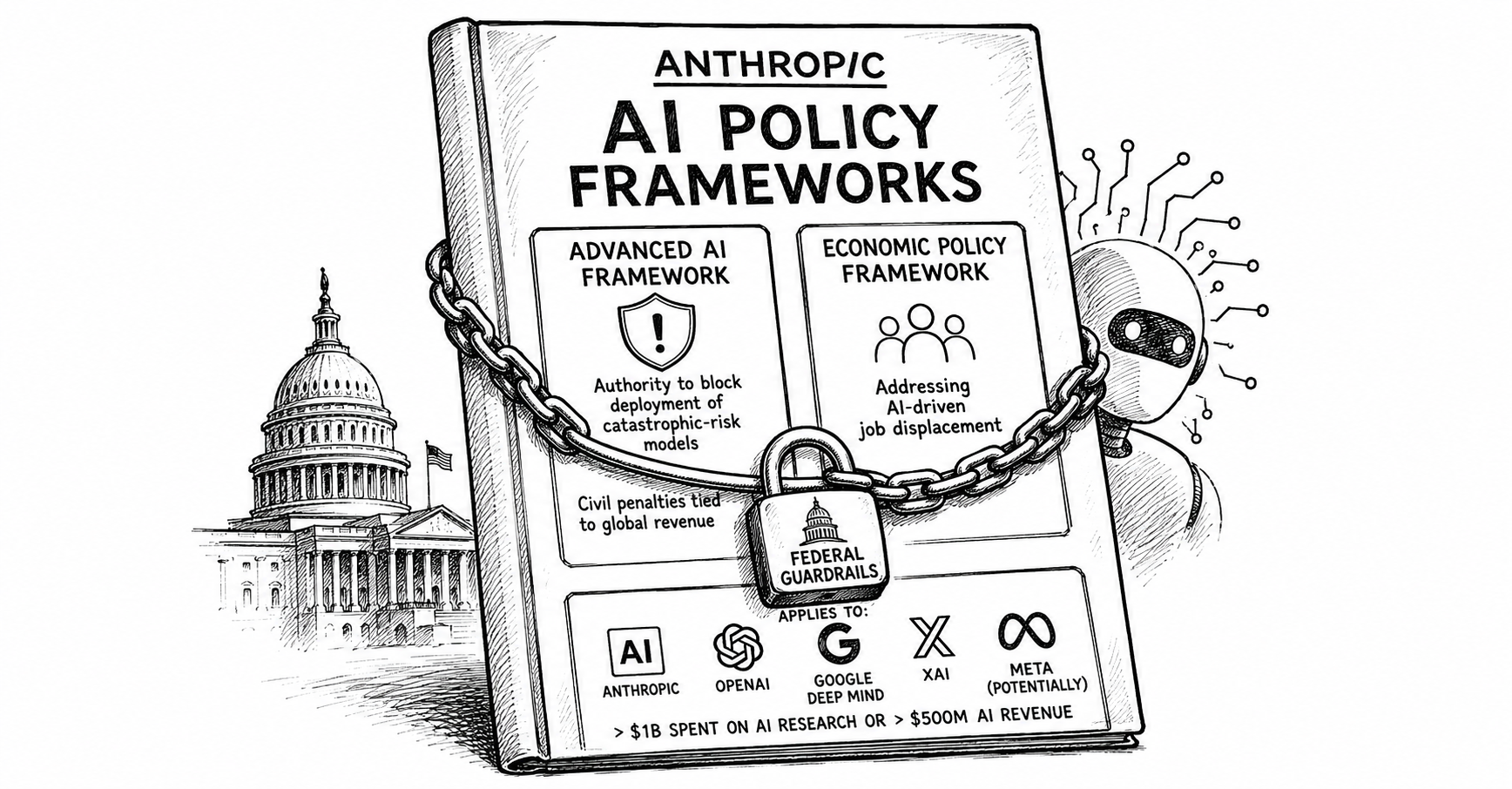
Anthropic published two policy frameworks on June 10 proposing how the federal government should regulate frontier AI models, taking a direct position on one of Washington’s most contested fights by stating it does not believe “Congress should preempt state law unless it enacts a federal law that is at least as strong as the framework we are proposing today.” The Advanced AI Framework calls for government authority to block the deployment of models that pose catastrophic risk, with civil penalties tied to global revenue; a companion Economic Policy Framework addresses AI-driven job displacement. TheNextWeb reported the rules would apply to a small group of companies spending more than $1 billion on AI research or earning over $500 million in AI revenue — Anthropic itself, OpenAI, Google DeepMind, xAI, and potentially Meta.
The framework did not arrive from a position of neutrality. Four months earlier, on Feb. 27, Trump directed “EVERY Federal Agency” to immediately stop using Anthropic’s technology, after the company refused Pentagon demands for unrestricted use of its models in mass surveillance and fully autonomous weapons, BBC reporters Kali Hays and Lily Jamali reported. Defense Secretary Pete Hegseth designated Anthropic the first U.S. company ever labeled a “supply chain risk,” and Anthropic sued the Pentagon and other federal agencies over that designation, a suit more than 30 Google and OpenAI employees backed in an amicus brief calling it “an improper and arbitrary use of power.” Days before publishing its framework, Anthropic also complied with a separate federal export control directive suspending foreign nationals’ access to its newest models, Claude Fable 5 and Mythos 5.
That sequence is the mechanism worth naming: a company the federal government tried to cut off from its own contracts is now the one publishing the rules it wants that same government to adopt. TheNextWeb’s analysis of the framework called the timing deliberate, noting Anthropic is simultaneously fighting the Pentagon in court over its blacklisting, preparing for an IPO, and watching Congress negotiate a deal that would trade state AI preemption for online safety legislation — a deal Anthropic has no formal seat at shaping. Publishing a fully specified framework, with thresholds, penalties, and a preemption test already attached, is a way to set the terms of that negotiation before Congress finishes writing its own version. The House’s bipartisan Great American Artificial Intelligence Act, introduced June 4 by Reps. Jay Obernolte and Lori Trahan, proposes a three-year preemption of state AI development laws — a shorter, blunter trade than the one Anthropic is now publicly pushing back against by insisting any federal law has to match its own bar first.
Washington has historically written AI rules, or tried to, while industry reacted and lobbied around the edges of someone else’s draft. This sequence inverts that order. The company under direct federal sanction wrote a complete regulatory proposal first, penalties and thresholds included, and Congress is now negotiating in the shadow of a standard it did not set. The same week, Anthropic was opening new partnerships and an office in Seoul, a reminder that the company’s relationship with governments outside Washington has not been defined by the same conflict, which makes the domestic standoff look less like an industry-wide AI fight and more like a specific dispute between one administration and one company that happens to be setting the public terms of debate.
This decision moves power away from the federal agencies that spent the spring trying to discipline Anthropic through contracts and export controls, and toward Anthropic’s own published text, which now functions as the public floor any future federal law will be measured against. The next fight over AI regulation won’t start with what Congress wants. It will start with whether Congress is willing to write something weaker than what the company it just blacklisted already proposed.