
Japan’s Housing Squeeze Is Redesigning the Washing Machine
When space becomes the scarcest resource in a home, the objects inside it change to match.
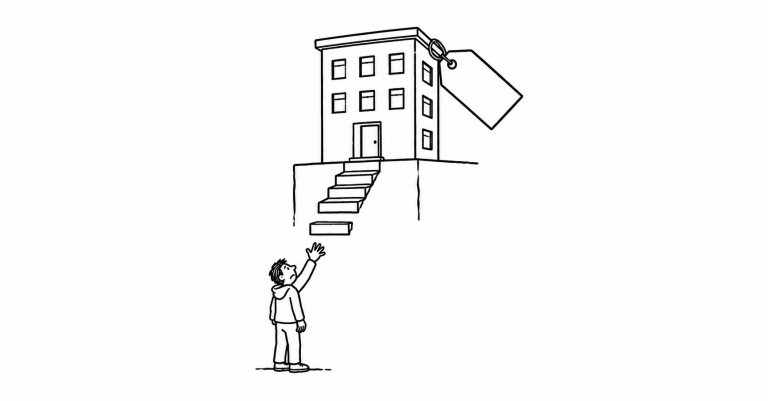
The average price of a new condominium in the Tokyo metropolitan area reached approximately ¥101.35 million(roughly $690,000) in the first half of 2026 — up 13.1 percent year over year, according to data cited in reporting by Kyodo News in The Mainichi. That number does not stay in the real estate section. It moves into the kitchen. It moves into the laundry room. It moves into the engineering departments of Japanese appliance manufacturers who are now designing products not for a home, but for what the market has decided a home is allowed to be.
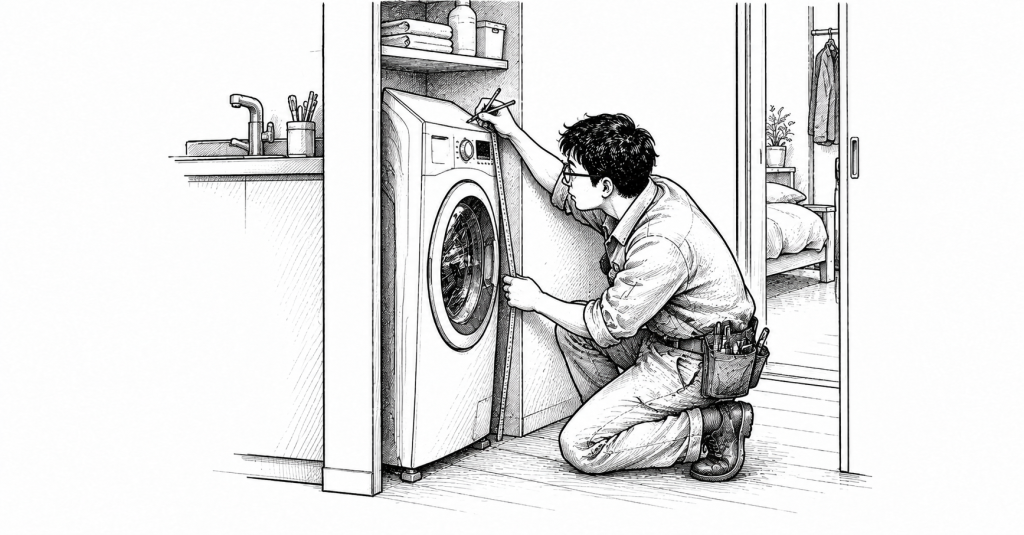
Japanese appliance manufacturers have begun formally organizing their product development around what they are calling “space performance” — the ratio of functionality to floor area. The concept is not new to Japan, which has built a global reputation for efficient design across consumer goods, transit systems, and urban infrastructure. What is new is the explicit acknowledgment that housing affordability has become a primary engineering constraint. Compact washer-dryers and other household appliances are being redesigned specifically for tighter urban living spaces, and the redesign is driven less by innovation than by necessity. The housing market has reassigned the value of every square foot of domestic space, and manufacturers are responding to that reassignment in the only language available to them: the specifications of the products they sell.
The mechanism is worth naming precisely because it is usually invisible. Housing crises are discussed in terms of rents, mortgage rates, supply shortages, and displacement. The conversation stays at the policy level, or at the human level — the family priced out of a neighborhood, the commute that gets longer as workers move further from city centers. What is less often tracked is what happens downstream, inside the unit itself, when the unit shrinks. Affordability shapes square footage. Square footage shapes layout. Layout shapes what fits. What fits shapes what manufacturers build. What manufacturers build shapes how households organize daily life — which appliances they can own, which tasks they can perform, how many people can do them at once, and what the rhythm of a domestic day actually looks like. A washing machine is a small object at the end of a long causal chain that starts with land prices and interest rates and ends in a design meeting.
Tokyo’s housing squeeze did not begin in 2026. The city has been one of the most expensive real estate markets in the world for decades, and Japanese appliance design has long reflected the spatial constraints of dense urban living. What the 13.1 percent year-over-year increase in new condominium prices signals is not the arrival of a new problem but the acceleration of an existing one — and an acceleration that has moved manufacturers from adapting to the market to explicitly reorienting around it. “Space performance” as a formal product category is the industry acknowledging that the floor plan has become a specification.
The cultural question embedded in that shift is what it means to redesign domestic life around shrinkage. There is a version of this story that is told optimistically: compact appliances as elegant engineering, small-space living as minimalist philosophy, the washer-dryer combination unit as a triumph of multifunctionality. Japan’s design tradition makes that framing available. But the framing is also a way of aestheticizing a constraint that most households did not choose. The families buying condominiums in the Tokyo metropolitan area at ¥101.35 million are not paying that price because they wanted less space. They are paying it because the market has decided that less space is what their budget purchases. The washing machine that fits in the resulting unit is not a design choice. It is an adaptation to a condition.
That adaptation is worth tracking because it generalizes. Tokyo is ahead of a curve that other dense urban housing markets are already on. New York, London, Hong Kong, Sydney, and Seoul are all producing housing stock that is getting smaller in response to land values that are getting larger. What Japanese manufacturers are now designing explicitly for — a home in which square footage is not assumed, in which every appliance must earn its footprint — is the direction the global housing market is moving. The washing machine being redesigned for a ¥101.35 million Tokyo condominium is an early-production model for what appliance design looks like in a world where affordability has made the ordinary home extraordinary to obtain and ordinary in size.
The housing crisis has a physical record. It is in the apartments. It is in the commutes. It is in the product catalogs.
SSC | Culture in Motion — September 24, 2026 — Social Storytellers Collective News Desk
Source: Kyodo News, as reported in The Mainichi, September 22, 2026. Yen-to-dollar conversion approximate at time of publication.