
America Is Processing Far Fewer Citizenship Applications — While Denials Are Rising
USCIS completed 75% fewer naturalizations in May 2026 than two years prior. The backlog is growing anyway.
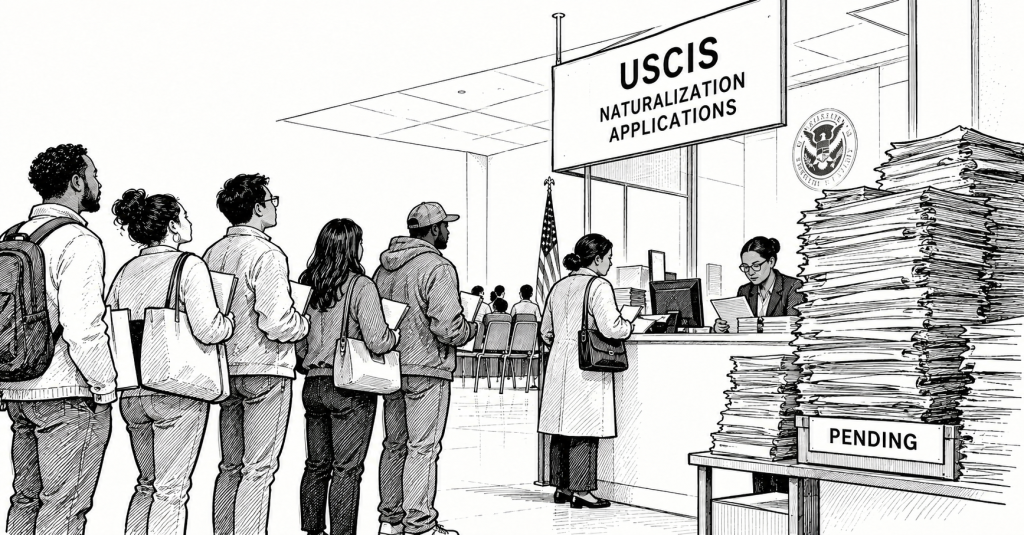
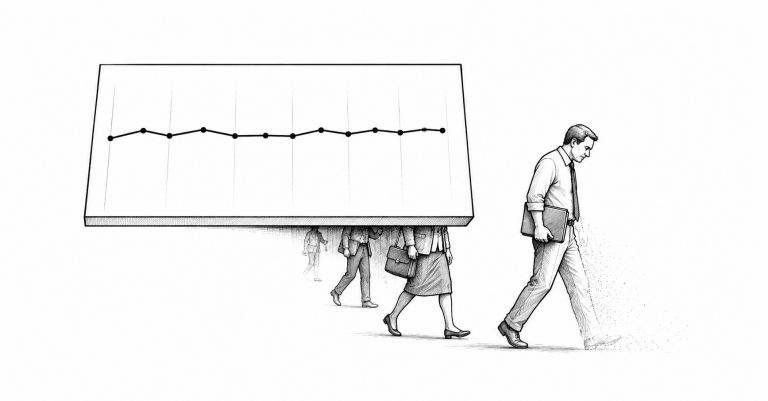
USCIS completed 20,795 naturalization applications in May 2026, down from 83,317 in May 2024 — a roughly 75 percent decline. At the same time, the denial rate for Form N-400 applications climbed from 8.3 percent to 18.1 percent, according to an analysis of USCIS data by the National Foundation for American Policy. Fewer applications are entering the system, fewer are being completed, and a larger share of those that do reach a decision are being rejected. The numbers are not moving in the same direction — they are accelerating in the same direction.
The backlog is growing even as applications fall
From January through May 2026, USCIS received an average of roughly 47,500 naturalization applications per month, compared with approximately 89,350 during the same period in 2024 — nearly a 47 percent decline. Yet the number of N-400 applications pending for more than six months increased from 198,235 to 441,362. A growing backlog could normally be explained by a surge in applications. Here, the opposite is occurring: intake has fallen substantially while older cases accumulate. USCIS reports that the national median processing time for a nonmilitary N-400 application was 5.0 months in fiscal 2024, 5.6 months in 2025, and 7.1 months in fiscal 2026 through June 30. The system is taking longer to process fewer applications and completing them at a lower rate.
Citizenship requirements have also changed
The slowdown comes as the naturalization process itself has become more demanding. Applicants who filed Form N-400 on or after October 20, 2025 face a revised civics examination. The test draws from a pool of 128 questions, with applicants asked 20 and required to answer 12 correctly. The previous test asked 10 questions from a pool of 100 and required six correct answers. The available data do not establish that the new test caused the increase in denials. NFAP has noted that the timing and normal lag between filing and testing make it difficult to attribute the increase to a single policy change. Naturalization applications can also be denied for reasons including eligibility problems, English or civics-test failures, immigration or criminal-history issues, or failure to provide required documentation. What the data establish is the trend — not its single cause.
The numbers point to a structural change
The denial trend predates the latest monthly figure and has accelerated consistently. NFAP’s analysis found the rate at 9.2 percent in September 2025, rising to 13.1 percent in January 2026, 18.2 percent in April, and 18.1 percent in May. The Trump administration and USCIS have framed tighter immigration and naturalization procedures around screening, eligibility, and protecting the integrity of the citizenship process. Immigration advocates and attorneys have argued that the cumulative effect of stricter review, longer waits, and compounding policy changes could discourage eligible permanent residents from applying at all. These are competing interpretations of what the policy changes mean; the administrative data establish the underlying slowdown and the increase in denials.
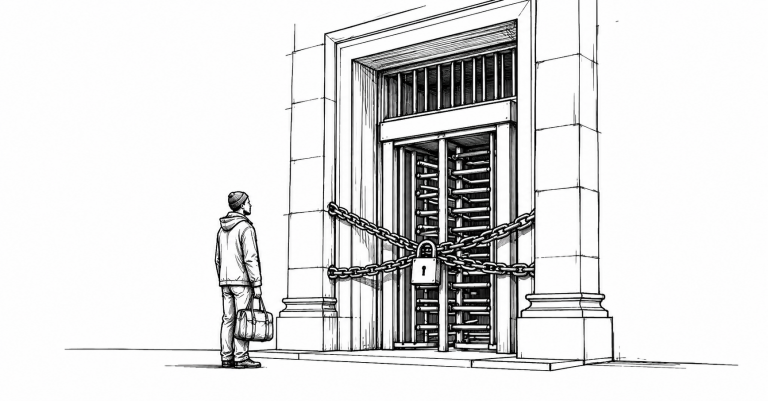
What has changed is measurable. USCIS is receiving fewer citizenship applications, completing substantially fewer of them, taking longer to process the cases it does hold, and denying a larger share of the applications it adjudicates. For hundreds of thousands of lawful permanent residents, the final step in the immigration system — becoming an American citizen — now involves a longer and less predictable wait, with a higher probability of being told no at the end of it.
SSC | Structural Reality · Policy — September 24, 2026 — Social Storytellers Collective News Desk
Source: National Foundation for American Policy analysis of USCIS administrative data; USCIS processing time reports, fiscal years 2024–2026.