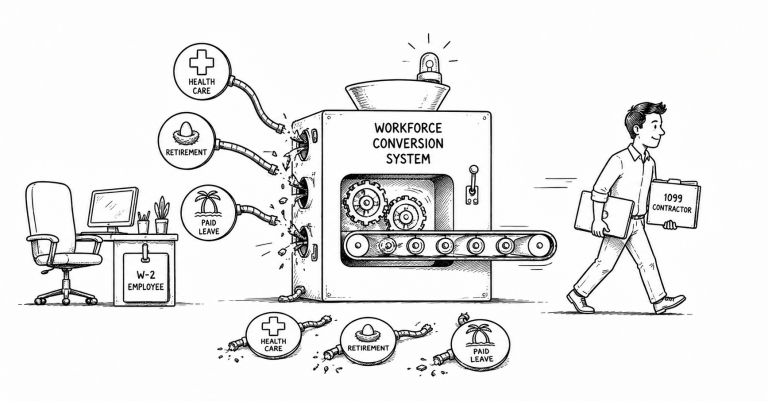
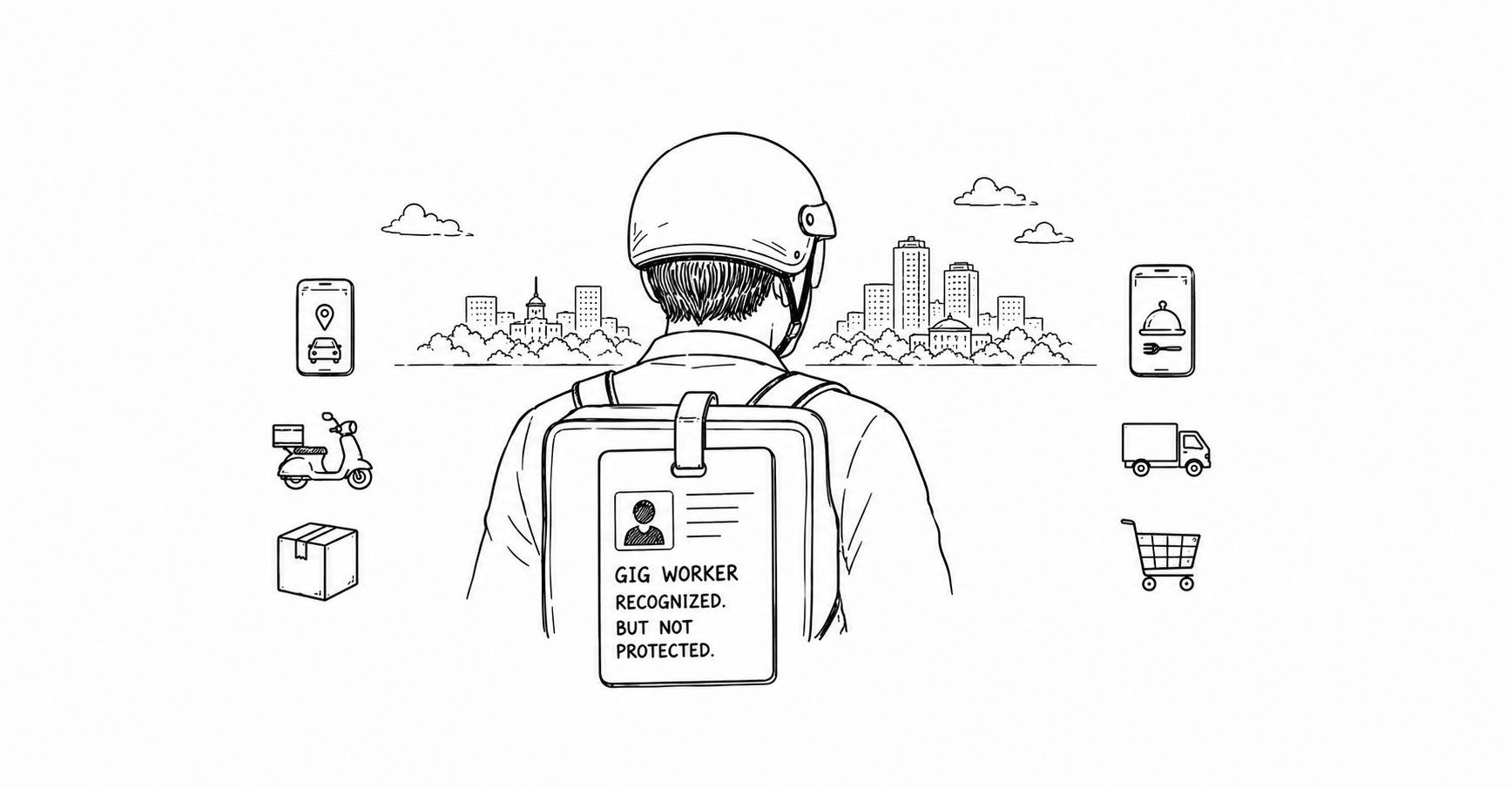
India Gave 12 Million Gig Workers a Legal Name. The Rules That Follow Decide Whether the Name Comes With Anything.
India’s Code on Social Security formally recognized gig and platform workers for the first time. As of mid-2025, fewer than 340,000 of the country’s 12 million gig workers had enrolled in the system created to protect them.
India’s gig workforce grew from 7.7 million workers in fiscal year 2021 to 12 million in fiscal year 2025 — a 55 percent increase driven by smartphone penetration, digital payment infrastructure, and expanding platform delivery, ride-hailing, and logistics companies. The workforce grew faster than any regulation designed to govern it.
In November 2025, India’s Code on Social Security came into force. For the first time, gig and platform workers received formal legal recognition — not as employees, but as a distinct category of worker entitled to access a Social Security Fund. Platforms are required to contribute 1 to 2 percent of their annual turnover to cover life and disability insurance, accident coverage, and health and maternity benefits.
Legal recognition is a genuine shift. It acknowledges that gig workers exist, that they are not simply independent entrepreneurs who require no protection, and that the platforms profiting from their labor carry some responsibility toward them.
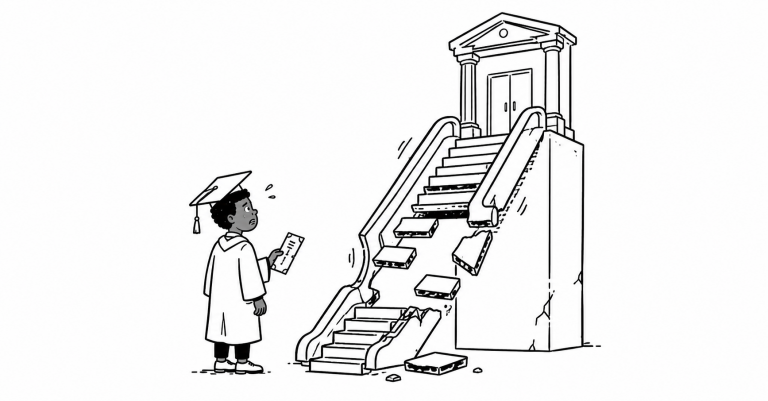
Recognition is not coverage.
As of mid-2025, the central registration system had enrolled fewer than 340,000 of India’s 12 million gig workers. The draft rules condition access on at least 90 days of engagement with a single aggregator annually — or 120 days across multiple platforms. That threshold excludes many workers in a sector defined by instability. A driver who works twenty days a month across three apps and earns enough to keep his family housed may not qualify for a single benefit.
The platforms have invested heavily in lobbying the definition of “platform worker” and the calculation of turnover on which their contributions are based. The difference between 1 and 2 percent of a large platform’s annual turnover runs into hundreds of crores of rupees. Companies do not accept those definitions without a fight.
Recognition creates a legal category. Enrollment creates access. Benefits require funding, and funding requires enforcement. India has accomplished the first step in a sequence where each following step has historically taken longer and produced less than the one before.
Non-agricultural gigs are projected to constitute 6.7 percent of India’s total workforce by 2029 and to contribute significantly to GDP. The country’s economic projections assume gig workers will be present and productive. Its legal framework has not yet delivered a system that reaches them.
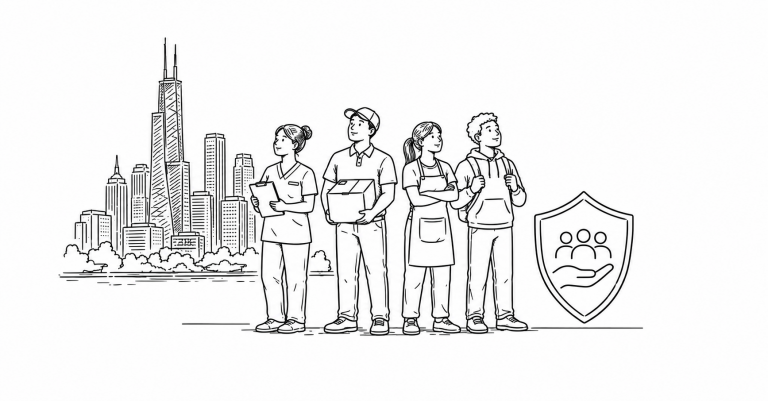
The 12 million workers who now have a legal name are watching to see whether the name comes attached to anything that changes how they work, what they earn, or what happens when they are injured doing it.