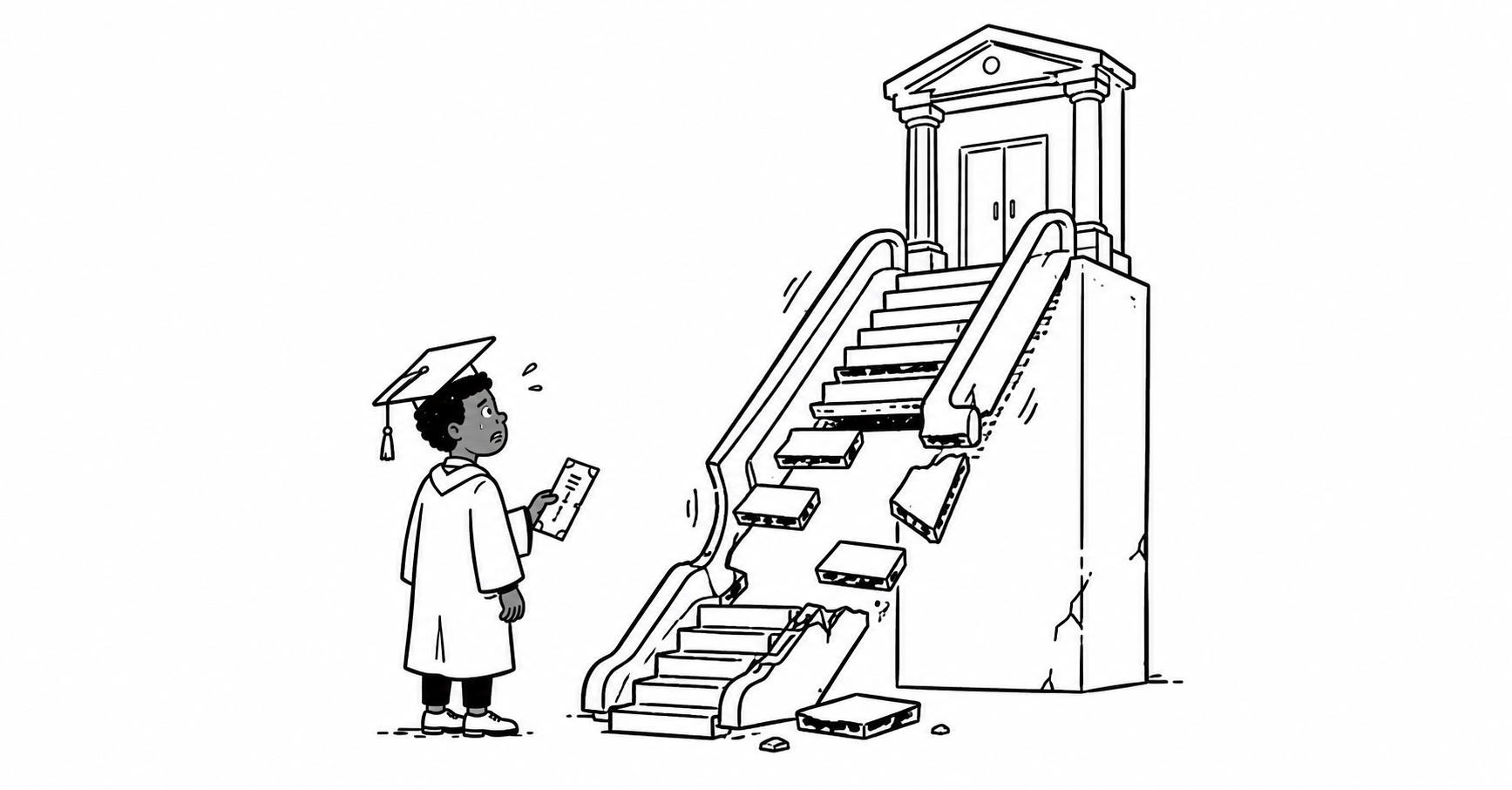
Higher Education Is Still Selling Mobility Into a Labor Market That Keeps Changing the Terms
The degree was supposed to be the ticket. For the Class of 2026, the ticket keeps getting harder to redeem.
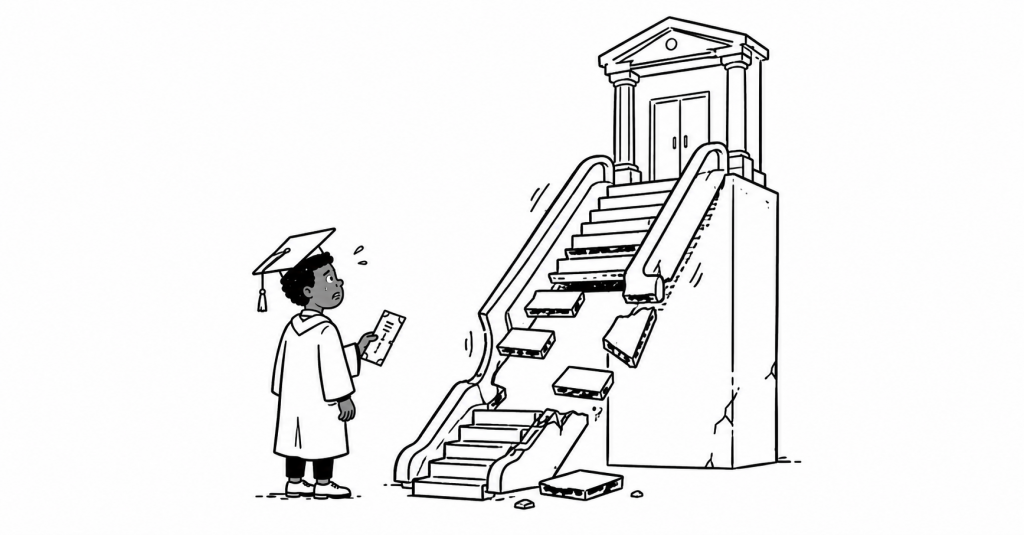
The Class of 2026 is graduating into one of the most difficult entry-level labor markets in two decades. The unemployment rate for recent college graduates reached 5.7% in early 2026 — higher than the national average of 4.3%, according to data cited across multiple analyses. The underemployment rate, which captures graduates working in jobs that do not require their degree, sits at 42.5%, the highest level since the first year of the COVID-19 pandemic. BlackRock CEO Larry Fink said at a summit in March that the 2026 class could face the highest jobless rate in years, in part because AI is making entry-level roles obsolete.
The Economic Policy Institute’s analysis of the Class of 2026, released in May, found that the unemployment rate for young college graduates rose from a low of 4.0% in July 2023 to 5.3% by March 2026 — a faster increase than for the broader workforce. A separate EPI analysis released the same month found the primary driver is a depressed hiring rate, not a spike in layoffs. Young graduates are not losing jobs at an unusual rate. They are having an increasingly difficult time getting hired into them in the first place. That is a different problem than the one job training programs and career services offices are designed to solve.
The Federal Reserve Bank of Dallas found, in research published in early 2026, that among young labor market entrants, the job-finding rate has held steady only for jobs with low AI exposure. For occupations rated as highly exposed to AI, the employment share for workers aged 20 to 24 has fallen since November 2022, when ChatGPT was released. The Federal Reserve Bank of New York found something that complicates the AI-only narrative: employers are less likely to hire recent college graduates into occupations that can be done remotely, because they are reluctant to onboard early-career workers into environments where learning from colleagues is harder. Computer science and computer engineering graduates — the majors most associated with AI-resistant skills — have unemployment rates double that of pharmacy, criminal justice, and biology graduates, according to Fed New York data.
Higher education is caught between two structural realities it did not create and cannot fix unilaterally. The labor market for entry-level knowledge work is contracting at the exact moment the pipeline into that market is largest. And the institutions that built their enrollment models, tuition pricing, and social value proposition around the promise of degree-to-career mobility are now watching that mobility weaken in ways their recruitment materials have not caught up to. A student who took on $60,000 in debt to access a knowledge economy job is not experiencing the 4.3% unemployment rate. They are experiencing 5.7% unemployment, 42.5% underemployment, and a LIFO charge on their investment that the headline number cannot see. The degree is not worthless. What it can no longer reliably promise is the trajectory it was priced on.