Hiring Managers Are Calling It Cheating. We Call It a Mirror.
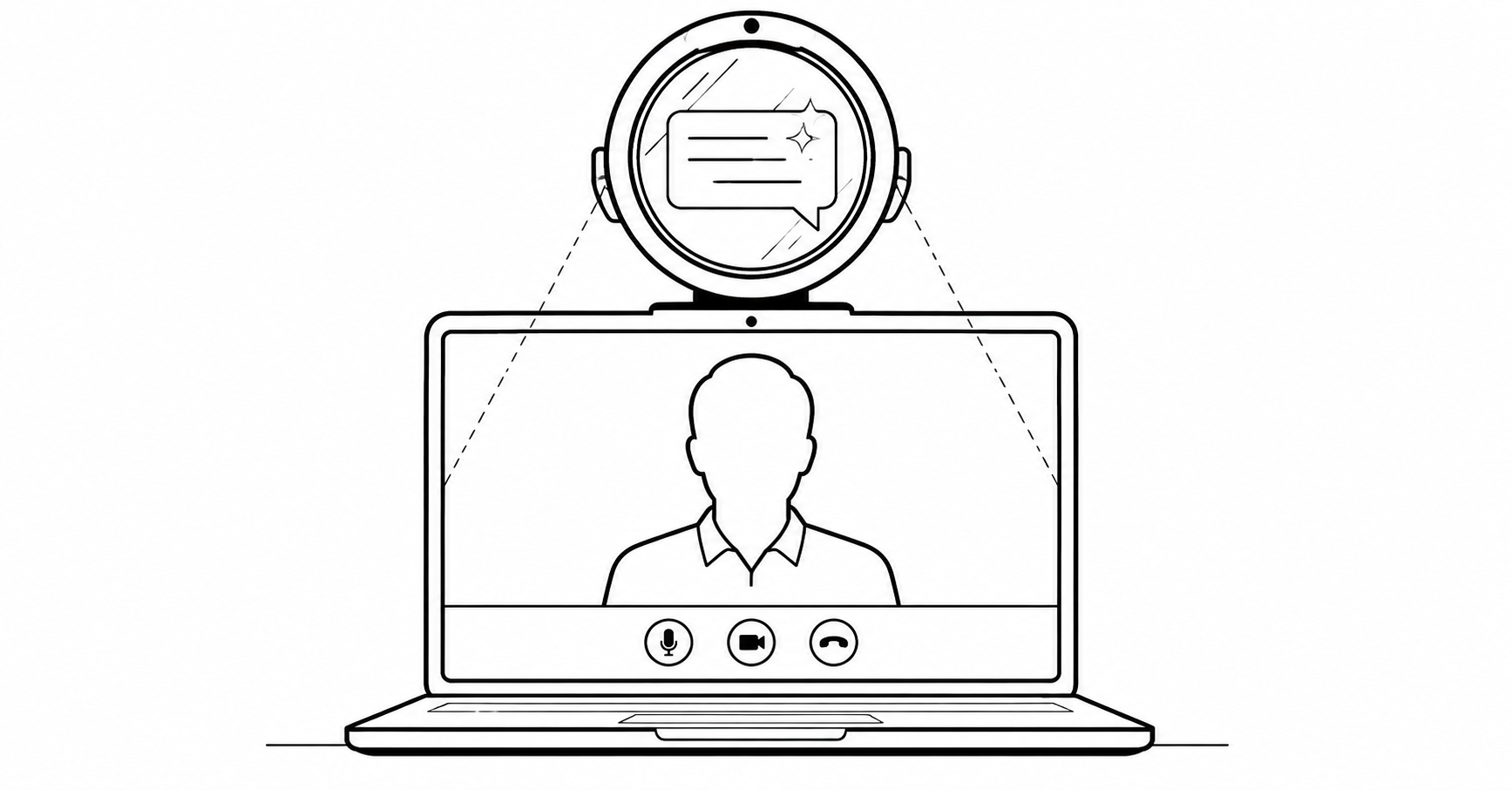
Bloomberg reported this week that hiring managers are increasingly alarmed that job candidates are using AI to pass interviews — answering questions in real time with chatbot assistance — only to arrive on the job and underperform against whatever the interview was supposed to measure. The response from some employers has escalated to the point where companies are physically mailing cameras to candidates and instructing them to install surveillance equipment at their own desks before a screening can proceed. Roughly 50% of job seekers, per Gartner data cited by Bloomberg, have acknowledged using AI during the application process.
Companies are describing this as cheating. We want to describe it as something else: a stress test that the hiring process is failing.
The interview, as it currently exists across most of corporate America, was not designed to measure whether someone can do a job. It was designed to measure whether someone can perform well under artificial conditions — prepared answers, standardized questions, the performance of confidence in a high-stakes low-information conversation with a stranger who holds your economic future in their hands. Companies built this system, normalized it over decades, and then decided that performance within it was a valid proxy for job performance. It was always a shaky premise. AI just made it visible.
When a candidate uses a chatbot to answer a behavioral question in real time, what exactly are they bypassing? They are bypassing their ability to recall a prepared story about a time they demonstrated leadership under pressure. They are not bypassing their ability to lead under pressure. Those are not the same thing. The interview was measuring the former and calling it the latter. The gap has always existed. AI just made it exploitable.
Shannon Rice, an Executive Talent Acquisition Consultant at Ohio State University, put it plainly in a LinkedIn comment that got wide traction this week: evolve how you assess talent rather than fear the tool. Her suggestions — behavioral questions anchored to real experience, practical exercises that mirror the actual work, evaluation of how candidates use AI ethically and effectively — are sensible, and they are also a quiet indictment of the status quo. If the assessment needs this much redesign to hold up against AI, the assessment was not measuring what employers thought it was measuring.
The surveillance response deserves separate attention, because it is not a minor escalation. Mailing cameras to job applicants and asking them to install monitoring equipment in their homes before they are even employed is an extraordinary demand. It normalizes a level of corporate access to private domestic space that has no obvious limit once established. The power imbalance in hiring — candidates need jobs, employers have them — makes this feel less like a choice and more like a condition. A candidate who declines the camera does not get the interview. A candidate who accepts it has consented, under economic duress, to employer surveillance of their home. The framing of this as a reasonable quality-control measure rather than a coercive demand reflects who holds power in this relationship and who has decided the rules.
Here is the argument the Bloomberg coverage doesn’t fully make: the companies most invested in surveillance-based interview integrity are, almost by definition, the companies whose jobs are not compelling enough to attract candidates willing to go through a more rigorous but fairer process. The best candidates have options. They do not install employer cameras in their bedrooms to compete for a role. The surveillance arms race is, in part, a signal of a company’s competitive position in the labor market dressed up as a quality-control problem.
The 50% figure is also doing more work than Bloomberg’s framing allows. Half of all job seekers have used AI during the application process. That is not a fringe behavior. That is the norm. When the norm becomes what employers are calling cheating, one of two things is true: either employers have correctly identified a massive integrity crisis in the labor market, or employers have defined cheating as something that the majority of their candidate pool is now doing because the process itself has become detached from what it is supposedly measuring. We think it is the latter.
What AI has done to the hiring process is similar to what calculators did to math education in the 1980s. The initial panic was about cheating. The structural insight, once the panic settled, was that the curriculum needed to change — that the point of math education was never to produce people who could perform long division by hand, but to produce people who could think quantitatively. The calculator did not undermine that goal. It exposed that many assessments were measuring the wrong thing.
The right response to 50% of candidates using AI in interviews is not to build better surveillance. It is to build assessments that AI cannot substitute for — assessments that measure judgment, pattern recognition across genuine complexity, the capacity to work with incomplete information in real collaboration with other people. Those assessments exist. They are harder to standardize. They require more investment from employers. They tend to surface different candidates than the traditional interview does, which is part of why companies have been slow to adopt them.
The candidates using AI are adapting to a broken system using the best tools available to them. The companies surveilling them are defending a broken system with escalating coercion. Neither of those is a long-term solution. The long-term solution is a hiring process honest enough about what it actually measures that candidates do not need to cheat to pass it — and employers do not need cameras to enforce it.
Source: Bloomberg — https://www.bloomberg.com/news/articles/2026-07-14/ai-tools-can-help-job-hunters-cheat-on-interviews-and-coding-tests