Canva’s Founders Want to Know What You Think the World Needs.
That’s Not the Same as Letting You Decide What Happens to Their $12 Billion.
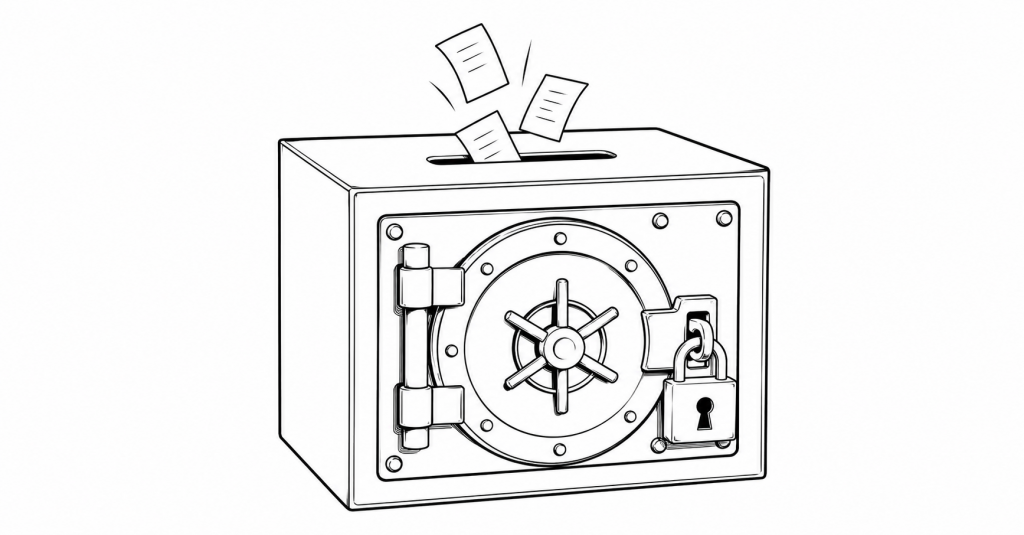
Melanie Perkins and Cliff Obrecht, the husband-and-wife cofounders of Canva, launched something called the Global Goals Platform on Thursday, July 16, asking people around the world to answer one question: What is one goal you would like to see achieved in your lifetime? The project is being presented as a listening exercise — a democratic first step before the couple deploys a significant portion of what is estimated to be one of the largest privately held philanthropic pledges in the world. Canva was most recently valued at $42 billion. Five years ago, Perkins and Obrechtpledged approximately 30% of their equity — roughly $12.6 billion at current valuation — to charitable work through the Canva Foundation. The Global Goals Platform is the opening act.
The sequencing is the story. Conventional billionaire philanthropy doesn’t begin with a question. It begins with an answer: the donor identifies the problem, builds an institution around that answer, and invites the public to participate within whatever framework the donor has already constructed. Gates funds global health. Bezos funds climate. Zuckerbergfunds education. The money arrives before the communities do. What Canva is attempting — inserting a structured public listening process before its philanthropic agenda is fully formed — is a departure from that model. Whether it is a departure that actually redistributes power is the structural test the platform has not yet passed.
The mechanics of the listening exercise are specific. Two pilots are running simultaneously. USA Goals, developed in partnership with the Ad Council, pairs open public submissions with nationally representative research designed to capture priorities across geography and demographic groups. A second pilot with the Wollongong City Council will collect ideas from the Australian city’s approximately 220,000 residents. Canva says it will consolidate the findings into an interactive public report in late 2026, including its methodology and analysis of where community goals overlap. As of Friday, the global platform had received approximately 5,800 responses. Of those, 55% of submitted goals fell under peace and unity, 15% addressed climate and sustainability, and 12% focused on education. The U.S. platform separately reported about 5,000 submissions, with California, Texas, and Florida contributing the largest shares. These are open-participation figures — not the weighted, representative survey results that the Ad Council partnership is designed to produce — so they should not be read as a definitive ranking of public priorities. They are a snapshot of who showed up first.
The structural question is not what people are saying. It is what happens to what they say. Canva has not established a formula that would tie foundation funding allocations to the most frequently submitted goals. It has not explained how broad aspirations like peace, unity, or equality will be converted into specific capital commitments. It has not defined a threshold — say, if X% of respondents prioritize climate, Canva commits Y% of its philanthropic portfolio to climate — that would make the public’s input mechanically consequential rather than aspirationally influential. What it has offered is a promise: the report will serve as a starting point for future initiatives and may help connect nonprofits, organizations, and individuals with overlapping priorities.
That promise is not meaningless. It is, however, incomplete. Asking communities what they need is a meaningful departure from deciding what they need on their behalf. But it is not the same as giving those communities any authority over what happens next. The Canva Foundation retains full discretion over how its capital is deployed. The decision-makers after the survey are the same people who were the decision-makers before it. The listening exercise is real. The power transfer it implies has not yet occurred.
To be fair to what Perkins and Obrecht have built so far, the numbers are not trivial. The Canva Foundation and its social-impact programs have donated more than $2.5 billion in product value to schools and nonprofit organizations — a figure that reflects the cost-basis of free access to Canva’s platform rather than cash disbursements, and that distinction matters when evaluating scale. More than 950,000 nonprofits currently receive free premium access. The foundation committed $150 million toward reducing extreme poverty in Malawi and, through a partnership with GiveDirectly, more than 130,000 people have received direct cash transfers. In 2025, Perkins and Obrecht announced an additional $100 million commitment expected to reach another 185,000 adults over four years.
The cash number — $250 million across two tranches, reaching or expected to reach approximately 315,000 people — is meaningful on its own terms. In the context of a $12.6 billion pledge, it also illustrates the gap between what has been committed and what remains committed-in-principle. The majority of the fortune is still tied to Canva equity in a private company without a public market. The scale and timing of eventual giving will depend on whether Canva goes public, is acquired, or finds another liquidity mechanism. The pledge is real. The capital is not yet liquid. The survey is happening now; most of the money is not yet movable.
None of this makes the Global Goals Platform a cynical exercise. The methodology being developed with the Ad Council — combining open submissions with demographically representative research — is more rigorous than most philanthropic consultation processes. Publishing the full methodology and cross-community analysis publicly, as Canvasays it will, would produce a genuinely useful map of shared global priorities. If that map becomes accessible to nonprofits, advocates, and policymakers beyond the Canva Foundation’s own decision-making, it has value independent of how Perkins and Obrecht ultimately deploy their capital.
What the platform cannot yet claim is that it is participatory in the sense that matters most: the sense in which participation changes the distribution of decision-making authority, not just the information available to the people who already hold it. The public can submit its goals. Canva will read them. The money will still move when and where Canvadecides it should move. That is a better starting point than most philanthropies offer. It is not the same as structural accountability.
The test will not be the report Canva publishes in late 2026. The test will be whether, three or five years from now, you can draw a direct line from what people submitted to how the capital was allocated — and whether communities that participated can point to something concrete that changed because they answered the question. Asking the world what it needs is the easier part. Canva has built a platform to do it at scale. What comes after is where participatory philanthropy either becomes a new model or becomes a very well-designed survey that the money ignored.