New York Is Turning Sports Access Into Public Infrastructure
As major events become luxury products, the city is using screens, tickets, and transit to keep the World Cup within reach.
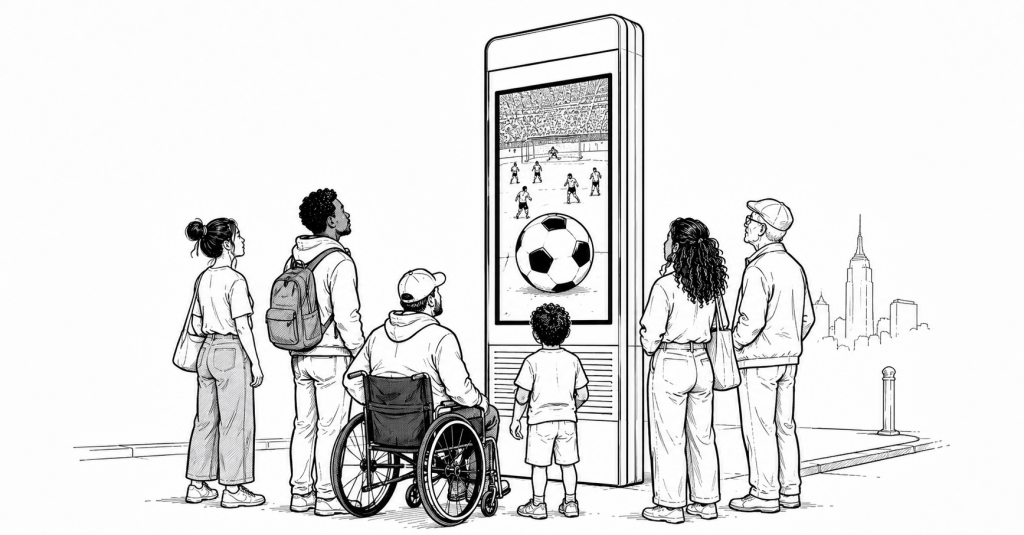
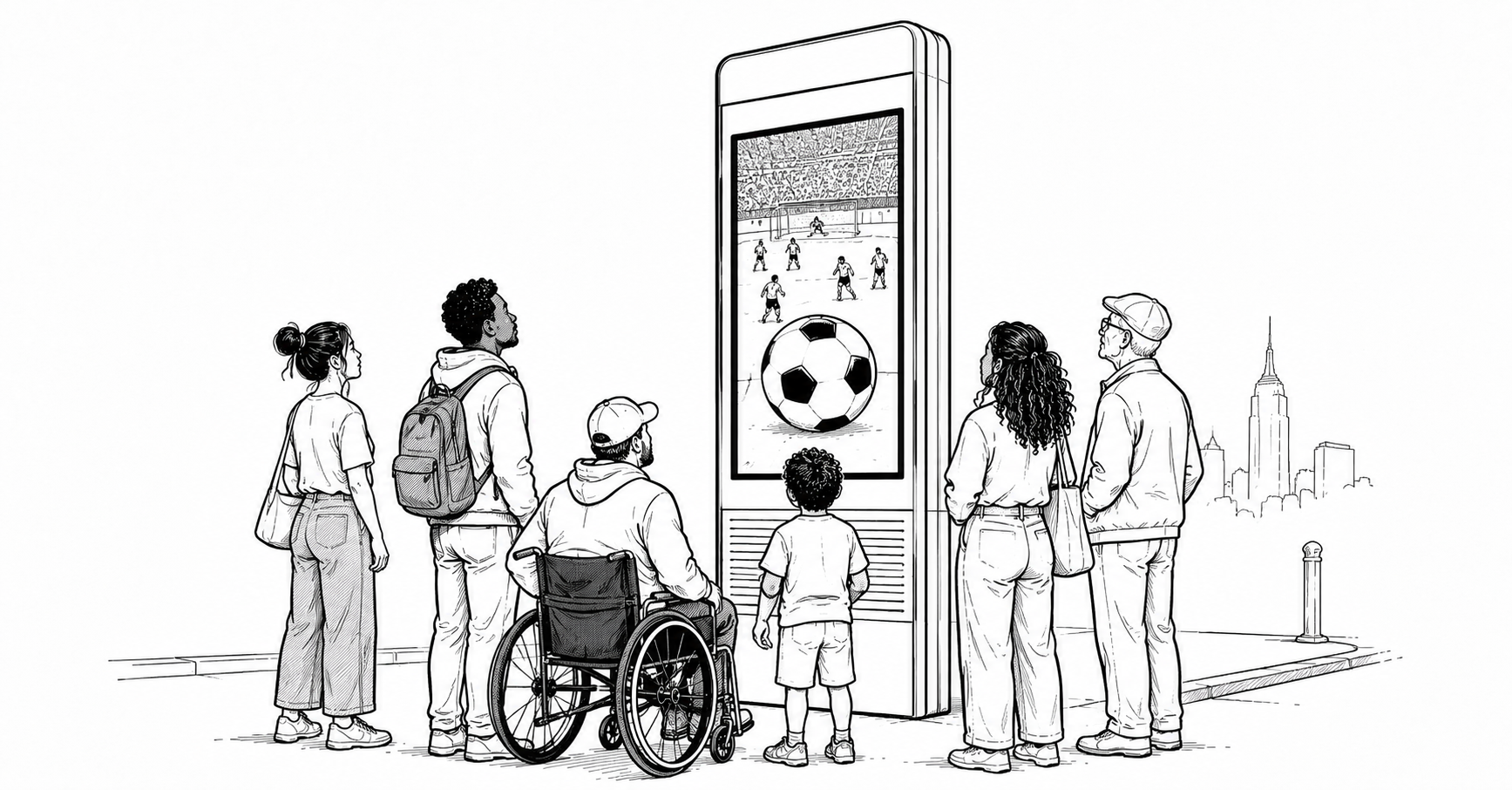
Reuters sports reporter Amy Tennery reported that New York City Mayor Zohran Mamdani plans to show selected World Cup matches on hundreds of LinkNYC kiosks across the five boroughs, using public-facing digital screens that normally carry ads or service announcements. The plan follows a similar move during the Knicks’ NBA Finals run and sits alongside a city-backed effort to secure 1,000 World Cup tickets for New Yorkers at $50 each, with free round-trip bus transportation to games in New Jersey.
The mechanism is access substitution. When live attendance becomes too expensive and broadcast access fragments across platforms, public infrastructure becomes the substitute for the shared screen.
Sports have always carried a democratic myth. The game belongs to everyone, even when the best seats do not. That bargain becomes harder to sustain when ticket prices, streaming subscriptions, merchandise costs, transit costs, and dynamic pricing turn participation into a financial sorting system. Fans may still identify with the team or the tournament, but the live experience moves away from them.
Mamdani is responding to that shift with municipal tools. Reuters reported that selected matches will air on 55-inch LinkNYC digital screens across the city. The mayor told Reuters that existing infrastructure should be used to make it easier for people to be part of the game. The city had already negotiated with the NBA to show two Finals games on the displays so New Yorkers without broadcast TV or streaming access could watch the Knicks’ title run.
The ticket numbers explain why the intervention matters. Reuters reported in May that New York City would make 1,000 discounted World Cup tickets available through a lottery system, priced at $50 each and split across five group-stage and two knockout matches. Those tickets include free bus transportation to East Rutherford, New Jersey, and are non-transferable to deter scalping. At the same time, TicketData put the average New York group-stage “get-in” cost at $864, while the best seats for the final were listed at nearly $33,000.
That gap is the story. A $50 civic ticket and a $33,000 final seat are not different versions of the same fan experience. They describe two different sports economies. One treats the tournament as a shared public event. The other treats scarcity as the product.
The jersey plan makes the same point in smaller form. Reuters reported that the mayor’s office launched New York City-inspired soccer jerseys sold at cost for about $50, compared with a $130 U.S. jersey at a World Cup stadium kiosk. The initial run of 1,500 jerseys sold out, and another batch was being prepared.
The policy is not without tension. Public viewing creates security and crowd-management demands. It also places city government in the middle of entertainment markets that are shaped by private leagues, global governing bodies, broadcasters, sponsors, and resale platforms. But that is exactly why the move matters. Once sports become priced like luxury goods, cities have to decide whether they will accept exclusion as the default condition of civic culture.
Power moved from event owners and pricing platforms toward residents, but only partially. The city cannot make the World Cup affordable at scale. It can create access points around the edges: a kiosk, a lottery ticket, a bus seat, a cheaper jersey, a public moment that does not require a household to buy its way into belonging.
The next phase of sports politics will not only be stadium subsidies and team relocations. It will be whether cities use public tools to keep shared culture from becoming something residents can only watch through a paywall, a resale market, or someone else’s social feed.