Four Airlines Raised Checked Bag Fees in Two Weeks. The Tax Code Explains Why They Do It This Way.
SSC News Desk
The checked bag now costs more at every major US carrier. What the coordinated April increases reveal about how airlines prefer to pass costs to consumers — and who ends up paying full price.
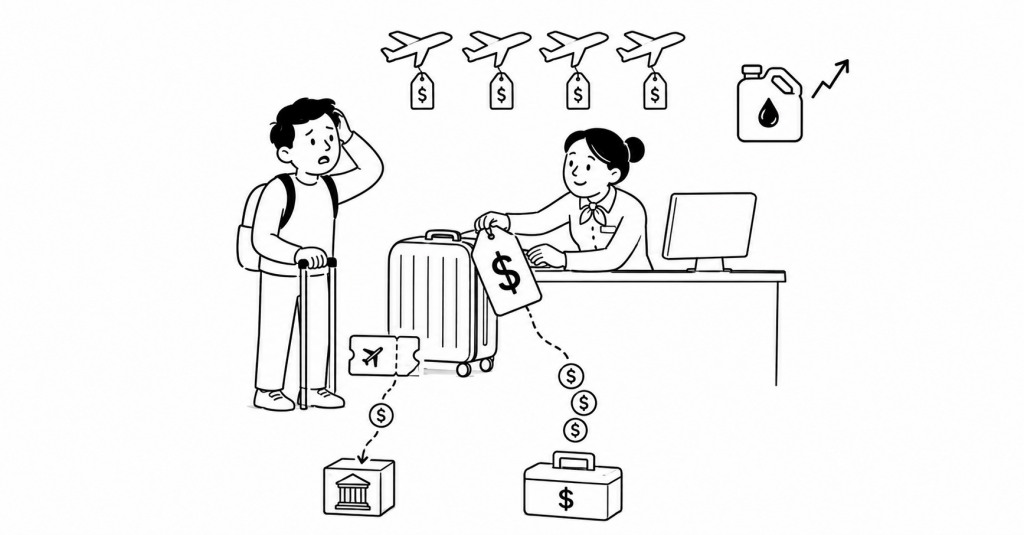
When JetBlue raised its first checked bag fee in late March 2026, it was the first domino. United followed on April 3. Delta on April 8. Southwest on April 9. Four major US carriers, two weeks, coordinated increases across an industry where the stated explanation was the same for all of them: jet fuel.
The fuel story is real. Jet fuel averaged nearly $4.88 per gallon in major US markets in early April — up from roughly $2.50 before the US and Israel struck Iran on February 28. Disruptions around the Strait of Hormuz sent energy prices surging, and airlines carry fuel as their single largest operating cost. When it spikes nearly 88 percent in weeks, something has to absorb it.
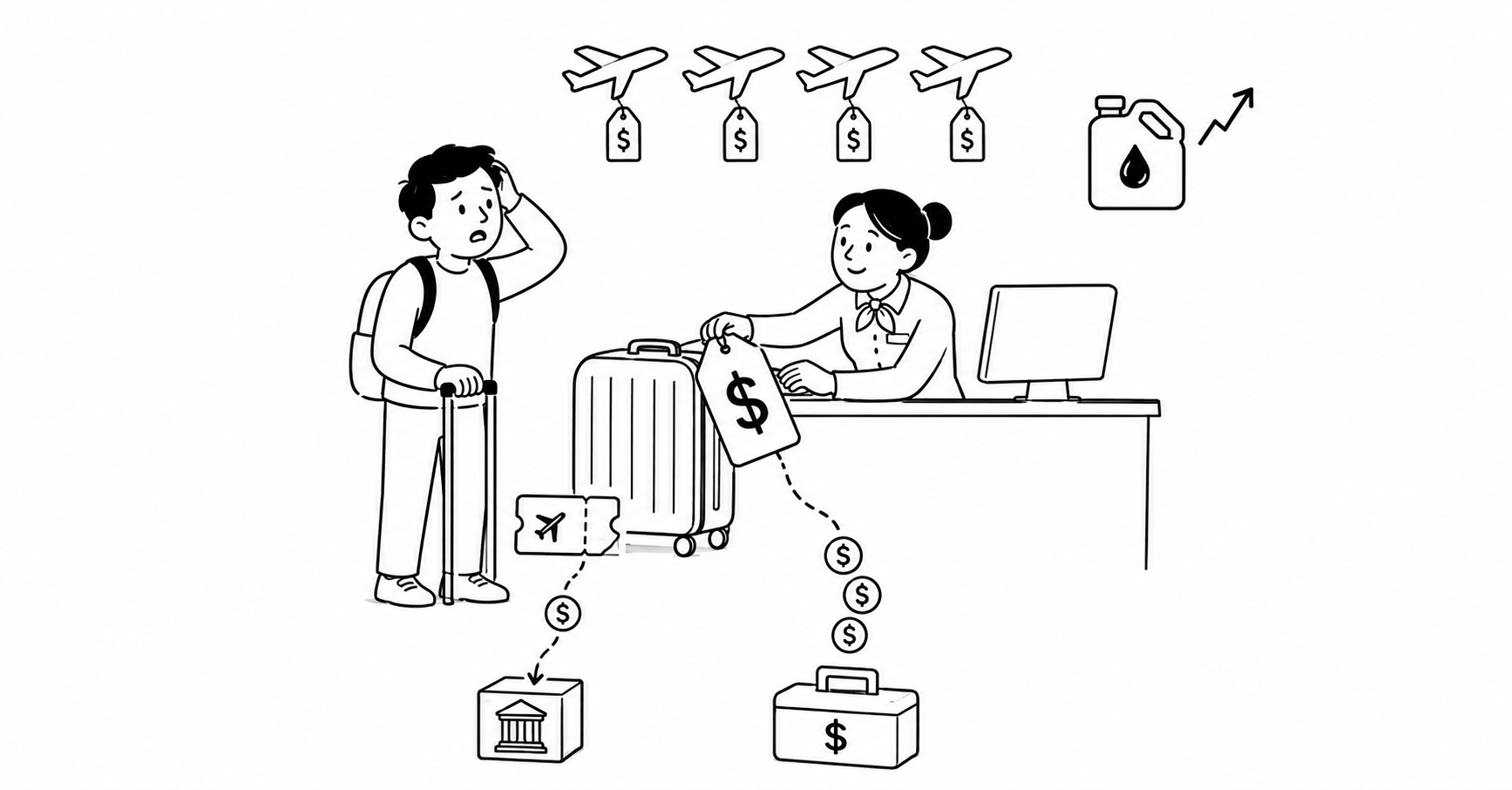
What absorbed it was the checked bag. This is not a coincidence of timing. It is a pattern the industry has followed through every fuel shock, labor cost pressure, and revenue shortfall for more than a decade. Bag fees, unlike airfares, are not subject to the 7.5 percent federal excise tax applied to domestic ticket prices. A $10 bag fee increase generates the full $10 in airline revenue. A $10 airfare increase generates roughly $9.25 after the federal government takes its share. Airlines have known this arithmetic for years. Bag fees are the preferred mechanism for passing costs to consumers precisely because the government takes a smaller cut.
The current fee structure: United, Delta, and Southwest now all charge $45 to prepay the first bag online, $50 at the airport counter. Second bags run $55 to $60. Third bags at United and Delta reach $200 — a $50 jump over the previous rate. JetBlue starts at $39 but adds peak-season surcharges pushing the first bag to $49, plus an additional $10 within 24 hours of departure. American Airlines has not yet matched the $45 prepaid rate, holding at $35 online and $40 at the counter — which means another industry-wide alignment is plausible if cost pressures hold.
The Southwest dimension deserves separate attention. For decades, Southwest’s two-free-bags policy was the clearest differentiator in American commercial aviation — not a small perk, but a brand promise that shaped how millions of travelers booked flights. That policy ended in May 2025, months before this latest round of increases. When Southwest raised its bag fees again on April 9, it was not an airline responding to fuel costs. It was an airline that had already exited the free-bag era continuing to optimize ancillary revenue in a market where no major competitor offers free bags to general passengers anymore. There is no longer a major US carrier that gives the average economy traveler a free checked bag. That era is over.
The travelers absorbing the full cost are the ones without co-branded airline credit cards, without elite loyalty status, and without the flexibility to pack into a carry-on. Families with checked luggage face a round-trip cost — $45 each way, per bag — that adds $90 to a ticket before a seat is selected. The mechanism is legal, normalized, and largely invisible in the headline price of the flight. Airline ticket prices must by law include taxes and mandatory fees. Bag fees are classified as optional, so they don’t appear in the displayed price. The traveler sees the airfare. The bag fee shows up at checkout, or at the counter, or when they decide not to pack light. By then, the decision to fly has already been made. Whether fuel costs stabilize or rise further, the fee structure established in April is unlikely to reverse — ancillary revenue, once captured, tends to stay captured. The industry has now established the pattern: one carrier moves, the others follow within weeks, and the explanation is always the same.