China Wants Officials to Look Beneath the Growth Numbers
China’s economy grew 5% in the first quarter. The government’s own analysts are warning the number doesn’t tell the whole story.

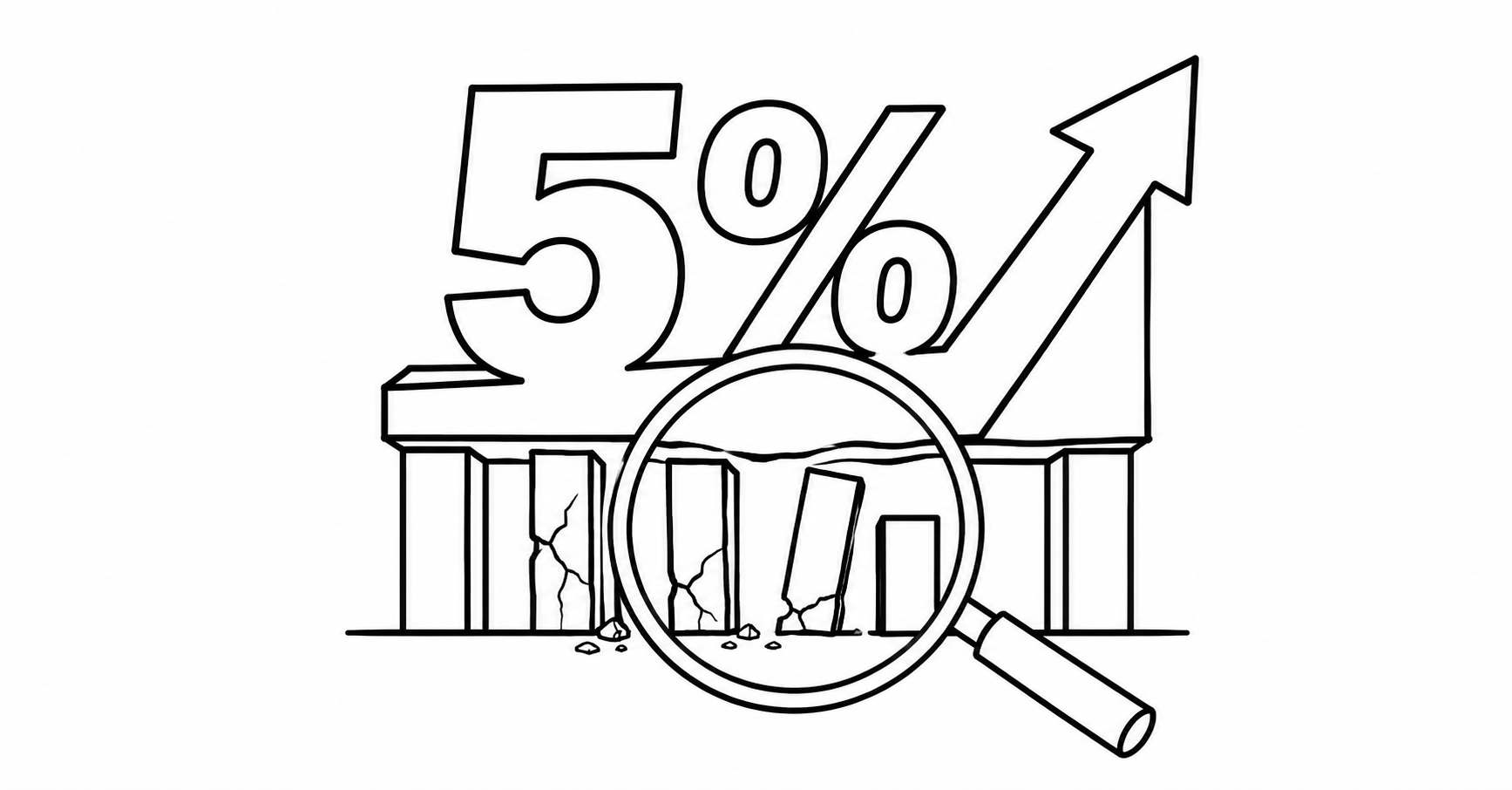
China’s National Bureau of Statistics reported 5.0% year-over-year GDP growth for the first quarter of 2026, beating forecasts of 4.8% and accelerating from 4.5% in the previous quarter — a result state media described as the economy showing “greater resilience and vitality.” The U.S.-China Economic and Security Review Commission’s May 5 analysis of the same data reached a more complicated conclusion: beneath the headline figure, the commission found weak consumption, inconsistent data reporting methodology, and mounting inflationary pressure tied to the war in Iran.
The clearest example of that inconsistency involves fixed-asset investment, a category the government has used for years as a reliable growth signal. Fixed-asset investment fell 3.8% in 2025 but jumped 1.7% in the first quarter of 2026, with the infrastructure portion of that investment surging 8.9% after declining 2.2% the year before. The commission’s analysis traced part of that sharp increase to a methodology change: the National Bureau of Statistics began folding power investment into the infrastructure figure, a category previously tracked separately by the National Energy Administration. Combining the two data sets makes the infrastructure number larger without infrastructure spending itself necessarily increasing by the same amount — the growth is partly an artifact of how the number gets assembled, not purely a reflection of new activity on the ground.
Consumption tells a similarly split story. China has repeatedly stated its intention to rebalance its economy toward consumer spending, and Beijing has run consumer subsidy programs aimed at boosting purchases of household goods and vehicles. Retail sales growth slowed to 1.7% year-over-year in March, down from 2.8% in the first two months of the year, with analysts attributing the decline to fading subsidy effects and softening auto demand. Consumer and producer inflation both rose in March, up 1.0% and 0.5% respectively, driven by higher fuel costs tied to the Iran war — inflation from an external shock rather than rising organic demand, which Trivium China analysts note puts producers in a harder position: raising prices to offset costs risks suppressing the already-soft consumer demand the government is trying to grow.
None of this means China’s headline 5.0% figure is fabricated. Independent research, including satellite-based measurements of nighttime light pollution used as an external check on economic activity, has generally found China’s official growth statistics correlate positively with externally verifiable trade data, and some Western economists argue China’s GDP may actually be underreported relative to real activity. The commission’s critique is narrower and more specific: that a single aggregate growth number, especially one assembled with shifting methodology, obscures exactly the kind of uneven performance — strong exports, soft consumption, inflation driven by external shocks rather than demand — that determines whether growth is durable or whether it’s papering over weakness in the parts of the economy China says it most wants to strengthen.
A reported 5.0% growth rate reads as confirmation that China’s economy can absorb external shocks, including a war disrupting global energy markets, without serious disruption. The commission’s analysis suggests the more accurate read is narrower: exports and industrial output are carrying the headline number, consumption remains the weak link Beijing has spent years trying to fix, and the inflation now showing up isn’t the kind that reflects a strengthening domestic economy. The full-year picture, not the first-quarter number, will determine which version of that story holds.
— SSC Global Affairs Desk | Social Storytellers Collective
Free, daily structural analysis like this lands in your inbox every weekday morning. Subscribe: https://246481934.hs-sites-na2.com/newsletter