
July Was Supposed to Add 83,000 Jobs. It Lost 23,000. The Unemployment Rate Fell Anyway.
SSC News Desk
Friday’s Bureau of Labor Statistics report delivered a 106,000-job miss and revised May and June lower by a combined 103,000. The unemployment rate fell because the labor force shrank.
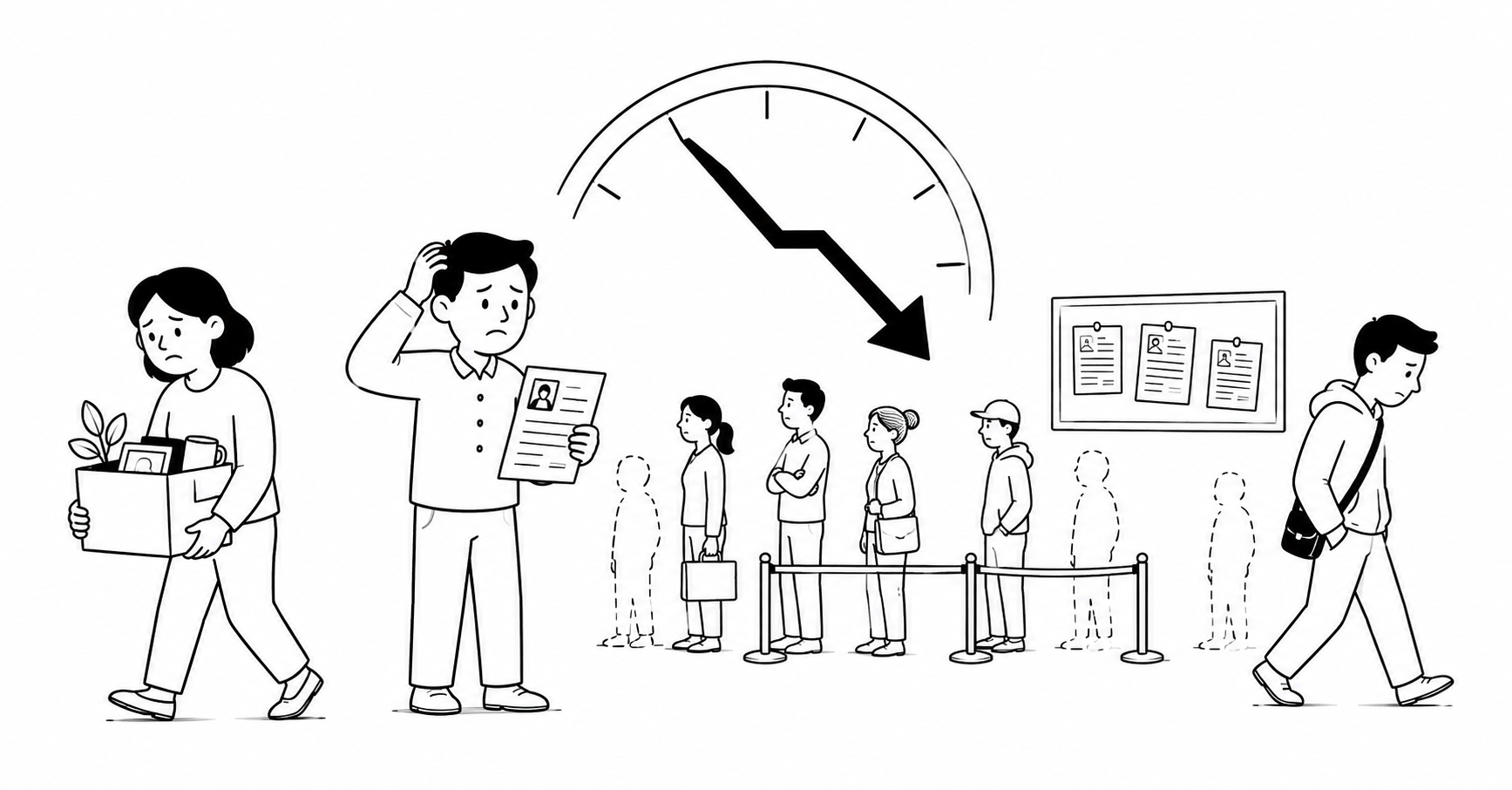
The number economists projected for July was +83,000. The number the Bureau of Labor Statistics delivered Friday morning was -23,000. That is a miss of more than 106,000 jobs in a single month — and the unemployment rate went down.
That last sentence is not good news.
The BLS July employment report shows total nonfarm payroll employment declining by 23,000, with the steepest losses in local government education (-50,000) and retail trade (-19,000). Financial activities shed another 14,000 positions, extending a sector-wide contraction that has now eliminated 121,000 jobs since a peak in May 2025. Health care continued its upward trend, adding 22,000 — but even that was below its own 12-month average of +36,000 per month. The labor market’s most reliable bright spot is dimming.
The unemployment rate fell to 4.1 percent, and that number will travel fast in headlines. What travels less fast is the mechanism behind it. The Bureau of Labor Statistics measures unemployment by counting people who are actively looking for work. When people stop looking, they exit the count. In July, the labor force — the total number of people either working or actively searching — contracted. The rate went down not because more people found jobs, but because fewer people were still trying. 5.9 million Americans were not in the labor force but said they wanted a job. They were not counted as unemployed because they had not actively searched in the prior four weeks. 476,000 of them are classified as discouraged workers — people who believe no jobs are available for them. The labor force participation rate fell to 61.4 percent, down 0.7 percentage points since January alone.
The report also carries a revision that matters more than the July number itself. May’s job gains were revised down by 66,000 — from +129,000 to +63,000. June was revised down by 37,000 — from +57,000 to +20,000. Combined, May and June added 103,000 fewer jobs than previously reported. The recovery that looked modest was actually weaker than it appeared. July’s loss is not a sudden deterioration. It is the continuation of a trend that the prior data obscured.
The sectors that shed jobs tell their own story. Local government education lost 50,000 positions in a single month — an unusual drop in a sector that had shown little net change over the prior year. Retail’s 19,000 loss was concentrated in warehouse clubs and supercenters, a segment navigating declining foot traffic and shifting consumer patterns. Financial activities have now shed 121,000 positions over 14 months. These are not the same workers. The education cuts affect communities differently than the financial sector cuts, which affect cities differently than the retail cuts. The aggregate number conceals the distribution.
Temporary layoffs increased by 153,000 in July, reaching 921,000 total — a measure that tracks workers attached to jobs but not currently working, and one that often leads permanent separations when conditions don’t improve. The 1.8 millionlong-term unemployed — people jobless for 27 weeks or more — represent 25.5 percent of all unemployed Americans. Average hourly earnings rose 3.2 percent over the past year to $37.62 — wage growth that sounds like progress until measured against an inflation rate running above it.
The Federal Reserve now faces a decision it did not expect to be making this way. A September rate hike was being discussed as recently as last week. July’s report gives the Fed a labor market that is not overheating — it is contracting at the payroll level, losing labor force participants at a pace not seen in five years, and revising prior months downward in ways that suggest the statistical picture was rosier than reality. Whether the Fed holds, cuts, or holds while signaling a cut is the institutional question September will answer. The report itself has already answered a different one: the job market heading into fall 2026 is weaker than the headline said it was — and has been for longer than anyone officially reported.