Fashion Models Are Discovering Their AI Doubles at Work
Model Francheska Pujols refiled suit against Rainbow Shops June 15 over AI-generated ads.
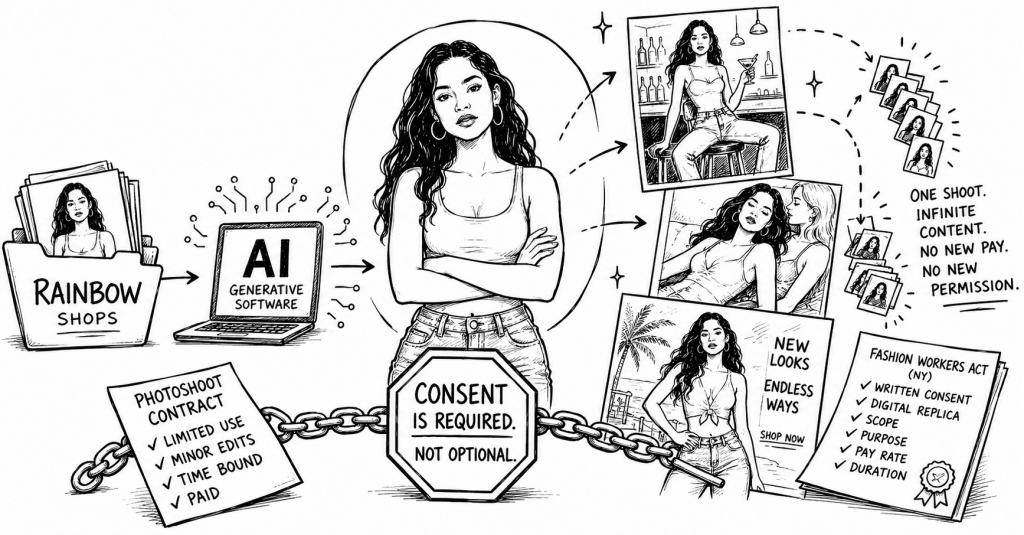
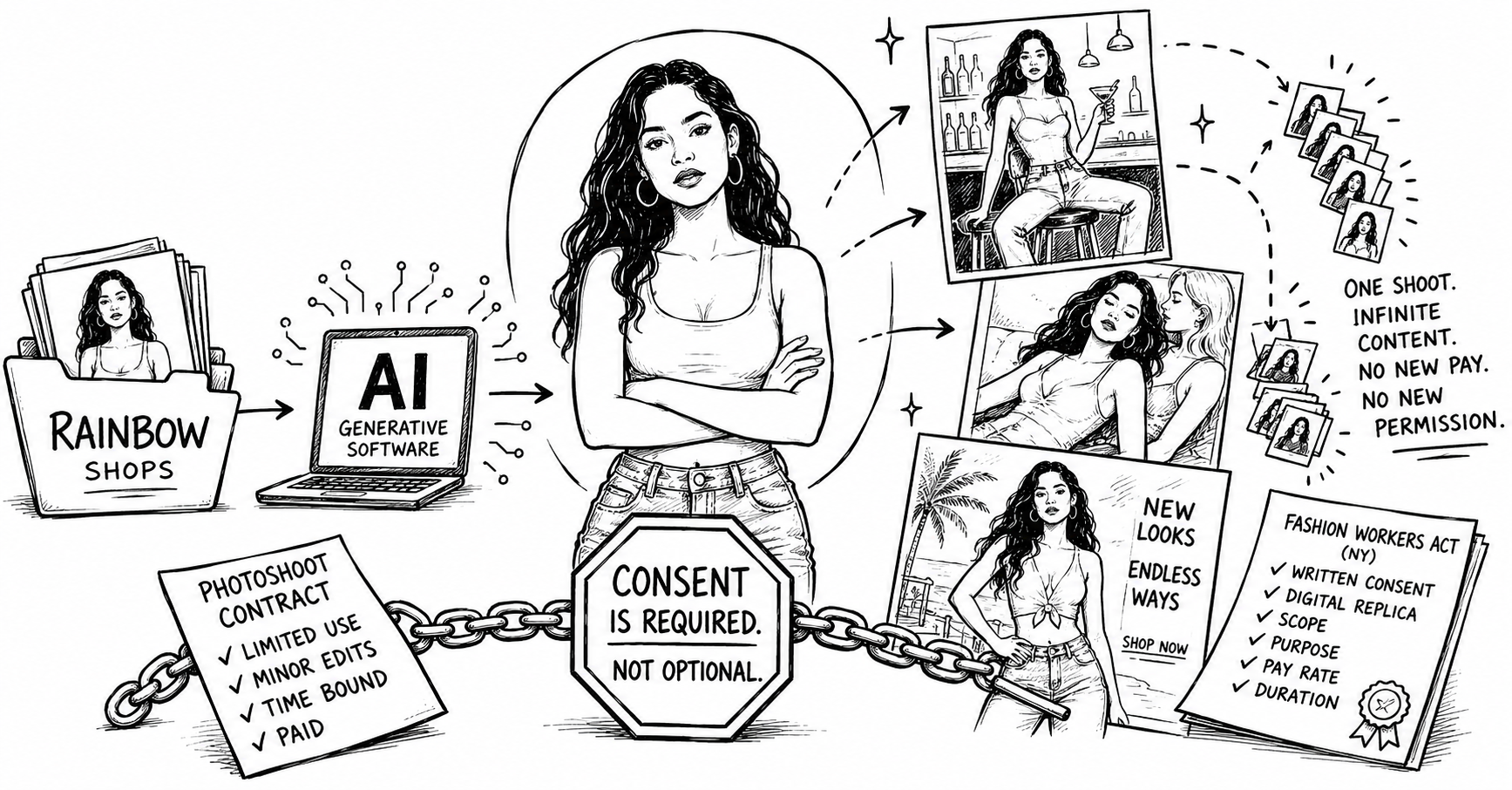
New York model Francheska Pujols refiled a lawsuit against budget retailer Rainbow Shops on June 15, alleging the company used artificial intelligence to generate new advertising images of her after their photoshoot contract had expired. J.C. Rice broke the story for the New York Post, reporting that Pujols’s original 2024 shoot showed her in neutral poses against a plain white backdrop, while the finished ads placed her in scenes she says she never shot — straddling a barstool with a cocktail in one image, reclining in another model’s lap in another. Pujols’s attorney, Richard Altman, says the contract permitted only minor photo edits, not new AI-generated compositions, and that Pujols sent Rainbow a cease-and-desist letter in March that the brand allegedly ignored. Rainbow Shops has denied wrongdoing, telling the Post it “used our images properly and there’s no violation of her rights.”
A paid photoshoot is supposed to end where the contract says it ends. Generative AI breaks that boundary. The handful of images a brand owns outright after one sitting can now be fed into software and multiplied indefinitely into new poses, new settings, and new products, without booking the model again, paying her again, or returning to set. That is the mechanism Pujols’s lawsuit is actually testing: not whether Rainbow altered a photo, but whether a brand can treat one paid sitting as a permanent license to keep manufacturing new work.
The timing sharpens the stakes. Pujols withdrew her original case in May to pursue a private settlement, then refiled it on June 15 — four days before New York’s deadline for every model management company doing business in the state to register under the amended Fashion Workers Act. That law now requires written, separately negotiated consent before any company can create or alter a model’s “digital replica” using AI, spelling out the scope, purpose, pay rate, and duration of each use. Sara Ziff, founder of the Model Alliance, helped write those AI provisions for exactly this scenario: a brand with no live contract, but with the raw material already on file to keep using a model’s image anyway. Pujols’s decision to refile rather than settle quietly a second time makes her case the first real test of whether that consent requirement holds once the original payment has already cleared.
The economics explain why a budget chain is testing this first, not a luxury house. Lupo, the fashion attorney Forbes has called the “father of fashion law,” says supermodels and runway shows will always exist where brands spend serious money — but that accounts for only about **15%** of what fashion companies actually produce. The other 85% is volume content, where, in his words, customers “don’t care” who the model is. That is the exact condition under which a company has the least incentive to pay for a new shoot when an old one can be regenerated instead, and the most incentive to let AI do the multiplying. Models without a recognizable name or a high-fashion contract — the ones doing budget catalog work, not magazine covers — have the least leverage to stop it and the most exposure when it happens to them.
New York’s law gives models a contractual veto that didn’t exist a year ago, but a veto only changes outcomes if someone is willing to enforce it in court. This decision moves power away from models, who could once assume a finished photoshoot was the end of the transaction, and toward brands, who can now treat a single paid sitting as raw material for indefinite reuse unless consent laws like New York’s are tested and enforced one case at a time. The next labor fights in fashion won’t be over day rates. They will be over who owns the right to keep generating new work from a face a company already paid for once.