Volkswagen Is Cutting the Cars. Workers Want to Know Whether They Are Next.
The automaker’s plan to shrink its model lineup by as much as half is being presented as simplification. The unresolved question is how much labor and factory capacity disappears with it.
Volkswagen has decided that it makes too many cars. After reporting an 8.6% decline in second-quarter global sales — including a drop of more than one-third in China — the German automaker announced that it could reduce its model lineup by as much as half. Executives described the move as part of a broader effort to reduce complexity, eliminate overcapacity, and make the company faster and more competitive. That is the corporate language. The labor question arrived immediately behind it.
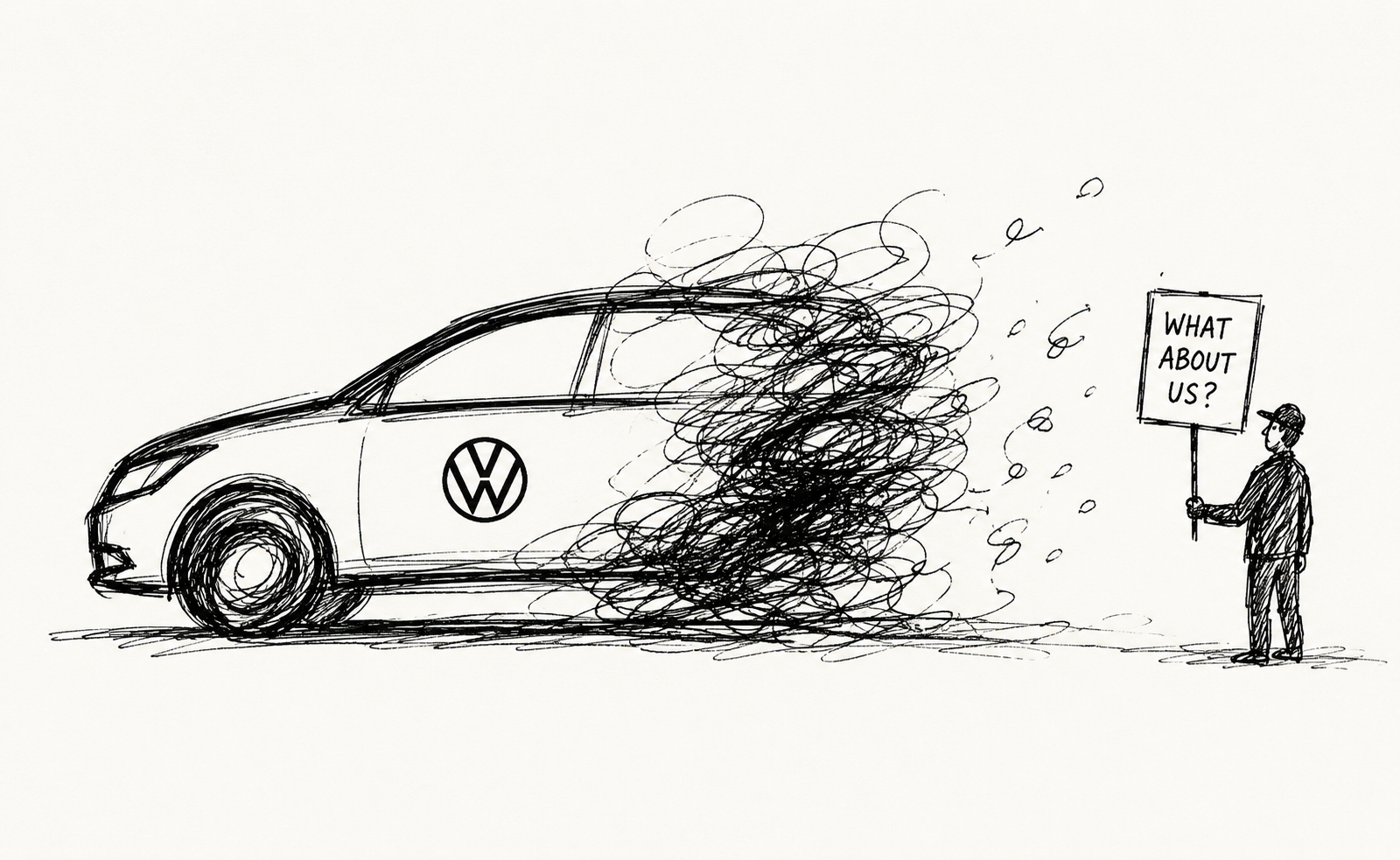
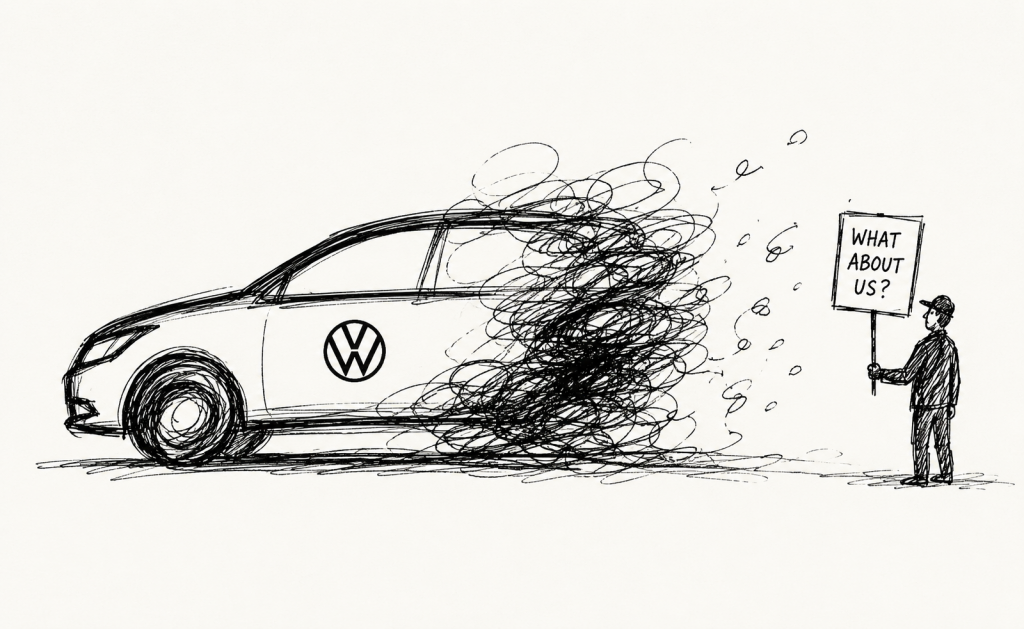
Volkswagen did not specify which models would disappear, which factories would lose production, or how many employees would be affected. But reports surrounding the restructuring said proposals involving as many as 100,000 jobs and the possible closure of four German plants had been discussed. Labor representatives pushed back, and workers gathered outside company facilities demanding clearer protections. The gap between the announcement and the answer matters.
A model is not only a product in a catalog. It is an assembly line, a supplier network, a software team, a group of engineers, a logistics route, and a workforce trained around a particular production system. When an automaker eliminates a vehicle, it is often eliminating some portion of the industrial structure required to build it. That does not mean every discontinued model automatically produces a layoff — platforms can be shared, factories can be retooled, workers can be reassigned — but a company cannot reduce its lineup by half, cut production capacity, and remove overlapping operations without eventually deciding what labor remains necessary.
Volkswagen’s challenge is larger than one weak quarter. Chinese automakers have moved faster on electric vehicles, software, and pricing. Tariffs have raised costs. Regulatory requirements have increased. Volkswagen’s own structure — multiple brands, overlapping products, and a vast manufacturing footprint — was built for an era when scale itself was an advantage. Now scale can also become weight.
The company is trying to become leaner without breaking the employment model that helped make it one of Germany’s most important industrial institutions. That is especially difficult because Volkswagen is not governed like a typical corporation. Labor representatives and the state of Lower Saxony hold unusual influence, giving workers more power to contest restructuring decisions before they become final. That governance structure may slow the cuts. It does not erase the economic pressure behind them.
The central question is no longer whether Volkswagen will simplify — the company has already said it will. The question is how the cost of that simplification will be distributed. Shareholders may see fewer low-margin vehicles. Executives may see a cleaner portfolio. Consumers may see fewer choices. Workers may see something else entirely: fewer shifts, fewer production lines, and fewer guarantees that the factory supporting their town will still have a product to build.
Volkswagen has announced how much of its lineup it may no longer need. Its employees are still waiting to learn how much of them the company believes it can do without.