Miami-Dade Is Building Luxury. The Workers Running the City Are Leaving.
When 85 percent of low-income households are housing cost-burdened and seven of the ten fastest-growing jobs pay under $18 an hour, the city’s growth model produces displacement by design.
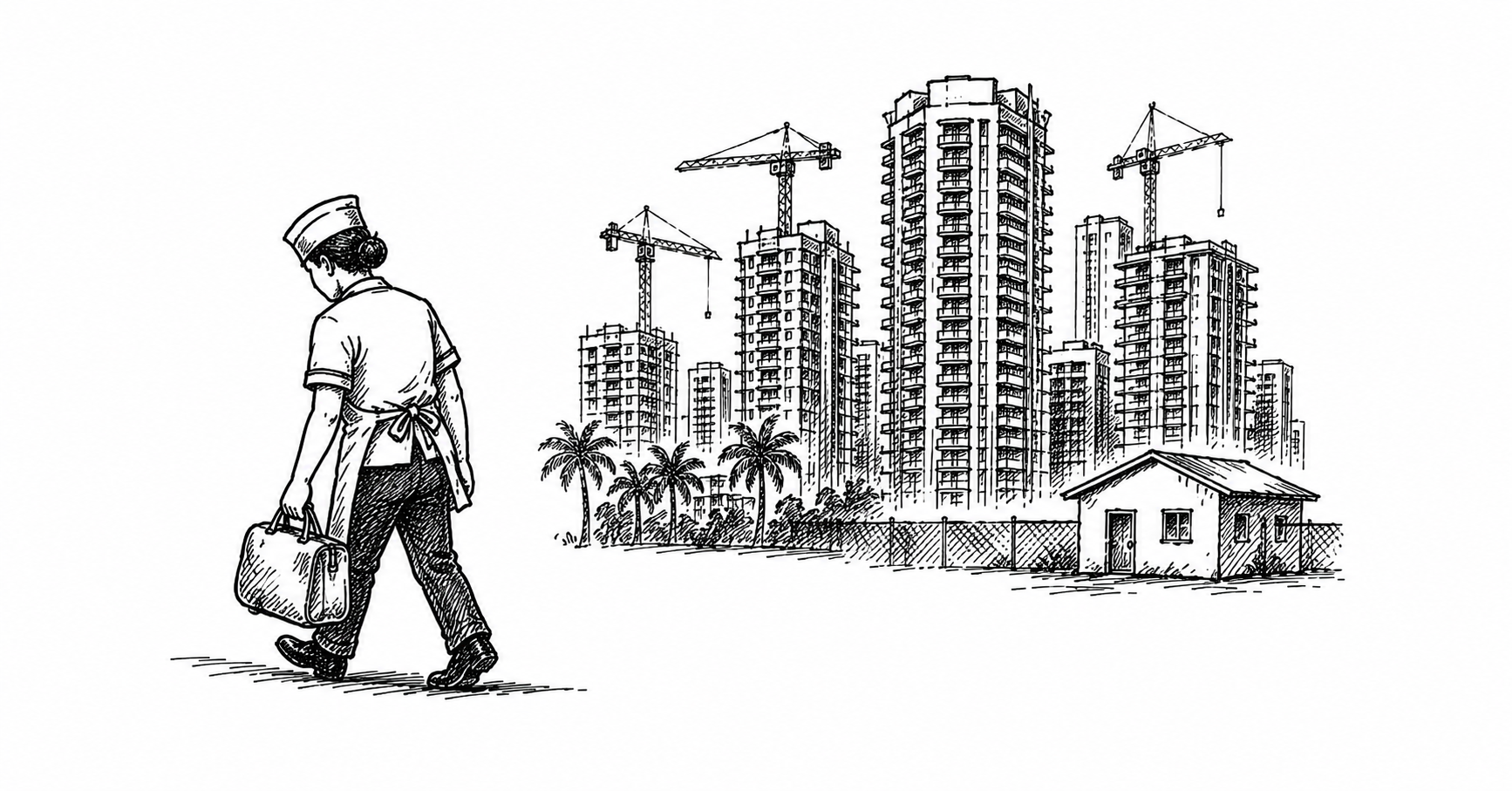
Miami-Dade County has a shortage of 90,000 affordable housing units, according to research by Miami Homes For All and Latination published in 2026. 85% of households earning under $35,000 annually are housing cost-burdened — spending more than 30% of their income on rent or mortgage. Seven of the ten occupations projected to generate the most new jobs in Miami through 2030 pay less than $18 per hour. The metro is already recording net population loss among its lowest-income residents. The workers keeping the city’s hospitality, healthcare, and service economy running are leaving because the city’s housing market has priced them out of staying.
The mechanism here is not a supply shortage in isolation. Miami-Dade has been building — but what it has been building is luxury and market-rate residential supply concentrated in neighborhoods where land values are highest and developer margins are strongest. The gap between what the market builds and what the workforce can pay is not a lag. It is the output of a development incentive structure that rewards high-margin construction and imposes no cost on developers for the affordability gap their projects leave behind.
Miami’s wage structure compounds this. The occupations the metro economy depends on most — hotel workers, restaurant staff, healthcare aides, construction laborers, retail clerks — operate under a wage floor that has not kept pace with the cost of living the metro’s growth has driven. A household earning $18 per hour at full-time hours brings in roughly $37,000 annually before taxes. The monthly rent for a market-rate one-bedroom apartment in Miami-Dade has exceeded $2,000 in most submarkets. The math does not close, and no combination of the market-rate units currently under development changes it.
Population loss among low-income residents is the mechanism by which Miami resolves this contradiction in the short term. Workers who cannot afford to stay leave — to Broward County, to other states, or out of the metro entirely. The city continues to function in the interim because the labor pool is large enough, and turnover is high enough, that replacement workers can be recruited. The point at which that equilibrium fails — when the pool of available low-wage workers is no longer sufficient to staff the economy that depends on them — is not a hypothetical. Several coastal metros have already demonstrated this dynamic. Miami is closer to that point than its economic growth figures suggest.
The luxury supply being built today will not solve the affordability gap. It will filter down over time — units built for high-income renters eventually reach the middle market, and those units release downward pressure in theory. But filtering takes years, and the 90,000-unit shortage means that even a complete cessation of new luxury development and a dramatic pivot to affordable construction would take years to close the gap. The workers who cannot afford to stay will not wait for the filter to work.
What Miami-Dade is producing is not a city experiencing a housing crisis alongside its economic success. It is a city whose economic model depends structurally on low-wage labor and whose housing market makes sustaining that labor force increasingly untenable. The 90,000-unit number is the measure of that structural tension. The displacement already underway is its consequence.