Eli Lilly’s Weight-Loss Drug Strategy Reveals How Pharmaceutical Power Actually Works

Eli Lilly announced Thursday that it will file for FDA approval of retatrutide, a next-generation weight-loss drug, in the first quarter of 2027. The drug performed well in late-stage trials, supporting weight loss and reducing some cardiovascular risk factors. By conventional measures of pharmaceutical success—efficacy, safety, clinical benefit—this should be straightforward news: a company developed a solution to a significant health crisis and is moving toward approval to help patients access that solution.
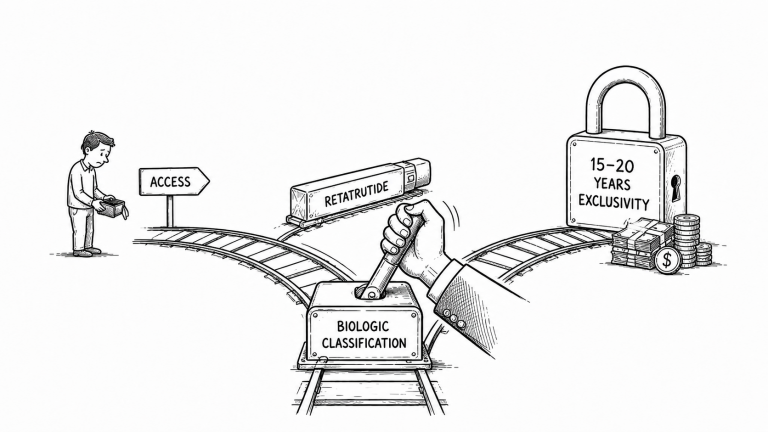
But Lilly made a strategic choice in how to structure this approval that reveals something fundamental about how the pharmaceutical industry operates in 2026: they are deliberately pursuing biologic drug classification specifically to extend patent protection and prevent generic competition for far longer than a standard pharmaceutical classification would allow.
This regulatory strategy has nothing to do with health outcomes and everything to do with maximizing monopoly pricing.
How Regulatory Classification Becomes a Pricing Strategy
Biologic drug classification was originally intended to address the complexity of manufacturing drugs derived from biological sources—antibodies, proteins, cell therapies. The FDA established a 12-year period of market exclusivity for biologics, longer than the standard protection for traditional pharmaceuticals, to account for the substantial costs of developing and manufacturing these complex treatments.
But Lilly—and the pharmaceutical industry more broadly—has weaponized this classification system. They’re not choosing biologic status because retatrutide is inherently difficult to manufacture as a biologic. They’re choosing it because biosimilars face substantially higher regulatory and manufacturing barriers than traditional generics.
Here’s the difference. A traditional pharmaceutical drug can have generic competitors enter the market after patent expiration, which typically drives prices down 80-90% within five years. The generic version is chemically identical and relatively simple to manufacture. Creating a biosimilar, by contrast, requires reverse-engineering a complex biological molecule, setting up new manufacturing infrastructure, and conducting extensive clinical testing to prove biosimilarity to the original. The cost to develop a biosimilar can be 5-10 times higher than developing a traditional generic. As a result, fewer companies enter the biosimilar market, competition is minimal, and prices remain elevated for 15-20 years or longer.
Lilly is choosing this pathway deliberately because it maximizes the window during which they can charge premium prices without meaningful competitive pressure.
What This Means for Patient Access
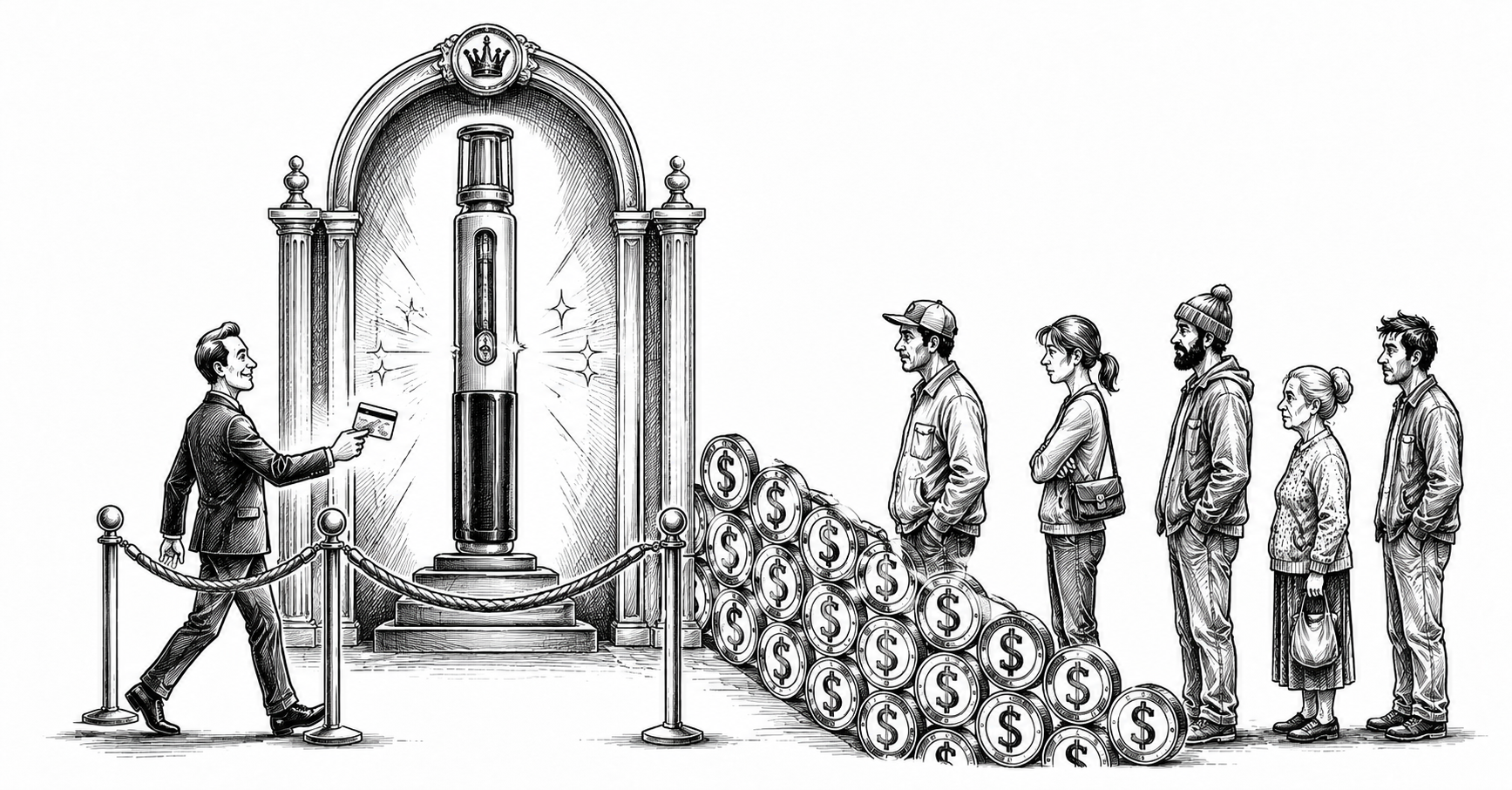
Retatrutide will launch at a price designed to recoup R&D costs and generate substantial profits during this extended monopoly period. For patients with comprehensive employer insurance or government coverage, access may be manageable through insurance. For uninsured or underinsured patients—disproportionately lower-income Americans, Black Americans, and Latinx Americans—the drug will be functionally unaffordable.
Access will stratify by income. The wealthy and well-insured will have immediate access to the drug. Everyone else will wait 15-20 years for biosimilars that might eventually reduce prices. During that waiting period, disease progression in unmedicated patients will advance significantly. Complications will accumulate. The health trajectory will worsen. But Lilly’s shareholders will have realized exceptional returns during the monopoly period.
This isn’t a market failure or an unintended consequence. It’s the system working exactly as designed.
The Pharmaceutical Industry’s Core Business Model
Pharmaceutical companies defend high prices by arguing they fund innovation. This argument contains partial truth. Developing new drugs is expensive. Clinical trials are rigorous and lengthy. Manufacturing at scale requires substantial capital investment. But this defense obscures what’s actually happening: the pharmaceutical industry is structuring the entire business model around pricing power, not health outcomes.
The strategic choice to pursue biologic classification is not a medical decision. It’s a corporate strategy decision made by people in Lilly’s regulatory affairs and legal departments who calculated how to maximize profit extraction from a patient population that needs this drug. They’re optimizing for shareholder returns, not patient access.
This is consistent across the industry. Pharmaceutical companies choose which regulatory pathways to pursue, which patient populations to prioritize, which geographies to target for distribution—all based on ability-to-pay calculations, not health need calculations. They acquire smaller competitors not to advance innovation but to eliminate price competition. They lobby for patent extensions that have nothing to do with the original innovation. They structure pricing strategies that generate maximum revenue from wealthy markets while leaving lower-income populations without access.
These are not aberrations. They’re standard business practices in pharmaceutical markets in 2026.
How This Perpetuates Health Inequity
The obesity epidemic disproportionately affects lower-income populations and communities of color. The social determinants of obesity—food insecurity, neighborhood access to healthy food, stress from economic precarity, lack of time for exercise—are concentrated in lower-income communities. The drug that could address obesity will be priced out of reach for the populations most affected by the disease.
The mechanism appears neutral and technical: FDA classification, patent law, regulatory procedure. These are bureaucratic decisions made by experts applying established rules. But the outcome is fundamentally about sorting who gets access to health solutions based on wealth. The system is designed to concentrate life-changing medical treatments among those who can pay premium prices while leaving everyone else without access, sometimes for decades.
This is how health inequity perpetuates itself in 2026. Not through individual discrimination or intentional exclusion, but through systems designed to appear neutral while systematically concentrating access based on ability to pay.
The Broader Pattern
Retatrutide is one drug and Eli Lilly is one company, but this dynamic is systemic across pharmaceuticals. It’s also extending into other sectors we’ve examined this week. Corporate power is concentrating through mechanisms that appear neutral: return-to-office policies that appear to be about collaboration but are actually about power recentralization, automation that appears to be about efficiency but is actually sorting labor by gender, biologic drug classification that appears to be about manufacturing complexity but is actually about pricing power.
In 2026, the way systems concentrate power and access is through regulatory strategy, technical classification, and procedural design. Not through visible discrimination. Not through explicit exclusion. But through infrastructure that makes sorting appear inevitable.