Eli Lilly’s Weight-Loss Drug Strategy Reveals What Institutional Priorities Actually Are When Patient Access Remains an Option
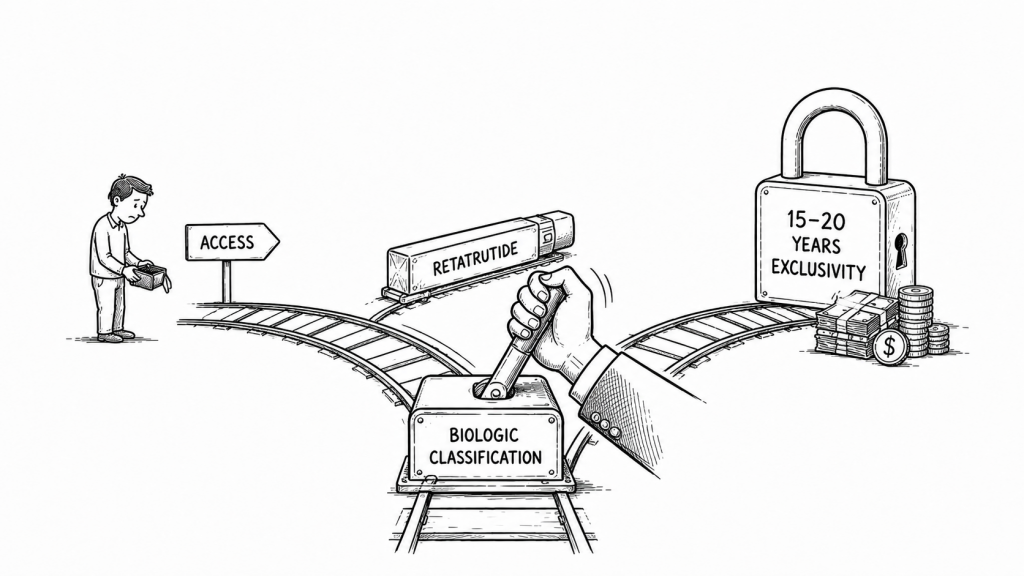
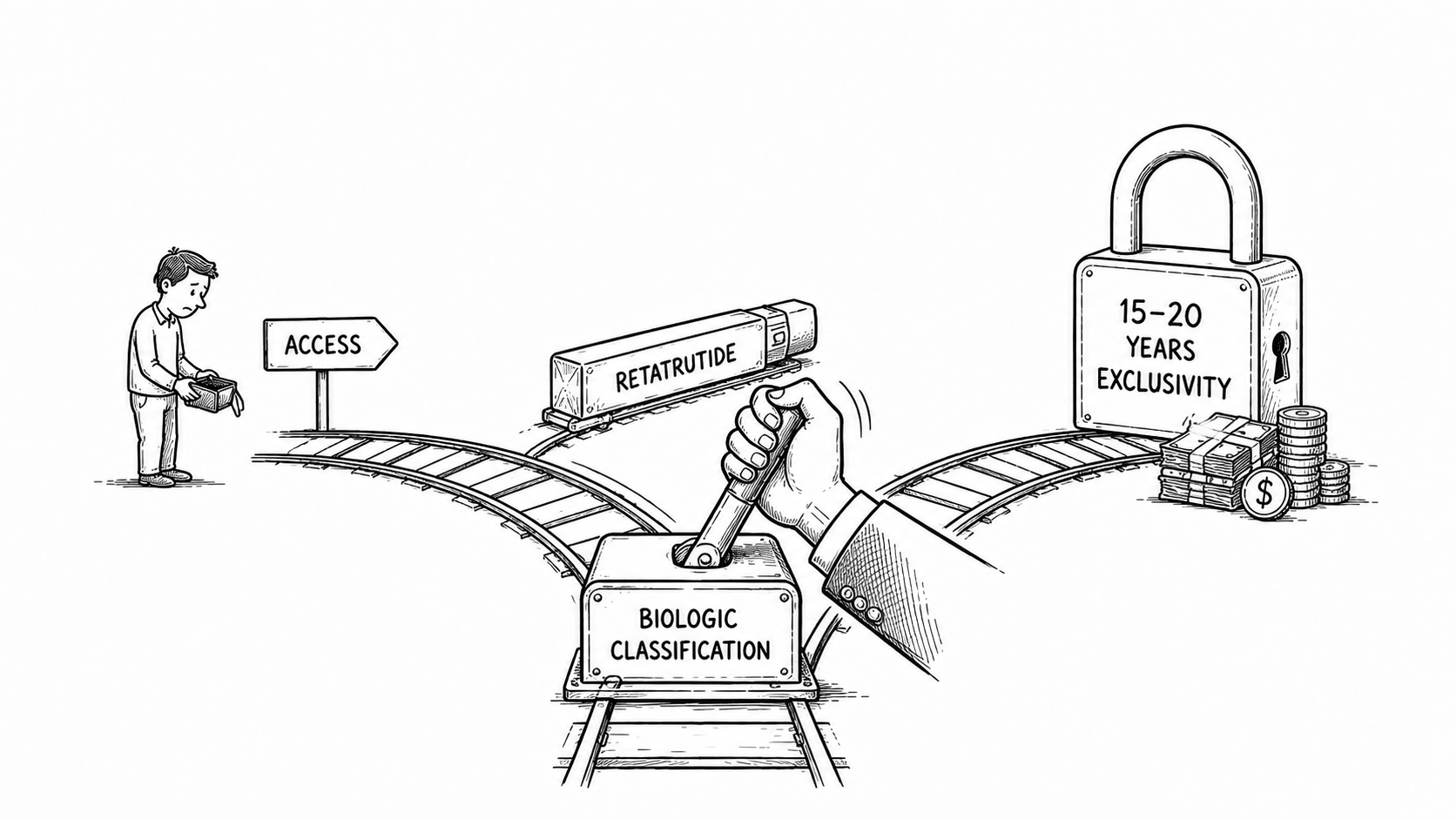
Eli Lilly announced this week that it will file for FDA approval of retatrutide, its next-generation weight-loss drug, in the first quarter of 2027. The company is deliberately pursuing biologic drug classification—not because it’s medically superior, but because it extends patent protection and prevents generic competition for 15-20 years. This is a strategic choice about how to maximize profit extraction. It’s also a choice that reveals institutional priorities with striking clarity, especially when you can see what choosing differently looks like.
The obesity epidemic in America is a public health crisis. Obesity disproportionately affects lower-income populations and communities of color. It’s linked to diabetes, cardiovascular disease, and reduced life expectancy. A drug that effectively treats obesity could save lives—if people could access it. Eli Lilly developed that drug. The clinical data is strong. The medical need is urgent. And the company’s response was to structure the regulatory pathway to ensure the drug remains unaffordable for most of the people who need it most.
This is not an inevitable market outcome. This is a choice. Eli Lilly could have pursued the approach Gilead and Merckchose with their weekly HIV pill: develop an innovation that solves a genuine medical problem while remaining profitable. Both strategies generate shareholder returns. Both strategies allow the company to invest in future innovation. The difference is who benefits from the innovation and when.
Eli Lilly’s choice was to pursue biologic classification. Here’s what that means in practice. A biologic drug gets 12 years of official market exclusivity. But biosimilars—the generic equivalents to biologics—face substantially higher development and regulatory barriers than traditional generics. Manufacturing complexity, regulatory requirements, and clinical testing demands make biosimilars 5-10 times more expensive to develop than traditional generics. The result: biologic classification extends effective monopoly pricing for 15-20 years, not the 12 years officially stated. During that monopoly period, retatrutide will be priced at levels that generate maximum profit, not maximum access.
The obesity epidemic disproportionately affects lower-income Americans. The drug that could help them will be priced out of reach for decades. People with obesity will wait 15-20 years for biosimilars that might eventually reduce prices. During that waiting period, disease progression advances. Complications accumulate. Health outcomes worsen. But Eli Lilly’s shareholders will have realized exceptional returns during the monopoly window.
The company will defend this pricing by citing R&D costs and innovation funding. Both are real. But the defense obscures what’s actually happening. Eli Lilly isn’t choosing between innovation and no innovation. It’s choosing between innovation-plus-access and innovation-plus-extraction. Gilead and Merck proved the first option is structurally available. Eli Lilly is choosing the second.
What does that choice reveal? It reveals that when given a fork in the road—solve a real problem profitably, or solve a real problem while maximizing extraction through regulatory strategy—Eli Lilly chose extraction. Not because the alternative wasn’t viable. Not because shareholders wouldn’t benefit. But because extraction generates higher returns during the monopoly window. The company calculated that 15-20 years of monopoly pricing was worth more than solving a public health problem at scale.
That’s an institutional priority. That’s a value. And it’s visible only when you can see that other companies made the opposite choice.