Dominican Tourism Is Growing, But Its Risk Is Becoming More Visible
A resort fire turned visitor confidence, emergency capacity, and informal dependence into the same economic story.
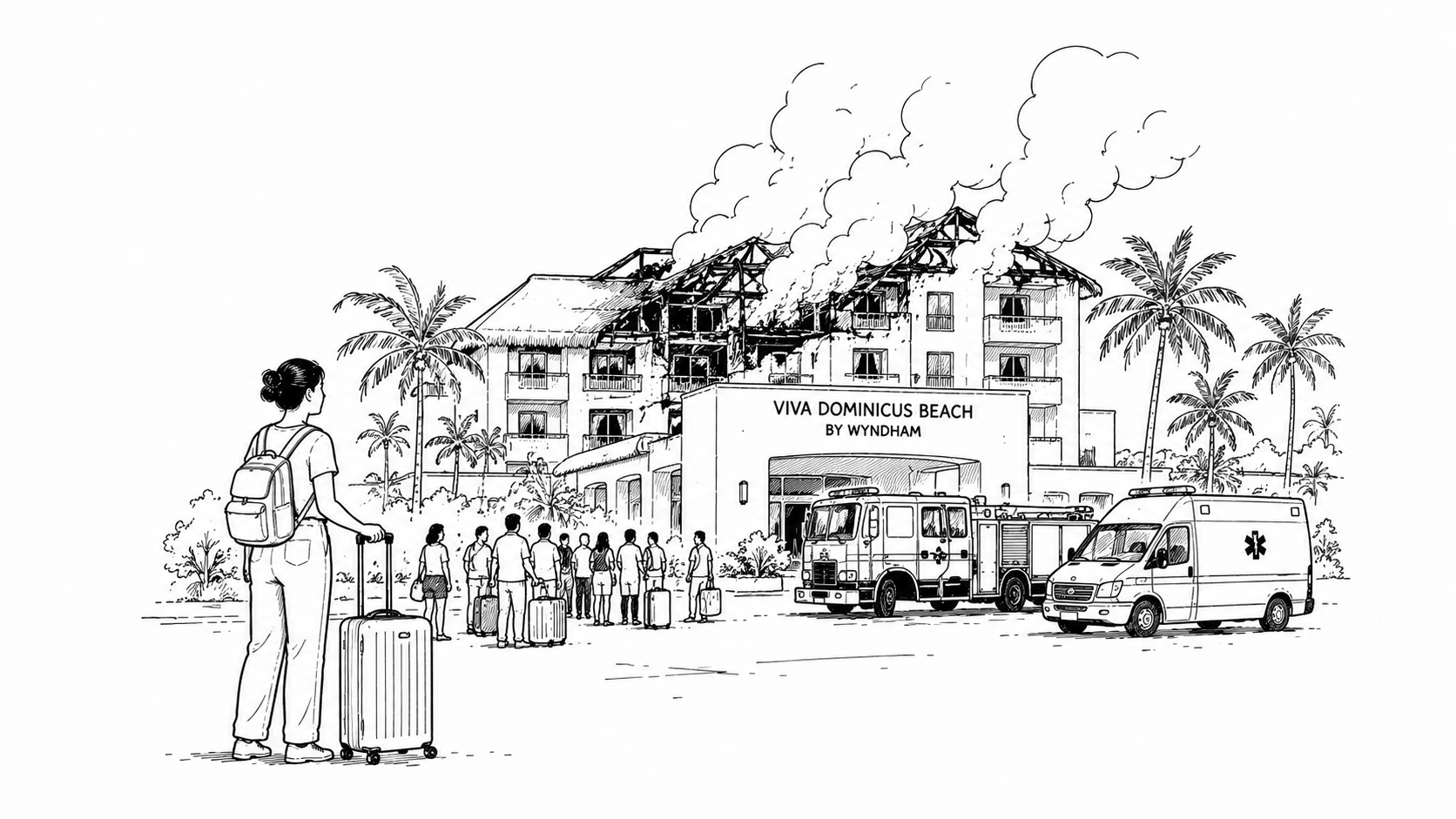
Associated Press reporter Martín Adames reported on June 20 that a fire at the Viva Dominicus Beach by Wyndham resort in the Dominican Republic forced the evacuation of nearly 1,700 tourists while the hotel was operating at 84% occupancy. The fire destroyed large parts of the resort, killed an Italian national, displaced guests to other hotels, and left authorities investigating the cause while tourism operations around the area continued. Dominican Today separately reported on June 27 that the country’s tourism boom is also feeding growth in informal businesses.
Tourism economies run on uninterrupted confidence. The Dominican Republic has built one of the Caribbean’s strongest visitor markets by selling volume, reliability, and escape. High occupancy is the system working as designed. It is also the system at its most exposed. A resort operating at 84% capacity has less margin for emergency response because the people, staff, and logistics are already fully engaged. When that system breaks, the support infrastructure that normally stays invisible becomes visible all at once: evacuation logistics, guest documentation, hotel relocation capacity, emergency communication, and the local labor that holds the operation together.
Nearly 1,700 tourists are not an abstraction. They are the moving center of a chain that extends beyond the resort walls into drivers, guides, vendors, food suppliers, maintenance contractors, security staff, and the informal sellers who build livelihoods around visitor flows. When that chain is interrupted, the damage distributes unequally. Guests experience disruption and return home. Workers and informal operators lose shifts, customers, and sometimes inventory without insurance or institutional support.
The informal economy dimension matters here. Dominican Today’s reporting on growth in informal businesses around tourist corridors documents what happens when visitor demand expands faster than formal employment systems can absorb it. Sellers, drivers, and independent guides build income around tourist flows because the formal hospitality sector does not create enough waged positions to capture all of the demand. That makes growth more broadly distributed in some respects. It also makes that income fragile when confidence breaks or a major incident reshapes the narrative of a destination.
A fire does not cancel what the Dominican Republic has built. The country has sustained strong visitor numbers through multiple shocks over the past decade. What the Viva Dominicus fire clarifies is that tourism strength and tourism resilience are different things. Safety inspection, emergency coordination, labor protection, and informal-business support are not optional amenities in a mature tourism economy. They are part of the product itself.
Caribbean destinations competing for the same visitor spending are watching how the Dominican Republic manages the aftermath. Countries that can demonstrate emergency capacity and worker continuity alongside price competitiveness will hold visitor confidence through disruption. Countries that treat those systems as back-of-house concerns rather than front-of-house obligations will keep discovering that a single incident can reframe an entire destination’s reputation faster than a marketing campaign can repair it.